Understanding Field Sobriety Tests in Colorado: What Officers Look For
When a routine traffic stop in Colorado escalates into a DUI investigation, field sobriety tests often become the deciding factor in whether an arrest occurs. These roadside tests are designed to help police officers look for signs of alcohol or drug impairment, but they are subjective, highly procedural, and frequently misunderstood by drivers. Understanding how field sobriety tests work in Colorado, what officers are trained to observe, and how these tests are used to establish probable cause is critical for anyone facing a DUI stop. Small details during these evaluations can significantly impact DUI charges, defense strategies, and case outcomes.
The Three Standardized Field Sobriety Tests Used in Colorado
The National Highway Traffic Safety Administration (NHTSA) has approved three standardized field sobriety tests that police officers in Colorado use during DUI stops. These tests are the Horizontal Gaze Nystagmus (HGN), the Walk-and-Turn, and the One-Leg Stand. Officers use these tests to check for signs that a driver may be impaired by alcohol or drugs.
Each test measures different physical and mental abilities that alcohol and drugs affect.
Police officers receive specific training on how to administer these tests correctly. The tests must be performed under proper conditions and scored according to NHTSA standards. Officers look for specific “clues” or indicators of impairment during each test. The number of clues a person displays helps the officer determine whether the driver shows signs of being under the influence.
Colorado courts recognize these three tests as valid evidence in DUI cases when officers administer them properly. The tests serve as tools to establish probable cause for arrest and provide supporting evidence for DUI charges.
Horizontal Gaze Nystagmus Test: Eye Movement Indicators of Impairment
Police officers in Colorado use the Horizontal Gaze Nystagmus (HGN) test as the first and most scientifically reliable of three standardized field sobriety tests. The test measures involuntary eye jerking when a person tracks a moving object. Officers hold a pen or flashlight about 12-15 inches from a driver’s face and move it slowly from side to side. The person must follow the object using only their eyes while keeping their head still.
When someone drinks alcohol, their brain loses some control over eye muscles. This causes the eyes to jerk or bounce instead of moving smoothly. Medical professionals call this jerking movement “nystagmus.” The HGN test reveals three specific types of abnormal eye movement that indicate alcohol impairment.
| Indicator | What Officer Observes | Potential Consequence |
| Lack of smooth pursuit | Eyes bounce or jerk while following the object side to side | Shows the brain cannot control eye muscles properly |
| Distinct nystagmus at maximum deviation | Strong jerking when eyes look as far left or right as possible | Points to blood alcohol concentration (BAC) above legal limits |
| Onset before 45 degrees | Eye jerking starts before reaching a 45-degree angle from center | Reveals higher levels of alcohol in the bloodstream |
Officers check both eyes separately, looking for six total clues (three in each eye). Finding four or more clues means the person likely has a BAC above Colorado’s legal limit of 0.08%. The National Highway Traffic Safety Administration (NHTSA) reports the HGN test correctly identifies impaired drivers about 77% of the time when administered properly. Officers receive specific training on conducting this neurological examination according to standardized procedures that courts recognize as valid scientific evidence in DUI cases.
Walk-and-Turn Test: Balance and Instruction-Following Assessment
Colorado law enforcement uses the Walk-and-Turn test as the second standardized field sobriety evaluation after the Horizontal Gaze Nystagmus (HGN) examination. This divided attention assessment measures a person’s ability to follow verbal directions while completing physical tasks at the same time.
Officers direct the suspected impaired driver to place one foot in front of the other and walk in a straight line for nine steps. The person must touch heel-to-toe with each step. At the end of nine steps, the person pivots on one foot and returns along the same line using the identical heel-to-toe walking method.
Eight Indicators of Impairment
Colorado police officers watch for eight specific signs that suggest alcohol or drug impairment:
- Loss of balance during instructions – Cannot stand steady while the officer explains the test
- Premature start – Begins walking before the officer finishes giving directions
- Stopping while walking – Pauses during the nine steps instead of walking continuously
- Separation between heel and toe – Fails to maintain heel-to-toe contact, leaving gaps between steps
- Stepping off the line – Places feet away from the designated straight path
- Arms raised for balance – Lifts arms more than six inches from the body to avoid falling
- Improper pivot – Turns incorrectly instead of keeping one foot planted while turning
- Wrong number of steps – Takes more or fewer than the instructed nine steps
A person who displays two or more of these eight indicators likely has impaired motor skills and cognitive function.
The Walk-and-Turn test creates a challenge for people under the influence of alcohol or drugs because it requires mental processing and physical coordination simultaneously.
Sober individuals generally perform this evaluation without difficulty, completing all requirements accurately.
One-Leg Stand Test: Coordination and Divided Attention Evaluation
Colorado police use the One-Leg Stand test as their third standard field sobriety check. This physical coordination examination tests whether a driver can keep balance while listening to directions and counting out loud. Officers tell the driver to stand on one foot, lift the other foot about six inches up, and count numbers for thirty seconds.
Police watch for four signs that show possible impairment:
- Body swaying – your torso and limbs move side to side or back and forth as you try to stay upright
- Arms lifting for stability – you raise your arms more than six inches away from your body’s center
- Hopping motion – you jump or shift your standing foot to keep from falling over
- Lowered foot contact – you cannot keep your raised foot in the air and must touch the ground
When officers see two or more of these warning signs during your test performance, Colorado law considers this evidence of alcohol or drug impairment. These observations create probable cause, which gives police legal authority to arrest you for suspected DUI.
The test evaluation period lasts exactly thirty seconds, and officers document each failed indicator in their arrest report. Your test results become part of the criminal case evidence that prosecutors use in court proceedings against you.
Non-Standardized Field Sobriety Tests Officers May Administer
Colorado police officers can use field sobriety tests beyond the three main tests approved by the National Highway Traffic Safety Administration (NHTSA). These extra tests help officers check if drivers might be under the influence of alcohol or drugs.
Police may ask drivers to perform several different physical and mental tasks:
- Romberg balance test: Standing still with eyes closed and head tilted back
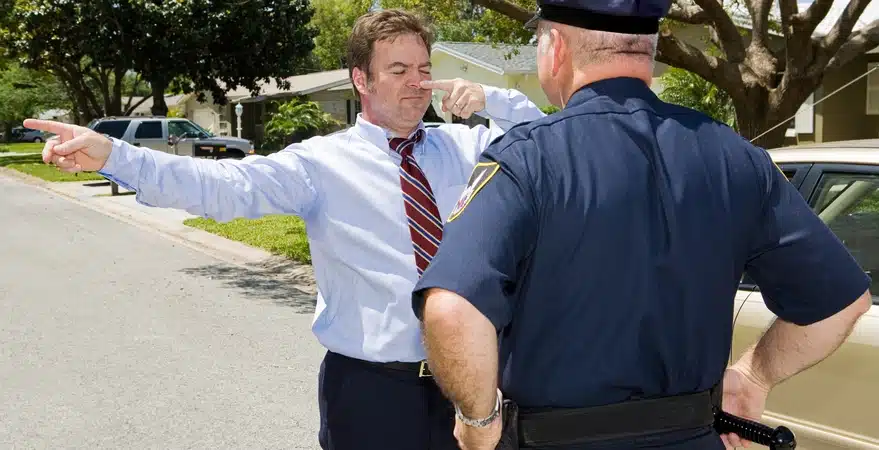
- Finger-to-nose test: Touching your nose with your finger while your eyes are closed
- Alphabet recitation: Saying part or all of the alphabet
- Counting exercises: Counting numbers in order or backwards
- Hand pat test: Patting hands together in a specific pattern
Officers use these tests to build probable cause for a DUI arrest. Probable cause means enough reason to believe a crime occurred. Colorado courts accept these tests as evidence, but they carry less weight than the three standardized NHTSA tests (horizontal gaze nystagmus, walk-and-turn, and one-leg stand).
Why These Tests Can Be Challenged
Non-standard field sobriety tests lack scientific research backing their accuracy. Defense attorneys can challenge test results in court because:
- Medical conditions like inner ear problems or diabetes affect balance
- Physical limitations such as injuries, age, or weight make certain movements difficult
- Nervous behavior caused by sthe ress of the traffic stop impacts performance
- Environmental factors, including uneven pavement, poor lighting, or bad weather, create unfair testing conditions
- Officer interpretation involves personal judgment rather than objective scoring
Specific Clues and Scoring Criteria Police Use for Each Test
Colorado police use standardized field sobriety tests developed by the National Highway Traffic Safety Administration (NHTSA) to evaluate whether drivers show signs of alcohol or drug impairment. Each test has specific clues officers watch for, and the number of observed clues helps establish probable cause for a DUI arrest.
Horizontal Gaze Nystagmus (Eye Test)
Officers check three clues in each eye (six total):
- Smooth pursuit: Eyes jerk instead of following an object smoothly
- Maximum deviation: Eyes jerk when looking as far to the side as possible
- Onset angle: Eyes begin jerking before reaching 45 degrees
Failing criteria: Four or more clues out of six
Walk-and-Turn Test
Officers observe eight clues:
- Cannot maintain balance while listening to instructions
- Starts walking before the instructions are finished
- Stops while walking to regain balance
- Fails to touch heel-to-toe on steps
- Steps off the line
- Raises arms for balance (more than six inches from sides)
- Makes an improper turn
- Takes the wrong number of steps
Failing criteria: Two or more clues out of eight
One-Leg Stand Test
Officers watch for four clues:
- Sways while balancing
- Raises arms for balance (more than six inches from sides)
- Hops on the standing foot to maintain balance
- Puts the raised foot down before the test ends
Failing criteria: Two or more clues out of four
Factors That Can Affect Test Results
Non-alcohol-related conditions can produce clues, including:
- Medical conditions: Inner ear disorders, neurological issues, eye conditions
- Physical limitations: Injuries, age-related balance problems, high body weight
- Footwear: High heels, flip-flops, platform shoes
- Environmental conditions: Uneven surfaces, poor lighting, rain, snow, wind
- Stress or nervousness: Anxiety during the traffic stop
Understanding how Colorado officers evaluate field sobriety tests helps drivers recognize the process used to establish probable cause for DUI arrests and the factors that can influence test outcomes.
Environmental Factors That Can Affect Test Performance
Road and weather conditions can make sobriety tests unreliable, even for sober drivers. Uneven surfaces like broken pavement or gravel lots affect balance tests. Poor nighttime lighting hinders visibility for officers and drivers during tests. Rain makes roads slippery, altering balance; strong winds and cold tighten muscles, mimicking intoxication. Heat causes fatigue, similar to intoxication symptoms. Passing cars add stress, impacting focus, especially for those with kids in the car.
Environmental factors raise doubts about test accuracy, especially with medical issues like ear problems or injuries. Older drivers face compounded challenges with balance on poor surfaces. Testing locations vary; highway shoulders, construction zones, and parking lots differ in conditions. Officers must document these conditions, but reports often miss this key information.
Medical Conditions and Physical Limitations That Impact Results
Many health problems create symptoms that police officers confuse with drunk driving during roadside sobriety tests.
Brain and nerve disorders, ear balance issues, and muscle or bone injuries harm a person’s balance and movement, whether alcohol is involved or not. Police learn to spot signs of impairment but miss real medical problems that look like intoxication.
Health conditions that affect test performance:
- Inner ear disorders and vertigo – The balance system in the ear stops working properly, making one-legged stand tests impossible to pass
- Knee, hip, or ankle injuries – Damaged joints and ligaments prevent walking heel-to-toe in a straight line.
- Neurological conditions like multiple sclerosis – Disease damages nerve pathways and causes the eyes to move involuntarily, which looks like alcohol-related nystagmus.
- Age-related mobility limitations – Older adults lose flexibility in joints and muscles, making standardized test positions difficult or impossible.
Colorado DUI law allows defendants to challenge field sobriety test results based on medical conditions.
Medical records, doctor statements, and diagnostic test results from healthcare providers prove these conditions existed before the traffic stop.
Physical therapist evaluations and specialist reports document specific limitations.
This medical evidence shows the test results came from health problems rather than alcohol impairment, creating reasonable doubt about intoxication claims in court proceedings.
Your Legal Rights When Asked to Perform Field Sobriety Tests
Colorado law gives drivers the right to refuse field sobriety tests during traffic stops. No automatic penalties exist for saying no. These roadside physical tests differ from breath tests or blood tests. The implied consent law applies only to chemical testing, not to physical coordination tests like walking in a straight line or standing on one leg.
Police officers often ask drivers to perform these tests without explaining that participation is optional. This lack of information creates pressure to comply. Many people assume they must do what an officer requests.
Saying no to field sobriety tests prevents creating evidence against yourself. Prosecutors use failed test results in DUI cases to prove impairment. When drivers refuse, the state has less physical evidence to present in court.
Refusing these tests does not guarantee freedom from arrest. Officers can still arrest drivers based on other signs of impairment. These signs include the smell of alcohol, bloodshot eyes, slurred words, or dangerous driving patterns. Body camera footage and dash camera recordings capture these observations.
The best approach involves politely declining the tests. Drivers should avoid giving long explanations or making statements about drinking. Every word spoken at the scene can appear in court as evidence. Simple phrases like “I decline to participate” work better than detailed responses.
Traffic stops create stress and confusion. Knowing your rights beforehand helps you make better choices in the moment. After any DUI-related traffic stop, speaking with a defense attorney protects your legal interests. An experienced lawyer can review what happened and explain your options for the case ahead.
Consequences of Refusing Field Sobriety Tests in Colorado
When a police officer pulls you over for suspected drunk driving in Colorado, you can legally say no to field sobriety tests. These roadside tests—like walking in a straight line or standing on one leg—are voluntary.
Unlike refusing a breathalyzer or blood test, saying no to field sobriety tests does not automatically suspend your driver’s license or create criminal charges.
That said, refusing these tests creates real problems you need to understand.
Police officers can use your refusal against you. When you decline the tests, officers often see this as a sign you know you’re too impaired to pass. Your refusal gives them more reason to believe you’re driving under the influence, which strengthens their legal justification (probable cause) to arrest you.
At trial, the prosecutor can tell the jury you refused the tests. They will argue that you only refused because you knew alcohol or drugs had impaired your driving ability. The judge will allow this evidence into your DUI case.
What you should know before refusing field sobriety tests:
- Police will probably arrest you based on other signs of impairment they observed (bloodshot eyes, alcohol smell, slurred speech, erratic driving).
- You give up the chance to create evidence showing you were sober and could perform the tests properly.
- The prosecutor will tell the jury your refusal proves you felt guilty.
- After arrest, Colorado’s implied consent law still requires you to take a chemical test (breath, blood, or urine) or face license revocation.
Each DUI traffic stop presents different circumstances. Your decision to refuse or complete field sobriety tests affects the evidence available in your criminal case.
How Field Sobriety Test Results Are Used as Evidence
Field sobriety tests are crucial in DUI cases, revealing a driver’s coordination and cognitive function. They, along with officer statements, help prove legal arrest grounds and impairment by substances. The NHTSA approves the Horizontal Gaze Nystagmus, Walk-and-Turn, and One-Leg Stand tests, which courts recognize for their standardized administration. However, these tests rely on officer judgment, which can be flawed.
Defense attorneys highlight errors, adverse weather, poor testing surfaces, medical conditions, and inappropriate footwear that affect test results. Officer training flaws can lead to evidence dismissal. Video footage can clarify events. Courts view sobriety tests as part of a larger evidence set, prioritizing chemical tests and erratic driving footage. Prosecutors must prove guilt beyond a reasonable doubt. Documentation errors in sobriety tests are used by defense to introduce doubt, demanding the prosecution affirm correct procedures and consider alternative causes.
Common Administration Errors That Invalidate Test Results
Police officers who give field sobriety tests must follow exact steps every time. When officers skip steps or do the test wrong, courts may throw out the results. These mistakes can destroy the evidence against a driver.
Missing Medical Problems
Officers must ask about health issues before starting any test. Many people have conditions that affect their balance and movement. A person with diabetes, inner ear problems, back injuries, or leg pain cannot perform these tests the same way a healthy person can. Missing these medical facts makes the test results meaningless.
Wrong Testing Location
The law requires a flat, dry, hard surface for field sobriety tests. Officers who test drivers on gravel roads, slanted parking lots, or bumpy pavement create unfair conditions. The National Highway Traffic Safety Administration (NHTSA) standards specify the exact surface requirements officers must meet.
Bad Instructions
Each field sobriety test has specific verbal instructions and physical demonstrations. Officers must explain exactly what the driver should do and show them how. When officers give confusing directions, rush through explanations, or skip the demonstration, the driver cannot perform the test correctly.
Poor Testing Conditions
Environmental factors severely impact test performance. Darkness prevents drivers from maintaining visual reference points needed for balance. Rain, snow, or strong wind creates additional physical challenges. Heavy traffic noise or flashing emergency lights distract the person taking the test.
The Difference Between Field Sobriety Tests and Chemical Tests
Colorado police use two main types of sobriety tests during DUI investigations: field sobriety tests and chemical tests. Each serves a different purpose, follows separate legal rules, and carries distinct consequences if a driver refuses.
Field Sobriety Tests
Field sobriety tests are physical exercises performed at the roadside to help officers determine whether they have probable cause for a DUI arrest.
These tests are voluntary. Drivers can decline without automatic penalties. They provide observational evidence about coordination, balance, and behavior—not precise measurements of alcohol in the body.
Chemical Tests
Chemical tests measure the exact blood alcohol concentration (BAC) or presence of drugs after a DUI arrest. Colorado officers typically use:
- Breath tests
- Blood tests
- Urine tests
Under Colorado’s Express Consent law, drivers agree to chemical testing by law when they operate a vehicle. Refusing a chemical test can result in automatic license suspension and may be used as evidence of guilt in court.
Key Differences
- Accuracy: Chemical tests produce exact BAC numbers; field sobriety tests rely on officer observations.
- Legal obligation: Field tests are voluntary at the roadside, while chemical tests are mandatory after arrest.
- Court use: BAC from chemical tests serves as definitive evidence of legal intoxication (0.08% or higher), whereas field sobriety tests support probable cause but do not prove intoxication.
Understanding these distinctions helps Colorado drivers know their rights and the legal consequences of refusing roadside or post-arrest DUI tests.
Video Evidence and Documentation of Roadside Testing
Dashboard cameras and body-worn recording devices capture most DUI investigations in Colorado. These recordings create objective records that prove more reliable than written police reports alone. The footage documents the suspect’s actual behavior, physical appearance, and performance during standardized field sobriety tests.
Video evidence can reveal differences between an officer’s written assessment and what actually happened during the traffic stop.
Critical elements captured in video documentation include:
- Balance problems that could come from medical conditions like inner ear disorders, neurological issues, or physical injuries rather than alcohol or drug intoxication.
- Weather conditions like rain, snow, ice, wind, or uneven road surfaces can affect test performance that officers may not properly note in their reports.
- Improper test administration by law enforcement officers who skip steps, give wrong instructions, or fail to follow National Highway Traffic Safety Administration (NHTSA) standardized protocols.
- Clear speech patterns that contradict officer’s claims of slurred speech or confusion.
Defense attorneys use this footage to challenge the prosecution’s version of events. The video record provides factual evidence that protects defendants’ constitutional rights.
Courts recognize video documentation as a critical tool for determining the truth in DUI cases. This objective evidence helps judges and juries make informed decisions based on what actually occurred during the roadside investigation rather than relying only on an officer’s memory or subjective interpretation of events.
Challenging Field Sobriety Test Results in Colorado DUI Cases
When prosecutors use field sobriety test results as the main evidence in a DUI case, defense lawyers have several ways to question whether these tests were valid and reliable. Defense attorneys examine the officer’s training, the location where tests happened, and whether police followed proper procedures. These reviews often reveal problems that can get evidence thrown out of court.
| Challenge Category | Specific Issue | Potential Impact |
| Officer Qualifications | Missing NHTSA certification credentials | Makes the test administration questionable |
| Environmental Factors | Bumpy ground, dim lighting conditions | Changes how accurately someone performs |
| Medical Conditions | Inner ear problems, knee injuries, and neurological disorders | Provides legitimate reasons for poor performance |
| Procedural Errors | Wrong instructions were given to the suspect | Breaks the standardized testing rules |
| Scoring Inconsistencies | An officer’s personal opinion affects scoring | Makes the results unreliable |
Missing police reports, conflicting statements from witnesses, and violations of a person’s constitutional right to refuse testing all help build a stronger defense. Medical experts and forensic scientists often testify in court about the scientific problems with field sobriety tests. These specialists explain how factors like age, weight, fatigue, prescription medications, and anxiety affect test performance independent of alcohol consumption.
The three standard tests require specific conditions and exact procedures. When officers skip steps, rush through instructions, or conduct tests on inappropriate surfaces like gravel parking lots or sloped roadways, the results lose credibility. Video evidence from dashboard cameras and body-worn cameras often contradicts officer reports about suspect performance.
Share This Story, Choose Your Platform!
Table of Contents
- The Three Standardized Field Sobriety Tests Used in Colorado
- Non-Standardized Field Sobriety Tests Officers May Administer
- Specific Clues and Scoring Criteria Police Use for Each Test
- Environmental Factors That Can Affect Test Performance
- Medical Conditions and Physical Limitations That Impact Results
- Your Legal Rights When Asked to Perform Field Sobriety Tests
- Consequences of Refusing Field Sobriety Tests in Colorado
- How Field Sobriety Test Results Are Used as Evidence
- Common Administration Errors That Invalidate Test Results
- The Difference Between Field Sobriety Tests and Chemical Tests
- Video Evidence and Documentation of Roadside Testing
- Challenging Field Sobriety Test Results in Colorado DUI Cases
Firstly, I would like to thank DUI Law Firm Denver for successfully representing me in my Adams County DUI case. The level of experience, scientific knowledge, dedication (I had both Emilio and Trevor representing me), and preparedness made all the difference during my trial. I highly recommend them. They are the BEST!
Related Reading

Commercial Driver DUI in Colorado: CDL-Specific Penalties and Defenses Commercial drivers in Colorado operate under two layers of regulation: state DUI laws and federal transportation rules. Together, these systems impose far stricter standards and penalties than those faced by regular drivers. A commercial driver can lose their CDL with a blood alcohol content of just [...]
Denver vs. Suburban DA Practices: Plea Policy Differences in DUI Cases DUI cases in the Denver metro area can unfold very differently depending on where an arrest occurs. Since 2005, the Denver District Attorney’s Office has maintained a strict policy against reducing DUI charges to lesser offenses, while nearby counties—including Jefferson County, Colorado, Arapahoe County, [...]

Ignition Interlock in Colorado: Calibration, Violations, and Early Reinstatement Traps Colorado’s ignition interlock program leaves little room for mistakes. Strict calibration schedules, zero-tolerance alcohol thresholds, and unforgiving violation rules mean that even a minor misstep, such as a missed service appointment or a failed breath sample, can extend your restricted driving period or trigger a [...]