Commercial Driver DUI in Colorado: CDL-Specific Penalties and Defenses
Commercial drivers in Colorado operate under two layers of regulation: state DUI laws and federal transportation rules. Together, these systems impose far stricter standards and penalties than those faced by regular drivers. A commercial driver can lose their CDL with a blood alcohol content of just 0.04%, half the legal limit for non-commercial drivers. Violations are also reported to national databases, meaning a DUI can follow a driver across state lines and affect future employment nationwide.
Because both criminal courts and federal transportation authorities can impose separate consequences, a single DUI arrest can threaten not only a driver’s license but an entire commercial driving career.

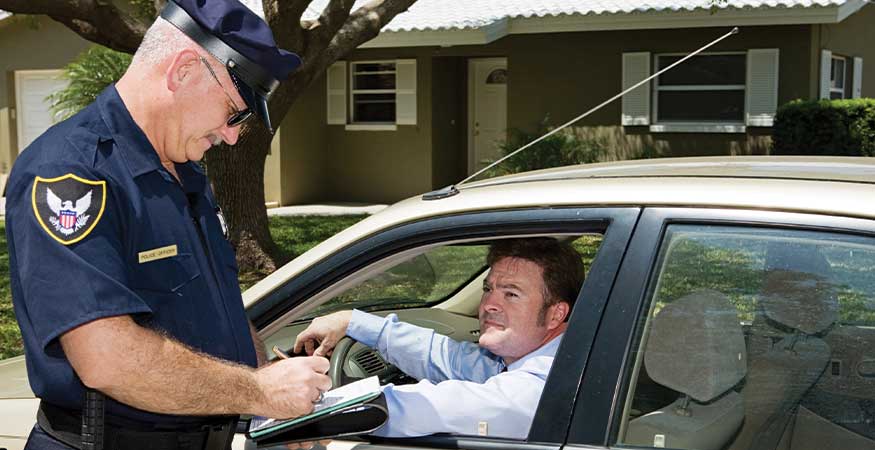
A highway encounter: law enforcement checks on a trucker.
Understanding BAC Thresholds: The 0.04% Standard for CDL Holders
Federal law sets a blood alcohol concentration (BAC) limit of 0.04% for commercial driver’s license (CDL) holders who operate commercial motor vehicles. This limit is half the 0.08% threshold that applies to regular drivers. The stricter standard exists because commercial drivers carry greater safety responsibilities when they operate large trucks, buses, and other commercial vehicles on public roads.
Colorado state law enforces this federal requirement. CDL holders face DUI charges at much lower BAC levels than regular motorists. The 0.04% threshold applies whether the driver works in interstate commerce (crossing state lines) or intrastate commerce (staying within Colorado).
A CDL holder who gets a DUI faces immediate license disqualification. This happens after a first offense. License loss creates serious employment consequences for professional drivers who depend on their CDL to work.
Police officers determine impairment through multiple methods. They make observations of driver behavior. They conduct field sobriety tests where drivers perform physical tasks. They administer chemical tests that measure BAC through breath, blood, or urine samples. All these assessment methods must meet the 0.04% legal standard for commercial drivers.
CDL holders must understand that the lower BAC threshold applies anytime they operate a commercial vehicle. The federal regulations protect public safety by holding professional drivers to higher standards than non-commercial motorists.
CDL Disqualification Periods: First Offense vs. Subsequent Violations
Colorado law sets mandatory suspension periods that take away a commercial driver’s legal right to operate vehicles after DUI convictions. These penalties get worse with each new violation, threatening the driver’s ability to earn a living in the trucking industry.
| Violation Type | First Offense | Second Offense | Third Offense |
| Standard DUI | 1-year suspension | Permanent suspension | Permanent suspension |
| Hazmat DUI | 3 years suspension | Permanent suspension | Permanent suspension |
| Refusal to Test | 1-year suspension | Permanent suspension | Permanent suspension |
Permanent suspensions can sometimes be reduced to ten years if the driver meets strict conditions. The driver must show proof of rehabilitation and complete all state requirements for getting their license back. The suspension applies whether the DUI happened in a commercial truck, personal car, or any other vehicle. This strict policy reflects Colorado’s higher standards for professional drivers who hold Commercial Driver’s Licenses (CDLs). These commercial operators transport goods and passengers on public roads, making public safety a top priority. The Federal Motor Carrier Safety Administration (FMCSA) requires states to enforce these penalties to maintain nationwide safety standards. Drivers who haul hazardous materials face longer initial suspensions because their cargo poses greater risks to communities. The refusal to submit to chemical testing (breath, blood, or urine) carries the same penalties as a DUI conviction itself.
Out-of-Service Orders and Their Immediate Impact on Employment
An out-of-service order is one of the most serious penalties a commercial driver can receive. Issued during roadside inspections by law enforcement or safety officials, it immediately prohibits a driver from operating any commercial motor vehicle (CMV) for a set period—typically at least 24 hours. Unlike license disqualifications that occur after a court conviction, out-of-service orders take effect instantly at the roadside.
Because federal regulations require employers to remove drivers from all safety-sensitive duties during this time, the impact on employment can be immediate. Drivers may lose wages, disrupt delivery schedules, and in some cases face termination, especially for repeat violations. Operating a commercial vehicle while under an out-of-service order leads to severe penalties, including longer CDL disqualifications and significant fines.
Common causes include hours-of-service violations, failed vehicle inspections, and missing documentation. These violations are recorded in federal safety databases and can affect future employment, insurance costs for carriers, and long-term career opportunities in the trucking industry.
Personal Vehicle DUI: How Off-Duty Violations Affect Your CDL
Many truck drivers think a DUI in their own car won’t hurt their commercial driver’s license. This belief is wrong. Colorado law says you must report all DUI convictions to the Division of Motor Vehicles within 30 days. This rule applies whether you drove a personal car, pickup truck, or commercial vehicle.
The Federal Motor Carrier Safety Administration (FMCSA) sets nationwide rules for commercial drivers. These rules require CDL disqualification for any alcohol-related conviction. The disqualification happens for both on-duty incidents and off-duty incidents.
A first DUI offense in your personal vehicle leads to a one-year CDL disqualification. If you hold a hazardous materials endorsement when the DUI occurs, the disqualification period extends to three years. A second DUI conviction at any point in your lifetime means permanent CDL revocation. You lose your ability to earn a living as a professional driver.
Colorado employers must follow strict notification requirements. Companies must disqualify drivers who fail to report DUI convictions within the 30-day timeframe. Your employer may terminate your employment for violating reporting requirements.
Commercial drivers face two separate punishment systems: criminal court penalties and administrative license sanctions. Criminal penalties include fines, jail time, and probation requirements. Administrative sanctions from the DMV and FMCSA end your professional driving privileges.
Both systems work at the same time, creating career-ending consequences from a single off-duty mistake.
Colorado’s Implied Consent Law and Commercial Drivers
Colorado’s implied consent law creates automatic testing obligations for commercial vehicle operators. When you drive a commercial truck, bus, or delivery vehicle in Colorado, you agree to chemical testing the moment a police officer suspects impairment. This agreement happens without signing papers—the law considers your decision to drive as your consent.
Refusing a test brings immediate consequences separate from criminal charges. The Colorado Department of Motor Vehicles (DMV) can disqualify your Commercial Driver’s License (CDL) for periods matching those given to convicted drunk drivers.
What does implied consent mean for CDL holders:
- Refusal means disqualification – saying no to a breath test, blood test, or urine test triggers automatic CDL suspension through the DMV, ending your ability to earn income before any judge reviews your case.
- Limited time to respond – administrative penalties from the DMV move quickly with short windows (typically 7 days) to request hearings, unlike criminal cases with longer timelines.
- Two separate legal processes – the DMV administrative hearing and criminal court case run at the same time as independent proceedings with different standards of proof.
- Permanent employment damage – refusing one test can end a 20-year trucking career since most transportation companies terminate drivers who lose CDL privileges.
- National database records – the Commercial Driver’s License Information System (CDLIS) tracks refusals across all 50 states, making these records visible to every future employer and law enforcement agency.
The Federal Motor Carrier Safety Administration (FMCSA) requires states to share CDL violation data. A refusal in Colorado appears on background checks in Texas, Florida, or any other state. Insurance companies access this information when setting commercial vehicle policy rates.
Refusing Chemical Testing: Administrative Consequences for CDL Holders
When a commercial driver in Colorado refuses a breath or blood test, the Colorado Department of Revenue can quickly suspend their Commercial Driver’s License (CDL). These penalties occur through the state’s administrative “express consent” system, which operates separately from any criminal DUI charges.
Key consequences for CDL holders include:
- First Refusal Penalty
- Minimum one-year CDL disqualification.
- The driver cannot operate any commercial motor vehicle during this period.
- Second Refusal Penalty
- Permanent CDL revocation, ending the driver’s commercial driving career.
- Dual License Consequences
- Drivers may lose both their regular driver’s license and their CDL at the same time.
- This means they may be unable to drive personal vehicles or commercial vehicles.
- Express Consent Hearing
- Drivers can request an Express Consent hearing to challenge the suspension.
- The hearing typically occurs within 60 days of the refusal.
- The hearing officer only needs a “preponderance of the evidence” to uphold the penalty, a lower standard than the “beyond a reasonable doubt” standard used in criminal court.
- Separate From Criminal Proceedings
- Administrative penalties can still apply even if criminal DUI charges are reduced or dismissed.
- Because many CDL holders depend on driving for their income, a refusal can lead to immediate job loss and long-term career consequences long before the criminal case is resolved.
Challenging Probable Cause in Commercial Vehicle Traffic Stops
Police need clear legal reasons to pull over commercial vehicles. Defense lawyers can examine and question these reasons in court. Law enforcement must show reasonable suspicion of a traffic violation or safety problem before making a stop.
Drivers with Commercial Driver’s Licenses (CDLs) face special risks during traffic stops. Officers often apply tougher standards to commercial vehicle operators than to regular drivers. When lawyers prove the initial stop was illegal, courts must throw out all evidence collected after that point. This includes breathalyzer tests, blood tests, and field sobriety results.
Grounds for challenging probable cause in commercial vehicle stops:
- Your job and professional license depend on the outcome of each traffic stop.
- Police officers sometimes mistake small equipment problems for signs of drunk or impaired driving.
- Dashboard cameras and body cameras may show that the officer’s written report contains errors about how you were driving.
- Federal Motor Carrier Safety Administration (FMCSA) rules are complex, and officers often apply them incorrectly.
- The Fourth Amendment of the U.S. Constitution protects commercial drivers from illegal searches and stops without valid cause.
Attacking BAC Test Results: Technical and Procedural Defenses
Blood alcohol concentration (BAC) tests contain weak points that defense lawyers use to protect truck drivers charged with DUI.
Breathalyzer machines need regular calibration checks that match Colorado state rules. Defense lawyers question whether the police officer had proper training, whether the test followed correct steps, and whether officers watched the driver for the required time before testing.
Blood sample challenges focus on who handled the evidence, whether storage kept samples at safe temperatures, and whether labs meet state certification requirements.
Breath testing machines use standard mathematical formulas that may not work the same for every person’s body chemistry and metabolism patterns.
Rising blood alcohol happens when police test drivers long after they stop driving. The body absorbs alcohol over time, so BAC levels increase after drinking ends. This means test results taken hours later show higher numbers than the actual BAC while driving occurred.
Mouth alcohol creates false high readings on breath tests. Sources include dental bridges and crowns, acid reflux disease (GERD), heartburn conditions, and drinking within 15-20 minutes before testing. These factors trap alcohol in the mouth rather than measuring deep lung air.
Police must document each testing step. Missing paperwork or skipped procedures give courts legal reasons to throw out BAC evidence.
Courts can suppress test results in Commercial Driver’s License (CDL) suspension hearings when officers fail to follow Department of Transportation (DOT) testing protocols or state administrative rules.
The Motor Vehicle Division reviews these technical violations during license revocation proceedings.
The Role of Field Sobriety Tests in Commercial Driver DUI Cases
Field sobriety tests (FSTs) are roadside assessments where police officers watch how a driver performs certain physical tasks. Officers use these observations to decide if they have enough reason to arrest someone for driving under the influence (DUI). These tests have major problems when used on commercial drivers who hold Commercial Driver’s Licenses (CDLs).
CDL holders face different challenges than regular drivers during FSTs. Many factors that have nothing to do with alcohol or drugs can make a commercial driver fail these tests. Body weight, age, past injuries, and tiredness from long hours behind the wheel can all look like signs of being drunk or high when they are not.
Main problems with FSTs for commercial drivers:
- Loss of livelihood when officers misread test results and arrest sober drivers, ending their careers
- Job-related injuries, such as back problems, knee damage, or hip pain, that affect balance and movement
- Road conditions, including cracked pavement, gravel shoulders, or sloped surfaces, make tests unfair
- Missing evidence when officers skip steps or fail to record video of the test being given correctly
- Health issues like diabetes, inner ear disorders, neurological conditions, or side effects from prescription medications that create false signs of impairment
Defense lawyers examine how officers gave the tests, review the officer’s training certificates and experience level, and look at weather and road conditions. These factors help prove the arrest lacked proper legal grounds.
The National Highway Traffic Safety Administration (NHTSA) sets specific rules for giving FSTs. When officers do not follow these standardized procedures, the test results lose credibility in court proceedings.
Employer Notification Requirements and Career Implications
CDL holders must inform their current employer in writing within 30 days of any DUI conviction or license disqualification. Federal regulation 49 CFR § 383.31 makes this requirement mandatory. The notification rule applies whether the violation happened in a commercial truck or a personal car.
Drivers who fail to notify their employer face additional penalties on top of the DUI consequences.
A DUI conviction creates permanent damage to a commercial driver’s career. The conviction stays on the Motor Vehicle Record forever. Most trucking companies have zero-tolerance policies for DUI violations.
These transportation companies check driving records regularly through state DMV databases. Insurance providers often refuse to cover drivers with DUI convictions. Without insurance coverage, drivers cannot work in commercial transportation, even if their CDL license gets reinstated.
Commercial drivers with DUI records face lower wages and fewer job opportunities in the trucking industry. Many carriers will not hire drivers who have any alcohol-related violations on their record.
Restricted or Provisional Driving Privileges: What’s Available to CDL Holders
Colorado law stops CDL holders from getting restricted driving privileges for commercial vehicle operation after a DUI conviction or administrative license suspension. Regular drivers without CDLs can get probationary licenses that let them drive to work, school, or doctor appointments. These probationary licenses clearly state that commercial driving is not allowed.
CDL holders facing disqualification need to understand that their commercial and non-commercial driving privileges work separately. Each license type follows different restriction rules.
Major limitations affecting CDL holders:
- Cannot operate commercial vehicles during federal disqualification periods (the mandatory time the government requires you to stop driving commercial trucks, buses, or other large vehicles)
- Cannot keep employment requiring CDL operation during suspension (you must stop working jobs that require you to drive commercial vehicles)
- No hardship exemptions exist for commercial routes or deliveries (you cannot ask for special permission to drive commercial vehicles, even if you will lose your job or income)
- Personal vehicle operation may still be possible under restricted non-commercial privileges (you might still drive your own car with special permission for personal reasons)
- Must wait mandatory time periods before CDL reinstatement eligibility begins (specific waiting times apply before you can apply to get your commercial license back)
Professional drivers must find different employment options during disqualification periods. The Federal Motor Carrier Safety Administration (FMCSA) sets nationwide disqualification standards that apply across all states.
State departments of motor vehicles enforce these federal regulations alongside Colorado-specific traffic laws. Understanding both federal and state requirements helps commercial drivers plan for license reinstatement and career continuation.
Criminal Penalties Beyond License Suspension: Fines, Jail Time, and Records
Losing your license is just part of the punishment for commercial drivers convicted of DUI. Colorado’s criminal justice system adds separate penalties on top of license suspensions. CDL holders face a double burden from both the Department of Motor Vehicles and the criminal courts.
| Offense Level | Potential Jail Time | Fine Range |
| First DUI | 5 days to 1 year | $600 – $1,000 |
| Second DUI | 10 days to 1 year | $600 – $1,500 |
| Third+ DUI | 60 days to 1 year | $600 – $1,500 |
A DUI conviction creates a permanent criminal record. This record shows up on background checks that employers run in trucking companies, delivery services, construction firms, and many other industries. The conviction stays on your record forever unless you get it sealed or expunged through legal action.
Courts can require more than just fines and jail. Judges often order defendants to complete community service hours at nonprofit organizations or government facilities. Alcohol education programs teach about substance abuse and typically meet weekly for several months. The court may install an ignition interlock device in your personal vehicle. This breathalyzer system prevents your car from starting if it detects alcohol on your breath.
These requirements cost money and take time. Ignition interlock devices charge monthly rental fees plus installation costs. Alcohol education programs require tuition payments. Missing work for court dates, classes, and community service reduces your income. Many commercial drivers lose their transportation jobs while serving these sentences, making it hard to pay the required fees and fines.
The criminal record blocks job opportunities years after you complete your sentence. Warehouse positions, forklift operator jobs, delivery driving for companies like Amazon or FedEx, and construction equipment operation all require background checks. Employers in healthcare, education, finance, and government sectors also deny applications based on DUI convictions. The record affects your ability to get professional licenses, rent apartments, and qualify for some types of insurance.
Substance Abuse Programs and Return-to-Duty Requirements
Federal law requires commercial drivers to complete a full substance abuse assessment before returning to safety-sensitive duties after a DUI violation. The Federal Motor Carrier Safety Administration (FMCSA) mandates evaluation by a qualified Substance Abuse Professional (SAP). This licensed counselor or therapist determines what treatment the driver needs.
Drivers must finish all recommended education or rehabilitation programs. They must pass a return-to-duty drug test. They must submit to random follow-up tests for 12-60 months.
Critical program requirements include:
- SAP evaluations cost $400-$1,500, paid by the driver with no insurance coverage
- Treatment programs require 40-80 hours, which means lost work time and income
- Failed compliance permanently ends most commercial driving careers with no second chance
- Follow-up testing continues even after the state reinstates the driver’s license
- Employers receive notification of all violations and testing failures through the FMCSA Drug and Alcohol Clearinghouse
These Department of Transportation (DOT) requirements create substantial financial costs and time commitments beyond court fines, jail time, and license suspension.
Commercial drivers face career-ending consequences that non-commercial drivers do not experience. The SAP evaluation process, treatment completion, and ongoing monitoring system work together to determine whether a driver can return to operating commercial motor vehicles.
Each step must be documented in the FMCSA Clearinghouse database.
Building a Strong Defense Strategy: When to Retain Specialized Legal Representation
Commercial drivers who face DUI charges in Colorado risk losing their CDL permanently and ending their careers. These drivers need a lawyer who knows both Colorado DUI laws and federal commercial driving rules before they make any legal decisions.
CDL-DUI defense attorneys understand how three separate systems work together: the Colorado Division of Motor Vehicles (DMV) hearings, criminal court cases, and Federal Motor Carrier Safety Administration (FMCSA) regulations. These lawyers can spot defenses that general practice attorneys might miss. Common defenses include illegal traffic stops by law enforcement, problems with breathalyzer or blood alcohol content (BAC) testing equipment, and violations of constitutional rights during the arrest.
Getting an expert DUI defense attorney right away helps protect important evidence. The lawyer can talk to prosecutors about reducing charges to offenses that won’t trigger automatic CDL disqualification. The defense strategy must address two goals: minimizing criminal penalties and protecting the driver’s ability to work.
Specific evidence needs immediate review: breathalyzer machine calibration records, blood test chain of custody documentation, field sobriety test videos, police officer certification records, and arrest procedure reports. This evidence can disappear or become harder to get as time passes.
The attorney should examine whether the arresting officer followed proper procedures, whether testing equipment was maintained correctly, and whether the driver’s Fourth Amendment rights against illegal search and seizure were violated.
An experienced CDL-DUI lawyer protects both immediate freedom and long-term career prospects for professional drivers.
Share This Story, Choose Your Platform!
Table of Contents
My daughter was in jeopardy of losing her driver’s license, but with Emilio De Simone’s diligent work of defense, she was able to keep her license. I highly recommend his services!
Related Reading

Denver vs. Suburban DA Practices: Plea Policy Differences in DUI Cases DUI cases in the Denver metro area can unfold very differently depending on where an arrest occurs. Since 2005, the Denver District Attorney’s Office has maintained a strict policy against reducing DUI charges to lesser offenses, while nearby counties—including Jefferson County, Colorado, Arapahoe County, [...]
Under-21 DUI in Colorado: Zero-Tolerance Rules and Defenses Colorado has some of the strictest underage drinking and driving laws in the country. Under the state’s Zero Tolerance Law, drivers under 21 can face criminal charges with a blood alcohol concentration (BAC) of just 0.02%, an amount that may result from even minimal alcohol consumption. An [...]

Ignition Interlock in Colorado: Calibration, Violations, and Early Reinstatement Traps Colorado’s ignition interlock program leaves little room for mistakes. Strict calibration schedules, zero-tolerance alcohol thresholds, and unforgiving violation rules mean that even a minor misstep, such as a missed service appointment or a failed breath sample, can extend your restricted driving period or trigger a [...]