Denver vs. Suburban DA Practices: Plea Policy Differences in DUI Cases
DUI cases in the Denver metro area can unfold very differently depending on where an arrest occurs.
Since 2005, the Denver District Attorney’s Office has maintained a strict policy against reducing DUI charges to lesser offenses, while nearby counties—including Jefferson County, Colorado, Arapahoe County, Colorado, Adams County, Colorado, and Douglas County, Colorado—often evaluate cases individually and may negotiate plea agreements. As a result, drivers facing similar facts can experience very different outcomes based solely on where the arrest took place. These jurisdictional differences influence potential plea options, criminal records, license consequences, insurance costs, and long-term opportunities. Understanding how prosecutors approach DUI cases in Denver compared with surrounding suburban jurisdictions is essential for evaluating defense strategies and anticipating likely case outcomes.
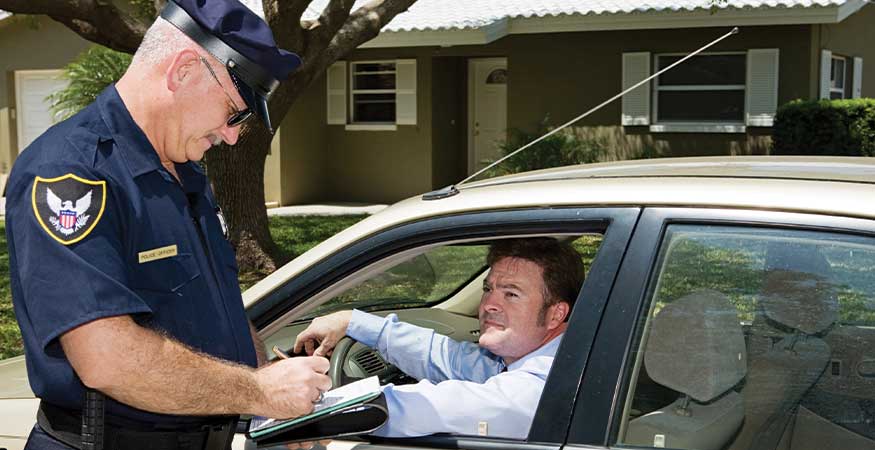
A routine traffic stop unfolds on a sunny day.
Understanding Colorado’s DUI and DWAI Statutory Framework
Colorado law recognizes two distinct impaired driving offenses under Colorado Revised Statutes § 42-4-1301: Driving Under the Influence (DUI) and Driving While Ability Impaired (DWAI). Although both involve operating a vehicle after consuming alcohol or drugs, they differ in the level of impairment required and the penalties that may follow.
DUI is the more serious charge. It generally applies when a driver’s blood alcohol concentration (BAC) is 0.08% or higher, or when alcohol or drugs substantially impair the driver’s ability to operate a vehicle safely.
DWAI applies at a lower level of impairment. Prosecutors may file this charge when a driver’s BAC falls between 0.05% and 0.079%, or when alcohol or drugs affect the driver’s ability to drive “to the slightest degree.”
The penalties for these offenses also differ. A first-time DUI conviction can carry 5 days to 1 year in jail, fines ranging from $600 to $1,000, driver’s license revocation, mandatory alcohol education classes, and possible ignition interlock requirements. In contrast, a first-time DWAI conviction typically results in 2 days to 180 days in jail, $200 to $500 in fines, license points, and possible community service.
These distinctions play a critical role throughout a DUI case. Prosecutors rely on BAC levels and evidence of impairment when determining charges, while defense attorneys often focus on these thresholds during plea negotiations. Because sentencing rules also differ, understanding the legal line between DUI and DWAI is essential for evaluating case strategy and potential outcomes in Colorado impaired driving cases.
Denver DA’s Historical Stance on DUI Plea Negotiations
For many years, the Denver District Attorney’s Office followed one of the strictest DUI prosecution policies in Colorado. From 2005 through 2020, the office maintained a “no plea reduction” rule that prohibited prosecutors from negotiating DUI charges down to lesser offenses. This approach set Denver apart from nearby jurisdictions such as Jefferson County, Colorado, Arapahoe County, Colorado, and Adams County, Colorado, where district attorneys typically evaluated cases individually and allowed negotiated resolutions.
Under Denver’s policy, defendants charged with DUI generally had only two options: proceed to trial or plead guilty to the original charge. Prosecutors were not permitted to reduce charges to alternatives such as Driving While Ability Impaired (DWAI) or reckless driving—even in cases involving borderline blood alcohol levels, evidentiary concerns, or mitigating circumstances.
The policy also limited prosecutorial discretion. Individual deputy district attorneys could not weigh factors such as breath test accuracy, field sobriety performance, or a defendant’s lack of prior offenses when deciding how to resolve a case. Instead, the rule applied uniformly regardless of whether a driver’s BAC was barely above the legal limit or significantly higher.
Defense attorneys frequently criticized the rigid approach, arguing that it removed flexibility from the justice system and forced many cases toward trial, even when negotiated resolutions might have been appropriate. The policy also raised broader fairness concerns because defendants arrested in Denver often faced stricter outcomes than those charged with similar conduct in surrounding counties.
Arapahoe County’s Approach to DUI Case Resolution
In contrast to Denver’s former blanket policy, prosecutors in Arapahoe County, Colorado, evaluate DUI cases individually and may offer reduced charges when circumstances justify it. The Arapahoe County District Attorney’s Office reviews the evidence in each arrest before deciding how to proceed.
Prosecutors typically examine factors such as blood alcohol concentration (BAC) results, field sobriety test performance, possible constitutional or procedural issues during the traffic stop, and the defendant’s prior criminal record. When evidence is borderline, or weaknesses appear—such as BAC readings just above the 0.08% limit, procedural errors, or questionable breath test reliability—prosecutors may consider reducing charges to offenses like Driving While Ability Impaired (DWAI).
This case-by-case approach reflects the traditional use of prosecutorial discretion across Colorado. Rather than treating every DUI arrest the same, the system allows prosecutors to weigh the strength of the evidence and the defendant’s circumstances when negotiating plea agreements. The goal is to balance public safety with proportionate outcomes that reflect the actual level of impairment involved in each case.
Jefferson County Prosecutorial Philosophy on Impaired Driving
Jefferson County’s district attorney takes a middle path when handling drunk driving charges. This method looks at each case’s specific facts while keeping strong standards for driving under the influence (DUI) offenses. The goal balances community safety with fair outcomes for each situation.
How Jefferson County Prosecutes DUI Cases
Risk Evaluation Process
Prosecutors review the driver’s criminal history, blood alcohol concentration (BAC) test results, and additional danger factors before discussing any plea bargains. This step identifies which cases present the highest threat to public safety.
Plea Bargain Rules
The office allows charge reductions only in certain situations. Prosecutors must write down clear reasons explaining why a particular case qualifies for a reduced charge. This documentation creates accountability and prevents arbitrary decisions.
Victim Involvement Requirements
When a drunk driving incident causes injuries to people or damages property, prosecutors must talk with the victims before making plea agreements. Victims receive information about the case and can share how the crime affected their lives.
Sentencing Position for Serious Cases
The district attorney’s office pushes for mandatory minimum jail time in two situations: when defendants have previous DUI convictions on their record, and when BAC measurements exceed the legal limit by substantial margins (typically 0.15% or higher compared to the 0.08% standard threshold).
This framework creates predictable outcomes across similar drunk driving cases. At the same time, prosecutors retain judgment authority for unusual circumstances that don’t fit standard patterns.
The system protects both community members who share the roads and defendants’ rights to proportional consequences matching their specific conduct.
Douglas County DUI Plea Bargaining Practices
Douglas County, Colorado generally takes a stricter approach to DUI prosecutions than many neighboring jurisdictions. The Douglas County District Attorney’s Office rarely agrees to reduce DUI charges, particularly when a driver’s blood alcohol concentration (BAC) exceeds the 0.08% legal limit.
In practice, BAC levels often influence how prosecutors handle a case:
| BAC Level | Likelihood of Reduced Charges | Typical Outcome |
| 0.08–0.15% | Very low | DUI charge usually proceeds as filed |
| 0.15–0.20% | Extremely rare | Enhanced penalties often apply |
| Above 0.20% | Not permitted | Defendant may be classified as a
persistent drunk driver |
Prosecutors also evaluate several aggravating factors when deciding whether any negotiation is possible. Cases involving vehicle crashes, injuries, or victim impact statements receive heightened scrutiny. DUI arrests involving children in the vehicle, threats to community safety, or prior alcohol-related offenses also make charge reductions highly unlikely.
Because of this strict stance, defense attorneys typically need clear weaknesses in the prosecution’s evidence to pursue a reduced charge. Successful negotiations may depend on demonstrating issues such as breath or blood testing errors, improper calibration of testing equipment, medical conditions affecting BAC readings, or procedural violations during the traffic stop or arrest. In these situations, defense counsel often relies on technical records, expert testimony, and detailed case analysis to challenge the reliability of the evidence.
How Blood Alcohol Content Levels Influence Plea Offers Across Jurisdictions
Douglas County uses strict rules based on blood alcohol content (BAC) numbers. Other nearby counties use different methods when deciding DUI plea deals. Denver prosecutors give more flexibility when BAC readings measure between 0.08 and 0.15. Suburban counties set fixed limits at certain BAC numbers.
Each county handles BAC levels differently:
- Denver District Attorney’s Office: Allows reduced charges for BAC levels 0.08-0.149 when the defendant has reasons that make the offense less serious.
- Arapahoe County Prosecutor’s Office: Sets a hard limit at 0.17 BAC—no charge reductions allowed above this number.
- Jefferson County District Attorney’s Office: Uses a step system where restrictions start at 0.15 BAC.
- Adams County Prosecutor’s Office: Reviews each drunk driving case individually without focusing on specific BAC numbers.
These different county policies create unequal results for people charged with similar drunk driving offenses. A person arrested in Denver might receive a better plea offer than someone arrested in Arapahoe County, even with the same BAC reading.
Defense attorneys must understand each county’s BAC policy to build effective case strategies. The county where police arrest a driver determines the potential penalties and available plea options.
This variation in prosecution standards across the Denver metro area means geographic location directly impacts criminal case outcomes and possible jail time.
The Role of Aggravating Factors in Plea Negotiations
Prosecutors look at more than blood alcohol concentration when deciding DUI plea deals. District attorneys in Denver and surrounding counties check for specific problems that make plea bargaining harder. These problems include past DUI convictions, car crashes, damaged property, injured people, children in the vehicle, suspended licenses, and driving much faster than the speed limit. Each of these issues can lead to more serious criminal charges under Colorado law.
The way prosecutors handle these problems differs between Denver and suburban counties. Denver district attorneys follow written rules that explain exactly how each problem affects the plea offer. Suburban prosecutors make more individual decisions on a case-by-case basis without strict guidelines.
Some situations remove the chance for reduced charges completely. Cases with serious bodily injury (defined in Colorado Revised Statutes § 18-1-901(3)(c.5)) or child endangerment (under § 18-6-401) receive no standard plea reductions in any jurisdiction. Serious bodily injury means significant physical harm that causes major health risks or permanent damage to body parts or functions. Child endangerment involves creating dangerous situations for minors.
When multiple problems exist in one DUI case, the effects multiply. Suburban prosecutors file additional separate charges more often than Denver prosecutors.
Denver uses a charging matrix—a structured system that produces more consistent results. This difference in approach means two defendants with similar DUI cases may receive very different treatment depending on whether their case goes through Denver or a suburban county court.
Resource Allocation and Caseload Management Differences
Denver’s Second Judicial District handles about 3,500 DUI cases each year. Jefferson County and Arapahoe County are suburban areas near Denver. Each of these suburban counties processes between 1,200 and 1,800 DUI cases per year. The difference in case numbers creates different ways prosecutors handle DUI charges. Available staff, money, and time shape these approaches.
Resource allocation creates these specific differences:
- Attorney workload- Each Denver prosecutor handles 350-400 cases per year. Suburban prosecutors manage 200-250 cases per year. This means Denver attorneys have less time for each case.
- DUI team structure- Suburban prosecutor offices assign specific attorneys to work only on DUI cases. These specialized attorneys develop expertise in drunk driving law, blood alcohol testing, and field sobriety procedures.
Denver uses a rotation system where prosecutors handle DUI cases along with other criminal matters like theft, assault, and drug charges.
- Expert witness access- Suburban districts spend more money hiring toxicologists who analyze blood and breath test results. They also retain accident reconstruction specialists and medical experts.
These professionals help prosecutors understand technical evidence and explain it to juries.
- Case evaluation methods- Denver prosecutors use standard plea bargain templates because high caseloads require faster processing. These templates offer similar deals to defendants with comparable charges and criminal histories.
Suburban prosecutors examine each case individually, considering factors like the defendant’s blood alcohol level, prior record, accident involvement, and cooperation with police.
The structural differences between urban and suburban prosecutor offices affect two important outcomes: how willing prosecutors are to negotiate plea deals and how long cases take from arrest to final resolution.
Community Pressure and Political Considerations in Prosecution Decisions
District attorneys who win elections must listen to what voters say about dangerous driving. Urban and suburban communities care about different safety problems. Denver prosecutors handle many urgent issues at once: murders, assaults, robberies, burglaries, and neighborhood problems. This splits their attention away from drunk driving cases.
Suburban areas name drunk driving as their top worry, especially after serious crashes that kill or injure residents. Politics shapes how prosecutors charge defendants and negotiate deals. The choices vary based on location. Suburban district attorneys run for office promising strict punishment for DUI offenders. These campaign promises create office policies that resist light sentences or reduced charges.
Denver’s district attorney must satisfy many different groups who want opposite things. Victims’ families demand justice. Defense attorneys seek fair treatment. Community organizations push various agendas. Business groups raise concerns about economic impacts.
Local newspapers and television stations in suburban counties follow DUI arrests closely. Reporters cover court hearings and sentencing. Small-town media keeps stories in the public eye for weeks or months. This forces prosecutors to explain their decisions on individual cases. Voters remember how prosecutors handled specific drunk driving cases when election day comes.
Big-city media outlets move quickly from one story to the next. Denver prosecutors face less scrutiny on routine DUI cases unless the crash kills multiple victims or involves a celebrity defendant. These political forces control how much power prosecutors use during plea bargains. Suburban prosecutors recommend harsher sentences to judges. Denver prosecutors evaluate each case based on broader workload pressures and community priorities beyond traffic safety.
Employment and Professional Licensing Implications by Charge Type
Professional licensing boards in Colorado treat DUI convictions differently from DWAI convictions when they review practitioners under their control.
Healthcare professionals, attorneys, and commercial drivers must report alcohol-related convictions under C.R.S. § 12-255-120.
A DUI conviction starts formal board investigations and can lead to license suspensions. A DWAI conviction creates less serious discipline or monitoring agreements.
The Colorado Supreme Court decided in *People v. Stellar* that misdemeanor alcohol offenses can be grounds for professional discipline when they show someone is unfit to practice their profession.
Employment background checks treat these offenses differently. DUI appears as a more serious problem for jobs that require driving or professional licenses.
The Federal Department of Transportation permanently bans commercial drivers from operating vehicles after a DUI conviction. A DWAI conviction lets commercial drivers apply for reinstatement.
Professional licensing boards evaluate each case based on specific factors. These factors include the offense severity, the practitioner’s job duties, public safety risks, and rehabilitation efforts.
Medical boards, legal boards, and transportation authorities each apply their own standards when deciding disciplinary actions.
The distinction between DUI and DWAI convictions affects career consequences across multiple regulated professions in Colorado.
Insurance Rate Impacts and Financial Consequences
Insurance companies treat DUI and DWAI convictions differently when they set your car insurance prices. Colorado insurance providers view DUI as a serious offense that causes your rates to jump significantly. DWAI receives lighter penalties because it counts as a less serious charge.
The money differences between these two convictions include:
- DUI convictions cause premium increases of 40-80% that last three to five years.
- DWAI convictions cause increases of 20-40% over the same time period.
- Some insurance companies cancel your policy after a DUI conviction, which forces you to file SR-22 forms and buy high-risk insurance.
- The extra insurance costs over five years can differ by $5,000-$15,000, depending on which charge you receive.
Insurance companies use these different categories because their data shows different risk levels for DUI versus DWAI offenders.
This means your choice to accept a plea deal affects your wallet for years after you pay court fines and complete other penalties. The insurance rate increase starts when your conviction appears on your driving record and continues for multiple policy renewal cycles.
Smart defendants consider these long-term insurance costs when they work with their lawyer to negotiate charges.
Criminal Record Distinctions Between Jurisdictions
Colorado law separates DUI and DWAI offenses into two different categories. Other states use different rules when they review out-of-state convictions. These reviews affect driver’s licenses, jobs, and how courts classify repeat offenses.
Most states do not have DWAI as a separate charge. These states treat all impaired driving convictions the same way. They consider them equal to DUI charges. This creates problems for people with Colorado DWAI convictions who apply for jobs in other states. The issue becomes serious for positions that require background checks. Jobs in commercial driving and professional licensing face the strictest review.
Federal regulations for commercial driver’s licenses apply uniform standards. Under 49 CFR § 383.51, the federal government treats DWAI convictions exactly like DUI convictions. Both offenses trigger the same disqualification rules for commercial drivers.
Colorado residents with prior DWAI convictions face specific risks when charged with DUI in other states. States without DWAI laws may count the earlier Colorado offense as a prior DUI. Prosecutors in these jurisdictions can use this classification to increase penalties.
The enhanced charges can reach felony level when the system identifies multiple offenses. This interstate variation in offense classification creates unequal legal consequences based on geographic location rather than actual conduct.
Defense Strategy Considerations Based on Filing Location
The location where a prosecutor files impaired driving charges affects which defense options work for the person accused. Denver’s district attorney’s office has written rules that limit some plea bargain options that suburban counties allow. This means defense lawyers must change their approach based on where the case gets filed.
Defense attorneys need to study how prosecutors in each county handle cases before telling clients what might happen.
Defense lawyers must consider these factors:
- Suppression motions work differently in each county because judges interpret *People v. Roybal* (a Colorado Supreme Court case about police searches) and Fourth Amendment rights (constitutional protection against illegal searches) in different ways.
- Expert witnesses play different roles depending on location – Denver prosecutors often challenge testimony from defense toxicologists (scientists who study alcohol in blood) about blood-alcohol calculations, while suburban prosecutors accept these expert reports more often.
- Diversion programs (alternatives to criminal conviction that require treatment or education) have different qualification rules in each county, with varying requirements to complete the program.
- Trial versus plea decisions depend on past conviction percentages and sentencing patterns that court records show for each judicial district (the geographic area where a specific court has authority).
Each county prosecutes DUI cases (driving under the influence charges) with distinct policies. Understanding local court practices helps defense counsel develop realistic case evaluations and outcome predictions for clients facing drunk driving allegations.
Share This Story, Choose Your Platform!
Table of Contents
DUI Law Firm Denver is excellent. Emilio De Simone and his team are intelligent, professional, honest, and trustworthy. Not only did they successfully handle my DUI charge, but they also dealt with other related issues. I highly recommend them for all your legal problems.
Related Reading

Commercial Driver DUI in Colorado: CDL-Specific Penalties and Defenses Commercial drivers in Colorado operate under two layers of regulation: state DUI laws and federal transportation rules. Together, these systems impose far stricter standards and penalties than those faced by regular drivers. A commercial driver can lose their CDL with a blood alcohol content of just [...]
Under-21 DUI in Colorado: Zero-Tolerance Rules and Defenses Colorado has some of the strictest underage drinking and driving laws in the country. Under the state’s Zero Tolerance Law, drivers under 21 can face criminal charges with a blood alcohol concentration (BAC) of just 0.02%, an amount that may result from even minimal alcohol consumption. An [...]

Ignition Interlock in Colorado: Calibration, Violations, and Early Reinstatement Traps Colorado’s ignition interlock program leaves little room for mistakes. Strict calibration schedules, zero-tolerance alcohol thresholds, and unforgiving violation rules mean that even a minor misstep, such as a missed service appointment or a failed breath sample, can extend your restricted driving period or trigger a [...]