Under-21 DUI in Colorado: Zero-Tolerance Rules and Defenses
Colorado has some of the strictest underage drinking and driving laws in the country. Under the state’s Zero Tolerance Law, drivers under 21 can face criminal charges with a blood alcohol concentration (BAC) of just 0.02%, an amount that may result from even minimal alcohol consumption. An under-21 DUI can lead to license suspension, fines, mandatory education programs, and a permanent record that may impact school, career, and future opportunities. In this guide, we explain how Colorado’s zero-tolerance rules work, how BAC testing is handled, and the legal defenses that may help protect young drivers facing underage DUI charges.

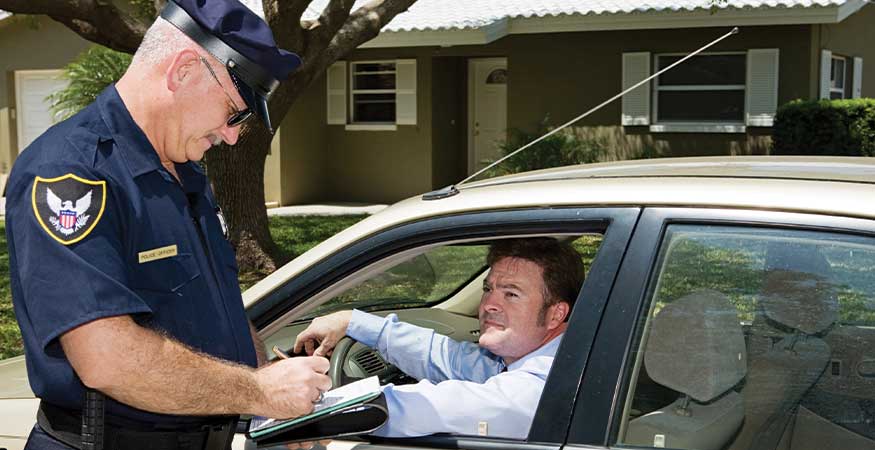
A driver’s anxious moment during a roadside stop.
What Constitutes Colorado’s Zero Tolerance Law for Underage Drivers
Colorado law prohibits drivers under 21 from operating a vehicle with a blood alcohol concentration (BAC) of 0.02% or higher. This rule, established under Colorado Revised Statute 42-4-1301(2)(a), makes it unlawful for a minor to drive after consuming virtually any amount of alcohol. Because the limit is so low, even small amounts, such as part of a drink or exposure to alcohol-based products, may produce a measurable reading. When officers suspect alcohol use, they may request breath, blood, or urine testing to determine BAC. A violation at or above 0.02% is classified as a Class A traffic infraction. Penalties can include driver’s license suspension, fines, community service, mandatory alcohol education, and points on the driving record, with increased consequences for repeat offenses.
The 0.02% BAC Threshold: How It Differs From Standard DUI Laws
The 0.02% threshold operates under a different legal framework than Colorado’s standard DUI law for adults. While drivers 21 and older are subject to a 0.08% BAC limit that focuses on impairment, the underage standard is based on the presence of alcohol itself rather than proof that driving ability was affected. This means a BAC level that would be lawful for an adult may still trigger penalties for someone under 21. Cases involving BAC levels between 0.02% and 0.08% are generally handled through an administrative process involving the Department of Motor Vehicles, rather than traditional criminal prosecution. However, if an underage driver’s BAC reaches 0.08% or higher, prosecutors may pursue formal DUI charges in addition to administrative penalties, exposing the driver to far more severe legal consequences.
Penalties for First-Time Under-21 DUI Offenders in Colorado
A first-time DUI offense for a driver under 21 can lead to both administrative consequences through the Colorado Department of Motor Vehicles (DMV) and criminal penalties through the court system. The exact outcome depends largely on the driver’s blood alcohol concentration (BAC) at the time of arrest.
If the BAC is between 0.02% and 0.05%, penalties typically include:
- Three-month driver’s license suspension through the DMV
- Mandatory alcohol education classes, completed at the driver’s expense
If the BAC is 0.05% or higher, the case may proceed as a criminal DUI, exposing the young driver to:
- Possible jail time
- Fines of up to $1,000
- Court-ordered community service
- License suspension of up to nine months
- Ignition interlock device installation, with all costs paid by the driver
In addition to these legal penalties, a conviction can carry serious long-term consequences:
- Significant increases in car insurance premiums
- A permanent criminal record is visible on background checks
- Mandatory substance abuse evaluation, which may lead to required counseling or treatment programs
Even a first offense can affect a young person’s education, employment opportunities, and financial stability for years to come.
License Suspension and Reinstatement Requirements
Getting your driver’s license suspended for underage DUI is just the first part of the problem. Getting it back requires you to complete specific tasks set by Colorado law before you can drive legally again.
The Colorado Department of Revenue Division of Motor Vehicles runs a formal hearing where you must prove you finished everything the court ordered. You need to bring documents that show you completed alcohol education classes, paid all reinstatement fees, and bought SR-22 insurance coverage that stays active for a minimum of two years.
The Level II alcohol education program requires 24 hours of classroom time spread across multiple weeks. Some offenders must also get evaluated by a substance abuse counselor who determines if treatment is necessary. The state bases this requirement on each person’s drinking history and case details.
You cannot start the reinstatement process until your full suspension time ends. The reinstatement steps include filling out application forms, paying processing fees to the DMV, and possibly retaking the written knowledge test and road skills test.
Whether you retake these exams depends on how long your license has been suspended and how serious your DUI offense was. Young drivers under 21 face stricter rules than adult offenders because Colorado enforces zero-tolerance laws for minors and alcohol.
The SR-22 certificate is a special insurance form that your insurance company files with the state. It proves you carry the minimum liability coverage Colorado requires. This high-risk insurance typically costs more than standard auto insurance policies.
Missing even one insurance payment can trigger automatic license re-suspension.
Mandatory Alcohol Education and Treatment Programs
Colorado DUI law makes every underage DUI offender finish state-approved alcohol education classes before getting their driver’s license back. The state offers two program levels based on how serious the offense was.
Level I Education Program
This program takes eight hours to complete. Students learn about how alcohol affects the body and brain. The classes teach better decision-making skills about drinking and driving. Parents or guardians often attend some sessions with teenage offenders. The cost runs between $50 and $200, which the offender’s family must pay out of pocket.
Level II Education Program
Courts assign this program to repeat offenders or those with high blood alcohol content readings. The treatment lasts several weeks and includes one-on-one counseling sessions with licensed therapists. Offenders also join group meetings with other program participants. This level costs more than Level I because of the extra counseling hours and professional staff time required.
How Courts Decide Which Program
Judges look at two main factors: the blood alcohol content measurement from the arrest and whether the person has previous DUI convictions. Higher alcohol levels or past offenses mean a Level II assignment. First-time offenders with lower readings usually get Level I.
Payment and Completion Rules
Families pay all program fees themselves without state financial help. The license stays suspended until the offender finishes every required class and counseling session. Meeting other reinstatement requirements, like court fines or waiting periods, does not matter if education remains incomplete.
State Oversight and Verification
Only state-certified providers can offer these programs. These organizations send attendance records straight to the Colorado Department of Motor Vehicles computer system. DMV staff check completion status before approving any license reinstatement request.
Long-Term Impact on Your Driving Record and Insurance Rates
An underage DUI conviction stays on a driver’s record for years. This creates money problems and real-world issues that last much longer than the first penalties.
Insurance Rate Increases
Your car insurance premiums can jump 50-200% higher than before. These raised rates last at least three to five years. Some insurance companies may refuse to cover you at all.
SR-22 Insurance Filing
The court requires you to file SR-22 paperwork. This document proves you carry the minimum car insurance required by state law. Your insurance company must file this form with the Department of Motor Vehicles.
Job Application Problems
Many employers run background checks before hiring. Jobs that involve driving company vehicles will be hard to get. Positions requiring clean criminal records may reject your application.
College and Scholarship Barriers
Universities review criminal records during admissions. Some schools deny admission to students with DUI convictions. Scholarship committees often disqualify applicants with alcohol-related offenses on their record.
Professional License Restrictions
Careers in nursing, medicine, law, teaching, and commercial truck driving require state licenses. Licensing boards review criminal histories. A DUI conviction can block your path to these careers or cause license suspension.
Background Check Visibility
The DUI conviction appears on criminal background checks for employment, housing rentals, and loan applications. Landlords may deny rental applications. Banks may refuse loans or credit cards.
These lasting impacts show why you need a lawyer right away if you face an underage DUI charge.
Challenging the Accuracy of Breathalyzer and Blood Tests
Chemical test results serve as the main proof in DUI cases involving drivers under 21. These tests can produce wrong results. Breathalyzer machines need regular checks, proper care, and correct use by trained operators.
The person giving the test must watch the driver for 15-20 minutes before testing and check the room temperature. When police skip these required steps, a lawyer can fight the test results in court.
Blood tests have their own problems. The sample must stay in police control from the moment nurses draw blood until lab workers test it. Gaps in this chain of custody create doubt about the evidence.
Storage errors happen when blood sits in warm places or outside refrigeration for too long. Bacteria can grow in blood samples and create false alcohol readings. Lab workers might touch samples without proper gloves, causing contamination. Long delays between collection and testing also damage the accuracy of results.
Defense lawyers examine how medical staff collected the blood, check if the testing lab holds valid state certifications, and review the training records of laboratory technicians. Colorado law sets specific rules for DUI testing, and breaking these rules can result in the case being thrown out.
Health problems can fool breath testing machines. Acid reflux disease pushes stomach alcohol into the mouth, creating falsely high readings.
Diabetes causes the body to make compounds called ketones that breathalyzers mistake for alcohol. Prescription drugs like inhalers for asthma and cold medicines with alcohol can trigger positive results.
Diet choices matter too – low-carb eating plans and fasting produce ketones similar to those of diabetes. These scientific facts give DUI attorneys strong tools to protect young drivers charged with DUI offenses.
Questioning the Legality of the Traffic Stop
Police officers need a valid legal reason before they can pull over any vehicle in Colorado. The officer must have reasonable suspicion that illegal activity occurred or that someone broke a traffic law. Without this legal basis, the traffic stop violates constitutional rights. This protection extends to all drivers under 21 years old and creates an important defense strategy when the prosecutor cannot prove the officer had proper justification.
Defense attorneys examine several issues that make traffic stops illegal:
- Lack of reasonable suspicion – The officer had no clear reason to believe a violation occurred
- Pretextual stops – Police use minor violations as an excuse to investigate unrelated criminal activity
- Anonymous tips – Officers rely on tips from unknown callers without verifying the information themselves
- Vague observations – Police describe behavior like “weaving within the lane” that does not constitute an actual traffic violation
- Racial profiling – Officers demonstrate patterns of stopping drivers based on race or ethnicity rather than legitimate violations
When a judge determines the traffic stop violated constitutional protections under the Fourth Amendment, all evidence collected after the illegal stop cannot be used in court. This suppression of evidence includes breath test results, field sobriety test performance, officer observations, and statements made by the driver.
The exclusionary rule prevents prosecutors from benefiting from unconstitutional police conduct. In many underage drinking and driving cases, suppression of this evidence leaves the prosecution without sufficient proof to proceed, resulting in dismissal of all charges against the defendant.
Rising BAC Defense: Timing of Alcohol Consumption Matters
Blood alcohol concentration changes after a person drinks alcoholic beverages. The body needs 30 to 90 minutes to absorb alcohol completely. During this absorption period, BAC levels continue to climb. This medical fact creates a defense strategy for underage drivers who face DUI charges.
Consider this scenario: An underage driver drinks alcohol and gets behind the wheel shortly after. A police officer pulls the driver over. The officer administers a breathalyzer test or a blood test. The timing between when the person drank and when they took the test matters for legal purposes.
The driver’s BAC might have been under the 0.02% legal limit for minors while the vehicle was in motion. The alcohol was still absorbing into the bloodstream during the traffic stop. By the time law enforcement conducted the chemical test, the BAC had risen above the legal threshold.
| Timeline | BAC Status | Legal Significance |
| While Driving | Below 0.02% | Not violating law |
| During Stop | Rising | Absorption continuing |
| During Test | Above 0.02% | Test shows violation |
This defense requires scientific evidence. A toxicologist or forensic expert can testify about alcohol absorption rates in the human body. The expert explains how stomach contents, body weight, metabolism, and drinking patterns affect absorption speed. The defense attorney must prove the defendant’s BAC was legal during the actual driving, even though test results showed illegal levels later.
Medical testimony establishes the pharmacokinetics of alcohol—how the substance moves through the body over time. The defense shows that the test results captured a moment when BAC peaked, not the BAC level during vehicle operation. This scientific approach can demonstrate the driver did not break the law while driving, despite chemical test evidence that appears incriminating.
Mouth Alcohol Contamination: Mouthwash, Medications, and Other Sources
Breathalyzer machines detect alcohol vapor when you breathe into them. These devices have a significant limitation: they cannot tell the difference between alcohol coming from your lungs (which shows the true blood alcohol level) and alcohol sitting in your mouth. This problem creates serious issues in under-21 DUI cases where any detectable blood alcohol concentration (BAC) breaks the law.
Mouth alcohol contamination produces incorrect high readings that fail to show your actual BAC.
Sources That Cause Mouth Alcohol Contamination
- Oral hygiene products with alcohol – Many mouthwashes and breath sprays contain ethanol (drinking alcohol) as an active ingredient. Popular brands like Listerine contain up to 26.9% alcohol by volume.
- Liquid medicines containing alcohol – Cough syrups, cold remedies, and prescription medications often use alcohol as a preservative or delivery agent. NyQuil contains 10% alcohol.
- Dental hardware that traps residue – Dental bridges, crowns, partial dentures, and orthodontic appliances create small pockets where alcohol can collect and remain after drinking stops.
- Gastroesophageal reflux disease (GERD) – This digestive condition causes stomach contents, including any alcohol present, to flow backward into the throat and mouth. Chronic heartburn and acid reflux have the same effect.
- Drinking immediately before the test – Consuming any alcoholic beverage within 15-20 minutes before breath testing leaves alcohol residue coating the mouth, tongue, and throat tissues.
Law enforcement officers must observe you for a continuous 15-20 minute period before administering a breath test. This observation period allows mouth alcohol to dissipate through natural saliva production and swallowing.
Testing without this waiting period violates proper breathalyzer protocol and may invalidate results in court proceedings.
Medical Conditions That Can Affect BAC Readings
Some health problems change how breathalyzer tests work and can give wrong blood alcohol content numbers.
GERD and Stomach Acid Problems
People with acid reflux disease have stomach liquid come back up into their throat and mouth. When this liquid contains alcohol from drinking, the breathalyzer machine reads the alcohol vapors from the stomach instead of just lung air. This creates higher BAC numbers than what is actually in the bloodstream.
Diabetes and Blood Sugar Issues
Diabetic ketoacidosis happens when a person’s body breaks down fat for energy because it cannot use sugar properly. This process creates acetone and isopropyl compounds in the breath. Breathalyzer devices cannot tell the difference between these natural body chemicals and ethyl alcohol from drinks. The machine counts these substances as alcohol consumption even when the person has not been drinking.
Low blood sugar (hypoglycemia) also changes how the body’s chemistry works. These metabolic shifts can affect breathalyzer accuracy and produce questionable test results.
Liver Disease Effects
The liver breaks down alcohol in the body at specific rates. When someone has liver damage or disease, their organ processes alcohol more slowly or faster than a healthy liver. Standard BAC calculations use normal liver function as the baseline. People with compromised liver health do not match these standard rates, which makes the final BAC calculation unreliable.
Legal Defense Applications
For drivers under 21 years old, zero-tolerance laws mean any detectable alcohol leads to DUI charges. Medical records showing these diagnosed conditions before the traffic stop provide concrete evidence that breath test results may be scientifically flawed. Courts must consider whether the BAC reading reflects actual alcohol consumption or physiological interference from documented medical conditions.
When Legal Representation Becomes Critical for Your Case
Some under-21 DUI situations need a dedicated lawyer right away. These cases are too serious to handle alone or wait for an overworked public defender.
You need your own attorney when:
- You face more than one charge – A DUI plus other charges like reckless driving, drug possession, or property damage means much worse punishment. Each charge adds to your total penalties.
- You have past legal problems – Previous alcohol violations or other offenses on your juvenile record mean judges will punish you more harshly this time.
- Someone got hurt in an accident – Any case where a person suffered physical injuries can become a felony charge. You also face lawsuits from injured people seeking monetary damages.
- You hold a commercial driver’s license – Federal law permanently bans CDL holders from professional driving careers after certain DUI convictions. This affects truck drivers, bus operators, and delivery professionals.
- You risk losing college scholarships or military plans – College financial aid packages and military service branches both conduct background checks. Athletic scholarships, academic grants, and enlistment contracts all require clean records. A conviction can terminate these opportunities within days.
These situations create problems that last much longer than typical underage drinking penalties. The legal consequences affect your education, career path, earning potential, and life opportunities for years.
Courts show less mercy when cases involve multiple violations, repeat offenses, injuries to others, professional licenses, or young people’s futures. Each scenario requires specific legal defense strategies that only an experienced DUI attorney understands.
Public defenders handle hundreds of cases and lack time for complex situations. Your case needs focused attention and aggressive advocacy to protect your future.
Steps to Take Immediately After Being Charged With Under-21 DUI
The hours after an under-21 DUI arrest matter for protecting legal rights and building a defense case. Here are the critical steps:
- Stay Silent: Decline to answer police questions beyond giving your name and basic identification. Staying quiet prevents accidentally admitting guilt or making statements that prosecutors can use against you in court.
- Write Down Everything: Document all details while memory remains fresh: what the officer said, weather and lighting during field sobriety tests, names of witnesses at the scene, and the exact order of events from traffic stop through arrest.
- Keep All Paperwork: Request copies of breathalyzer results, blood test results, and all tickets or citations. These documents contain evidence for the defense case.
- Don’t Post Online: Avoid discussing the arrest on Facebook, Instagram, TikTok, or with friends. Prosecutors review social media accounts and can use posts, photos, and messages as evidence in criminal proceedings.
- Call a DUI Lawyer: Contact a Colorado DUI defense attorney who handles underage drinking and driving cases within 24 hours. These lawyers understand Colorado’s zero-tolerance laws for drivers under 21 years old.
- Request DMV Hearing: Colorado law requires requesting an administrative hearing within seven days to challenge a driver’s license suspension. Missing this deadline means automatic license revocation without any chance to contest it.
Getting legal help quickly protects both criminal case outcomes and driving privileges. An experienced attorney can challenge evidence, negotiate with prosecutors, and represent you at Department of Motor Vehicles hearings.
Share This Story, Choose Your Platform!
Table of Contents
Emilio was a huge help with my case. I never expected to find somebody who was so knowledgeable and professional. He knew so much about the law there was never a doubt that he was going to get me the best possible outcome. I cannot thank him enough.
Related Reading

Commercial Driver DUI in Colorado: CDL-Specific Penalties and Defenses Commercial drivers in Colorado operate under two layers of regulation: state DUI laws and federal transportation rules. Together, these systems impose far stricter standards and penalties than those faced by regular drivers. A commercial driver can lose their CDL with a blood alcohol content of just [...]
Denver vs. Suburban DA Practices: Plea Policy Differences in DUI Cases DUI cases in the Denver metro area can unfold very differently depending on where an arrest occurs. Since 2005, the Denver District Attorney’s Office has maintained a strict policy against reducing DUI charges to lesser offenses, while nearby counties—including Jefferson County, Colorado, Arapahoe County, [...]

Jury Attitudes Toward Science in DUI Trials: What Recent Verdicts Suggest Recent not-guilty verdicts in DUI cases point to a growing shift inside jury deliberation rooms: jurors no longer accept breathalyzer results at face value. While the science behind chemical testing has not changed, public trust in how that science is applied has. Today’s jurors [...]