DUI and Your Security Clearance or Military Career in Colorado
A DUI arrest in Colorado creates three simultaneous challenges for service members and clearance holders - a civilian court case, a DMV license action, and a security review. Honesty in reporting and early action on deadlines protect both careers and clearances.
- Security clearance adjudicators evaluate patterns of behavior, honesty, and rehabilitation efforts rather than a single arrest alone. Hiding a DUI causes more damage than the conviction itself.
- Service members face military consequences under the UCMJ regardless of civilian court outcomes. These can include rank reduction, pay loss, or administrative separation.
- Colorado gives only seven days to request a DMV hearing after a DUI arrest. Missing this deadline triggers automatic license suspension that can block base access and duty assignments.
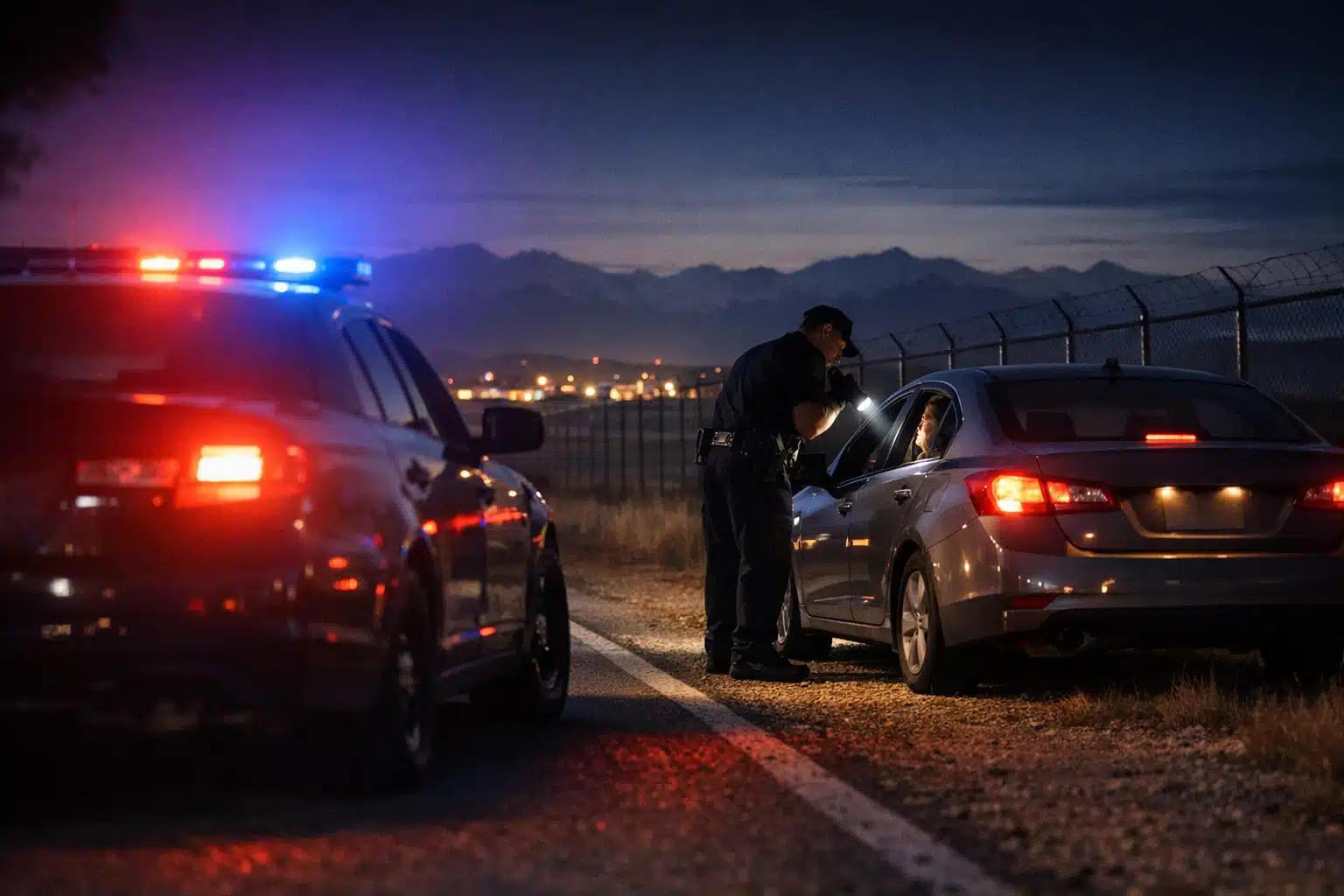
A DUI in Colorado can have serious consequences for military personnel and security clearance holders. A single arrest near bases like Buckley Space Force Base or Fort Carson can trigger a security review, command notification, and civilian court proceedings simultaneously. The situation moves quickly, with stakes extending well beyond standard fines to potentially impact your career and clearance status.
A DUI security clearance Colorado situation moves fast, and the stakes reach far beyond fines. A single arrest near Buckley Space Force Base or Fort Carson can trigger a security review, a command notification, and a civilian court case at the same time.
Service members and clearance holders face consequences that civilians never see. Your career, your clearance, and your rank can all be on the line from one traffic stop.
This article explains how a Colorado DUI affects clearances and military service. You will learn what gets reported, what deadlines matter, and where defense strategy differs for people in uniform.
How a DUI in Colorado Affects Your Security Clearance
A security clearance depends on your judgment, reliability, and financial stability. A DUI arrest raises questions about alcohol use and decision-making under all three categories.
Clearance decisions follow the Adjudicative Guidelines for Determining Eligibility for Access to Classified Information. A DUI commonly falls under Guideline G, which covers alcohol consumption.
One DUI rarely costs a clearance by itself. Adjudicators look at patterns, honesty, and whether you addressed the underlying conduct.
What Clearance Adjudicators Look At
- Whether this is a first offense or part of a pattern
- Your blood alcohol content at the time of arrest
- Whether you reported the incident honestly and on time
- Any alcohol evaluation or treatment you completed
- Evidence of rehabilitation and responsible conduct since
Honesty carries more weight than the arrest itself. Hiding a DUI from a clearance investigator damages your case more than the conviction.
Reporting a DUI on the SF-86 and to Your Security Officer
The SF-86 is the questionnaire used for national security positions. It asks about police involvement, arrests, and alcohol-related incidents within set time frames.

Many agencies require self-reporting of a DUI arrest within a short window. Waiting for your next reinvestigation is usually a mistake.
Follow these steps after a DUI arrest if you hold a clearance:
- Confirm your agency’s self-reporting deadline with your security officer.
- Report the arrest factually without speculating about guilt.
- Keep copies of your court documents and any evaluations.
- Avoid discussing case details that could waive legal protections.
- Coordinate your reporting language with your DUI attorney first.
Reporting the arrest does not require you to confess in court. You can meet disclosure duties and still contest the charge.
DUI Military Career Impact Under the UCMJ
The DUI military career impact runs on a separate track from civilian court. The Uniform Code of Military Justice (UCMJ) governs service members regardless of state outcome.
Article 111 of the UCMJ covers drunken or reckless operation of a vehicle. A command can act even if the civilian case resolves favorably.
Possible military consequences include:
- Nonjudicial punishment under Article 15
- Reduction in rank or loss of pay
- Negative performance evaluations
- Loss of base driving privileges
- Referral for administrative separation in serious cases
A DUI on base often falls under federal or military jurisdiction. A DUI off base in Denver usually runs through Colorado state court.
Colorado DUI and DWAI Explained
Colorado charges two main impaired-driving offenses. The difference matters for clearance reporting and command notification.
- DUI: Driving while substantially incapable of safe operation due to alcohol or drugs.
- DWAI: Driving while ability impaired to the slightest degree.
DWAI carries lighter penalties than DUI in Colorado. A reduction from DUI to DWAI can lessen how an incident reads to adjudicators.
Colorado also recognizes marijuana DUI based on THC blood levels. Drug-related impairment can raise added questions during a clearance review.
Two Cases, Two Deadlines: Court and the Colorado DMV
A Colorado DUI arrest starts two separate matters at once. One is criminal court, and the other is an administrative license action.
You have only seven days to request a DMV hearing after most DUI arrests. Missing that deadline means your license suspension begins automatically.
Here is how the two tracks compare:
- Court case: Handles the criminal DUI or DWAI charge and penalties.
- DMV hearing: Handles your Colorado driver’s license suspension.
- Court deadline: Set by your summons and court schedule.
- DMV deadline: Seven days to request a hearing to contest suspension.
For a service member, a suspended license can block base access and duty assignments. Protecting your license supports your career as much as your court case.
Driving Privileges and Ignition Interlock
Colorado allows many drivers to restore driving with an ignition interlock device. The device requires a breath sample before the vehicle starts.
Early reinstatement with interlock keeps many service members driving to duty. Your attorney can explain eligibility based on your record.
Breath Tests, Blood Tests, and Your Rights in Colorado
Colorado’s express consent law requires chemical testing when lawfully arrested for DUI. You generally choose between a breath test and a blood test.
- Breath test: Fast results, but machines require calibration and proper operation.
- Blood test: Measures THC and alcohol, but handling errors can affect accuracy.
Refusing a test can trigger a longer license revocation. Refusal can also appear as an aggravating detail during a clearance review.
Testing errors happen. An attorney can examine calibration logs, officer conduct, and lab procedures for weaknesses.

 Posted on Google
First Offense Versus Repeat DUI for Service Members
A first offense and a repeat offense carry different weight in every forum. Each one reads differently to a court, a command, and an adjudicator.
- First offense: More room to resolve the case and show rehabilitation.
- Repeat offense: Suggests a pattern that raises Guideline G concerns.
A pattern of alcohol incidents worries clearance adjudicators the most. Addressing the conduct early can change how that pattern is viewed.
Common Mistakes That Hurt Clearance Holders and Service Members
Certain early missteps damage both the court case and the career. Avoiding them protects your record on every front.
- Missing the seven-day DMV hearing deadline.
- Failing to self-report the arrest to a security officer on time.
- Giving a statement to investigators without legal counsel.
- Assuming a dismissed civilian case ends all military action.
- Delaying an alcohol evaluation that could support rehabilitation.
Every case is different, and laws change over time. Facts, jurisdiction, and command policy all shape what happens next.
When Hiring a Denver DUI Attorney Helps
A defense attorney who knows Colorado DUI law and clearance concerns adds real value. The goal is defending the charge without creating new reporting problems.
An attorney can help you:
- Meet both the court and DMV deadlines correctly.
- Pursue a reduction from DUI to DWAI where facts allow.
- Examine breath and blood evidence for errors.
- Coordinate self-reporting language that stays truthful and careful.
- Build a record of rehabilitation for adjudicators to review.
No attorney can promise a dismissal or a saved clearance. A strong defense improves how your case reads in court and to your command.
Key Takeaways for Colorado Service Members and Clearance Holders
A Colorado DUI creates three fronts at once: court, the DMV, and your clearance or command. Acting within the seven-day DMV window and reporting honestly protect your future.
Strong defense and careful disclosure can work together, not against each other. If you hold a clearance or serve in uniform, move quickly after an arrest.
Contact DUI Law Firm Denver for a confidential consultation. Call or text 303‑404‑7492, or email info@DUILawFirmDenver.com to discuss your case.
Sources
- Office of the Director of National Intelligence – SEAD 4, Adjudicative Guidelines
- Colorado General Assembly – Title 42, Colorado DUI Statutes
- Colorado Division of Motor Vehicles – Express Consent and Revocation
- U.S. House Office of the Law Revision Counsel – UCMJ Article 111
Share This Story, Choose Your Platform!
Table of Contents
Emilio was a huge help with my case. I never expected to find somebody who was so knowledgeable and professional. He knew so much about the law there was never a doubt that he was going to get me the best possible outcome. I cannot thank him enough.
Related Reading

A hunting season DUI Colorado charge often starts on a dark county road before dawn. You are driving back from a weekend elk camp near Craig or Gunnison, a loaded cooler in the back, rifles cased behind the seat. A sheriff’s deputy pulls you over for a cracked taillight, smells last night’s beer, and the [...]
An Oktoberfest DUI Colorado arrest frequently starts the same way: three steins of German lager that each carry nearly double the alcohol of a standard domestic beer. A driver who feels fine after a fall festival in Denver can still blow a 0.12 at the roadside. Fall beer festivals create a specific trap because traditional [...]
Arrested for a Denver Broncos game DUI means two separate problems start at once: a criminal case and a driver’s license case. The license case moves faster. You have 7 days from the arrest to request a hearing with the Colorado DMV, or your license suspension begins automatically. Fall Sundays at Empower Field at Mile [...]