Boating Under the Influence at Colorado Reservoirs: How BUI Differs From a Car DUI
Colorado BUI penalties can include up to a year in jail and fines, but unlike a car DUI, a boating conviction does not suspend your driver's license since no operator's license is required for recreational boats.
- BUI and car DUI share similar penalties like jail time and fines, but BUI cases stay in criminal court only with no DMV hearing or license points. A prior BUI can count against you in a future car DUI case.
- Testing on the water often involves blood draws rather than breath tests, and refusal does not trigger automatic license revocation like it does for car DUI. Officers may use seated float tests designed for boat conditions.
- Common enforcement spots include Chatfield, Cherry Creek, and Horsetooth reservoirs, with extra patrols on holiday weekends. An attorney can challenge stop validity, test accuracy, and testing conditions.
A Colorado BUI (Boating Under the Influence) differs from a car DUI primarily in licensing consequences. While BUI penalties can include up to a year in jail and hundreds of dollars in fines, a boating conviction does not suspend your driver's license like a car DUI does. Both offenses carry serious criminal penalties, but only a car DUI directly impacts your driving privileges.
Colorado BUI penalties can reach up to a year in jail and hundreds of dollars in fines, yet a boating conviction does not suspend your driver’s license the way a car DUI does. That difference surprises many people arrested at Chatfield, Cherry Creek, or Horsetooth Reservoir during summer weekends.
Boating under the influence in Colorado carries its own rules, its own testing procedures, and its own consequences. If a park ranger or sheriff’s deputy stopped your boat and asked you to submit to a test, you need to know how your situation compares to a roadside DUI.
Below is a head-to-head look at how boating DUIs and car DUIs differ across penalties, testing, and driving privileges.
What Boating Under the Influence Means in Colorado
Boating under the influence in Colorado applies when someone operates a vessel while impaired by alcohol or drugs. The law covers motorboats, sailboats, and even some non-motorized craft on state waters.
Colorado sets the legal blood alcohol limit for boat operators at 0.08 percent, matching the driving standard. A reading at or above that level supports a BUI charge under state boating law.
The offense lives in Colorado’s boating statutes, not the traffic code. That single distinction changes how the case moves and what a conviction costs you.
Where BUI Enforcement Happens
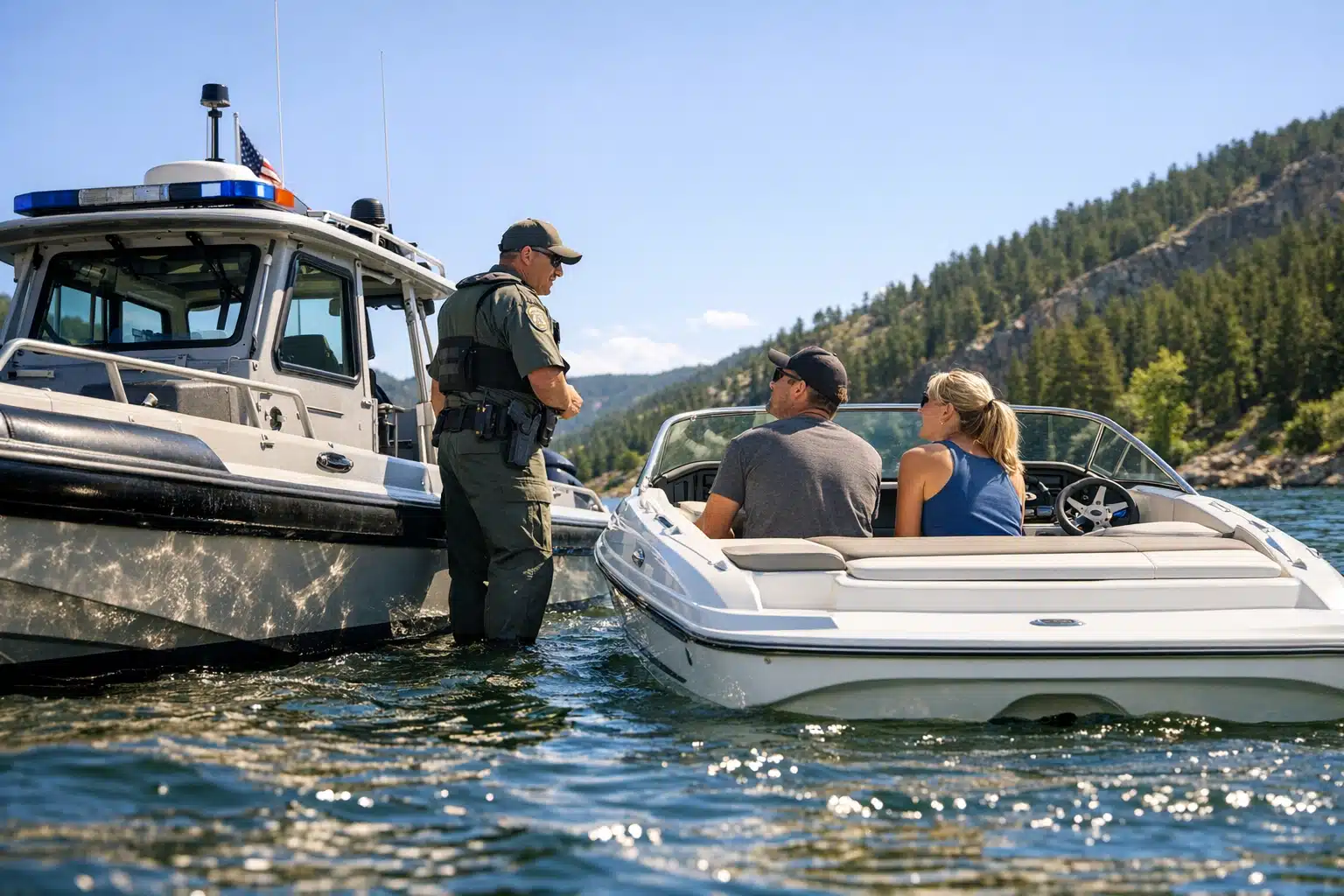
Colorado Parks and Wildlife officers patrol popular reservoirs during peak season. County sheriff’s marine units join them at high-traffic lakes near Denver.
Common enforcement spots include:
- Chatfield Reservoir in Jefferson County
- Cherry Creek Reservoir in Arapahoe County
- Horsetooth Reservoir near Fort Collins
- Boyd Lake and Carter Lake in Larimer County
Holiday weekends bring extra patrols. Memorial Day, the Fourth of July, and Labor Day see focused checks for impaired operators.
How Colorado BUI Penalties Compare to Car DUI Penalties
Colorado BUI penalties resemble car DUI penalties on paper but split apart in important ways. Both can bring jail time, fines, and probation. The driving consequences differ sharply.
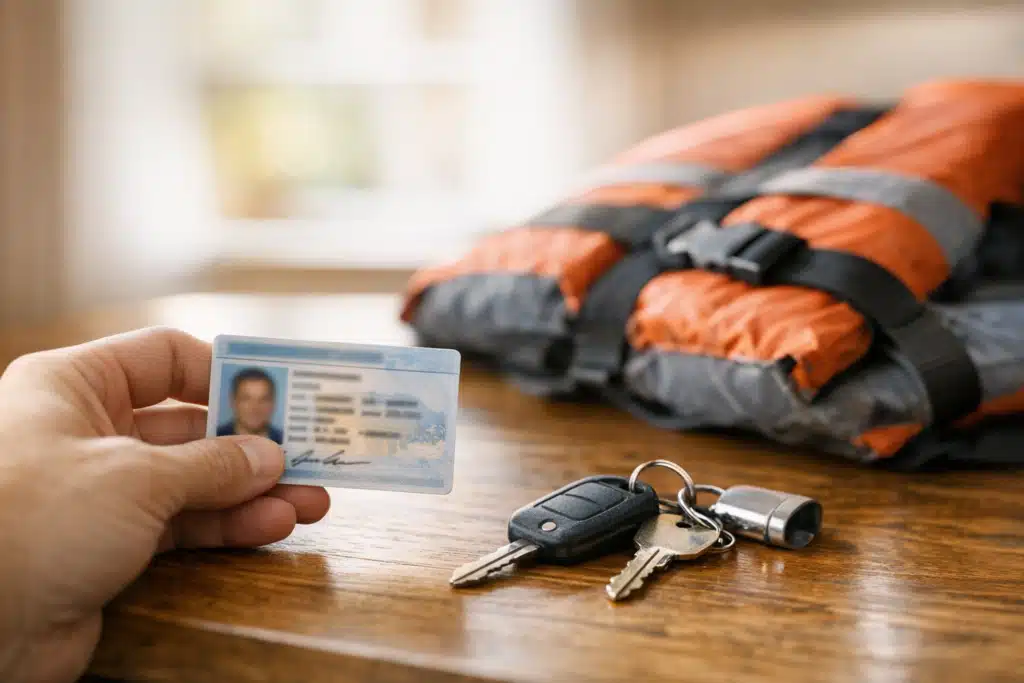
Here is a side-by-side comparison for a first offense:
Car DUI (first offense):
- Up to 1 year in jail
- Fines from $600 to $1,000
- Up to 96 hours of public service
- Automatic license revocation of 9 months
- Points assessed against your driving record
BUI (first offense):
- Up to 1 year in jail
- Fines that can reach several hundred dollars
- Public service and probation conditions
- No automatic driver’s license suspension
- No points against your driving record
A car DUI triggers action from both a criminal court and the Colorado DMV. A BUI usually stays in criminal court only.
Why the License Difference Matters
Your driver’s license lets you operate a car, not a boat. Colorado does not require an operator’s license for most recreational vessels.
Because of that, a BUI conviction does not carry the license revocation that follows a car DUI. You keep your driving privileges even after a boating conviction.
One caution applies. A prior BUI can count as a prior alcohol offense if you later face a car DUI. That link can raise penalties in a future case.
DUI vs DWAI: Does the Split Apply to Boats?
Colorado traffic law separates DUI from DWAI. DWAI means driving while ability impaired, a lesser charge based on any impairment to the slightest degree.
Boating law mirrors this idea. Colorado recognizes both boating under the influence and boating while ability impaired.
The distinction works like this:
- BUI applies at a blood alcohol level of 0.08 or higher, or clear impairment.
- BWAI applies when alcohol or drugs affect the operator to the slightest degree.
A skilled defense attorney sometimes works to reduce a BUI to a BWAI. That mirrors how DWAI defense functions in car cases.
Testing Procedures: BUI vs Car DUI
Chemical testing on the water differs from testing during a traffic stop. Colorado’s express consent law governs car DUI testing and controls your right to choose between breath and blood.
Boat operators face a related but separate framework. Understanding both helps you know what happened during your stop.
Breath and Blood Testing on the Water
Officers at a reservoir may request a breath or blood test if they suspect impairment. Blood tests are common on the water because portable breath machines are less practical on a rocking boat.
A breath test measures alcohol from your lungs. A blood test measures alcohol or drugs directly from a sample drawn by a qualified technician.
Blood testing matters more in marijuana DUI and BUI cases. Breath machines cannot detect THC, the active compound in cannabis.
Field Sobriety Testing on a Boat
Standard roadside tests assume solid, level ground. A boat deck, life jacket, and sun glare make those tests harder to perform fairly.
Officers sometimes use seated float tests designed for boaters. These check balance and coordination without asking you to walk a line.
Poor conditions can affect test results. A defense attorney reviews whether the testing setting was fair and whether the officer followed proper method.
Refusing a Test: Boat vs Car
Refusing a test carries different weight on the water than on the road. Colorado’s express consent law penalizes car DUI refusals with a one-year license revocation.
A boating refusal does not trigger that automatic license action. Your driver’s license is not tied to your boating privileges.
That said, refusal can still be used against you. Prosecutors may point to a refusal as evidence at trial in a BUI case.

 Posted on Google
What Happens After a BUI Arrest at a Colorado Reservoir
A BUI case follows a criminal court path. Knowing the steps helps you prepare for what comes next.
- You receive a summons or citation, or are booked and released.
- An arraignment sets your first court date and formal charge.
- Your attorney requests discovery, including test results and officer reports.
- Pretrial motions may challenge the stop, testing, or evidence.
- The case resolves by plea agreement, dismissal, or trial.
Unlike a car DUI, there is no separate DMV hearing to schedule. That removes one deadline but does not make the criminal case less serious.
Every case turns on its own facts. Test accuracy, the reason for the stop, and officer conduct all shape what happens.
Common Mistakes After a Reservoir Stop
People make avoidable errors after a boating stop. A few missteps can weaken your defense before you reach court.
- Assuming a BUI is minor because your license is safe
- Talking too much to officers about how much you drank
- Missing the first court date listed on the citation
- Failing to preserve details about weather, waves, and testing conditions
- Waiting weeks before contacting a defense attorney
A BUI is a criminal charge that can bring jail time. Treat it with the same seriousness as any car DUI.
When a Colorado BUI Attorney Can Help
An attorney reviews whether officers had valid reason to stop your vessel. Reasonable suspicion rules apply on the water as on the road.
Defense work in a BUI case may include:
- Questioning the accuracy of breath or blood test results
- Reviewing whether float tests were administered fairly
- Examining chain of custody for blood samples
- Seeking a reduction from BUI to BWAI where facts allow
Repeat offenses raise the stakes. A prior BUI or car DUI can increase penalties in later cases, making early legal help worthwhile.
Key Takeaways
Colorado BUI penalties can include jail and fines but do not suspend your driver’s license the way a car DUI does. Testing on the water leans toward blood draws, and refusal does not carry the same automatic license loss.
Acting quickly after a boating under the influence Colorado arrest protects your rights and your defense. Every case is different, and Colorado law can change, so speak with an attorney about your circumstances.
If you were arrested for BUI at a Colorado reservoir, contact DUI Law Firm Denver for a confidential consultation. Call or text 303‑404‑7492, email info@DUILawFirmDenver.com, or visit https://duilawfirmdenver.com.
Sources
- Colorado Parks and Wildlife – Boating Regulations
- Colorado General Assembly – Title 33 Parks and Wildlife Statutes
- Colorado DMV – Express Consent and Revocation
- U.S. Coast Guard – Recreational Boating Statistics
Share This Story, Choose Your Platform!
Table of Contents
My World changed dramatically in September 2017. I had never been in any sort of trouble with the law and now I was being cited for a DUI. I was scared, nervous, and had no idea what to do. I made the choice to contact an attorney, and DUI Law Firm Denver information was sent to me by a friend. I called Emilio right away to discuss my case.
The very first time we talked Emilio took almost an hour to listen to what was happening and offered specific recommendations to help me battle through this process. At that point I decided to hire Emilio and we began a long, almost 6 month journey, to resolve the issues surrounding this DUI.
Faced with very few options to help me mitigate my impending punishments, DUI Law Firm Denver never gave up helping me to fight as hard as we could for the best possible outcome in court. He made suggestions along the way that I truly believe turned the tides of this case. To the very end he stood beside me, believed in my story, and fought to help me in any way he could, even though he was pressed against a pretty solid wall.
At the end of it all, given what could have happened, I was very satisfied to come out of this with hope for a brighter future. I am taking the steps necessary to get back on track and without Emilio’s help I would have been doomed to a much greater punishment.
Related Reading

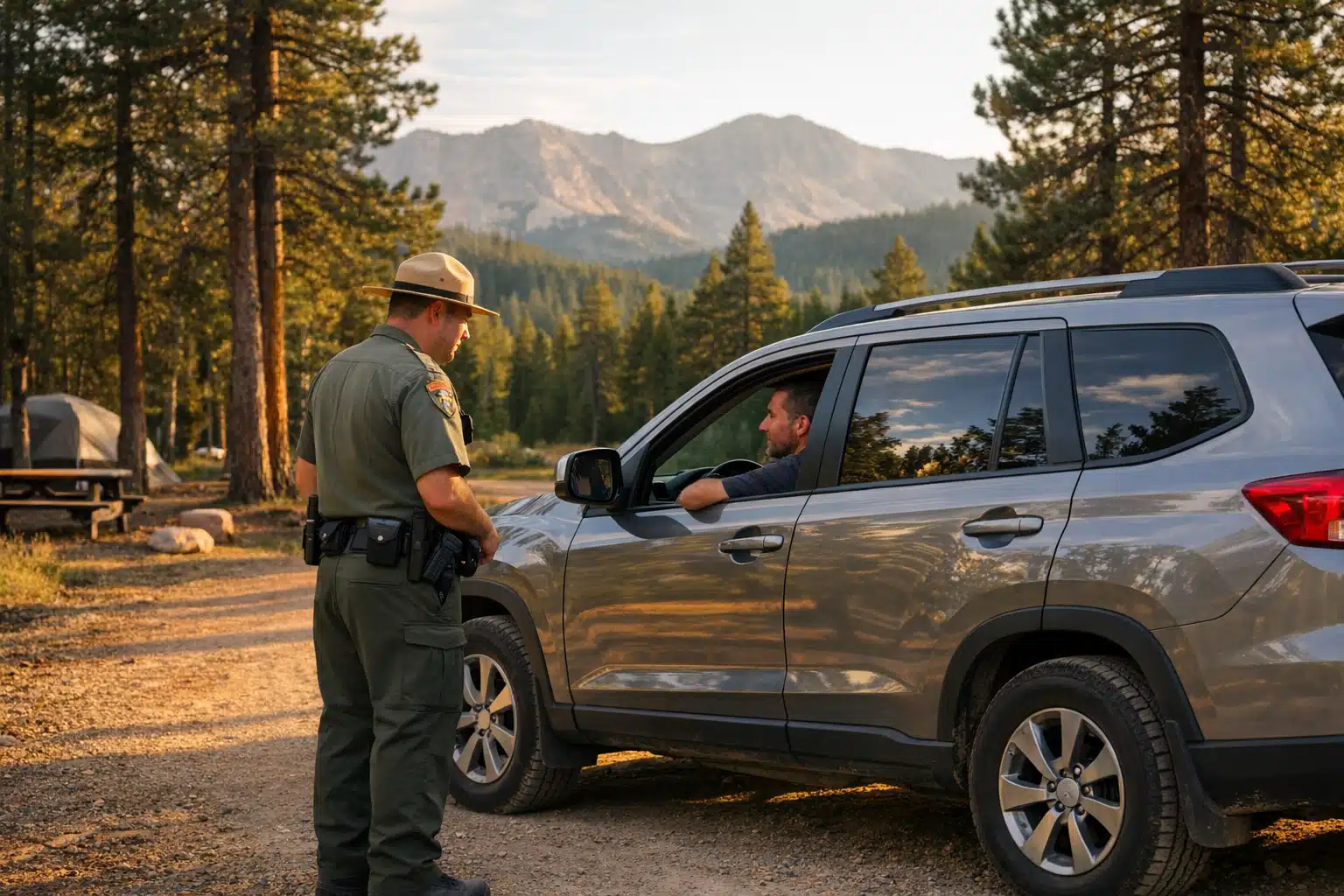
Yes, you can face a DUI on federal land in Colorado, even inside a campground loop or on a national forest road. Rangers, state troopers, and county deputies all have authority in different areas. A summer weekend at a Colorado campsite can end with handcuffs and a court date. Colorado’s camping season brings heavy traffic [...]

Under Colorado law, the necessity defense may apply if a driver can prove they operated a vehicle while impaired to prevent a greater and more immediate harm, and that no reasonable legal alternative existed. This defense is rarely successful because Colorado courts apply strict legal standards. Simply believing it was safer or more convenient to [...]
If you’ve been charged with a DUI in Colorado, you may wonder whether you can defend yourself using your own evidence. Photos, videos, receipts, witness statements, and medical records can all play a role in challenging a DUI charge. However, evidence alone rarely determines the outcome of a case. Successfully defending a Colorado DUI requires [...]