DUI While Camping or at a Colorado Campground: Can You Be Charged on Private or Federal Land?
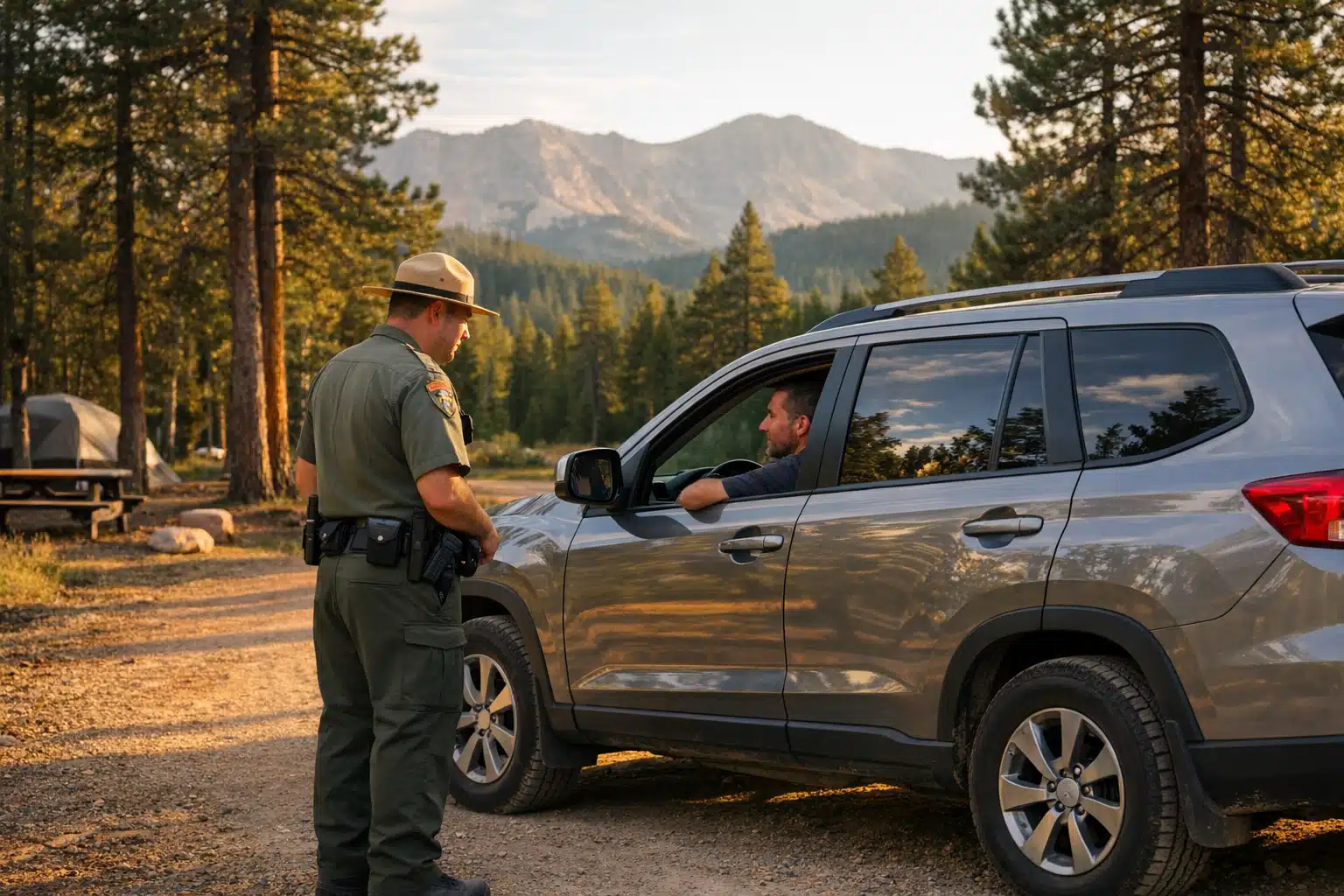
You can face a DUI on federal land in Colorado, including campground loops and national forest roads. Rangers, state troopers, and county deputies all have authority to make arrests in different areas.
- Colorado law applies to driving a vehicle anywhere in the state while impaired - even moving your truck a few feet between campsites can lead to charges. Federal cases may use Colorado's 0.08 limit through assimilation rules.
- Multiple agencies patrol camping areas including National Park Service rangers, Forest Service officers, BLM rangers, and county deputies. Cross-deputization agreements mean officers may share authority on the same stop.
- Remote testing creates defense opportunities since blood draws may happen hours later at distant hospitals. You must request a Colorado DMV hearing within 7 days if state law applies to protect your license.
Yes, you can be charged with a DUI while camping in Colorado on both federal and private land. Rangers, state troopers, and county deputies all have authority to enforce DUI laws in different areas, including campground loops and national forest roads. A simple weekend camping trip can result in arrest and a court date if you operate a vehicle while impaired.
Yes, you can face a DUI on federal land in Colorado, even inside a campground loop or on a national forest road. Rangers, state troopers, and county deputies all have authority in different areas. A summer weekend at a Colorado campsite can end with handcuffs and a court date.
Colorado’s camping season brings heavy traffic to national forests, state parks, and BLM areas. A DUI campground arrest in a Colorado summer raises questions most drivers never think about. Which court hears the case? Who had the power to stop you? Does state or federal law apply?
This post explains how jurisdiction works, where charges get filed, and why camping DUIs create procedural issues worth knowing about.
Can You Get a DUI on Federal Land in Colorado?
A DUI on federal land in Colorado happens when you drive impaired within a national forest, national park, or BLM-managed area. Federal officers and state officers may both patrol these places. The location of your stop decides who charges you and where.
Colorado has millions of acres of federal land. Popular spots include Pike National Forest, Arapaho National Forest, and Rocky Mountain National Park. Roads inside these areas are patrolled by different agencies depending on ownership.
Here are the main types of land where camping DUIs occur:
- National forests managed by the U.S. Forest Service
- National parks managed by the National Park Service
- BLM land managed by the Bureau of Land Management
- Colorado state parks managed by Colorado Parks and Wildlife
- Private campgrounds and RV parks
Each category comes with its own rules about who prosecutes and which court hears the case.
Does Driving on a Campground Loop Count as Driving?
Yes, driving on a campground loop can support a DUI charge in Colorado. Colorado law does not require you to be on a public highway. The law applies to driving a vehicle anywhere in the state while impaired.
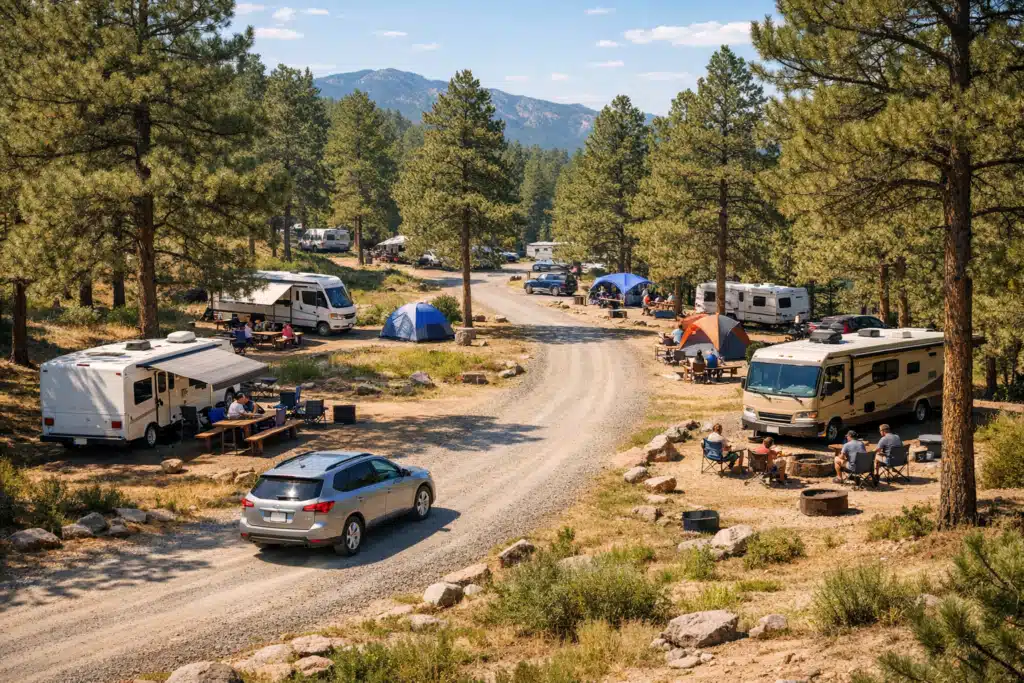
Colorado’s DUI statute covers any person who drives a motor vehicle. Courts have read “drive” broadly. Moving your truck a few feet between campsites may count.
Common camping scenarios that lead to charges include:
- Backing an RV into a site after drinks around the fire
- Driving to a nearby trailhead early in the morning
- Moving a vehicle to let another camper pass
- Leaving a campground to reach a store or gas station
Even short movements on private campground property can bring a stop. Rangers and deputies patrol these areas during busy weekends.
Federal DUI vs. State DUI: What Changes on Federal Land
A DUI on federal land may be charged under federal law or Colorado law. The answer depends on the type of federal land and its jurisdiction status. This distinction affects your court, your penalties, and your defense.
Below is a plain comparison of the two paths.
State DUI Charge
- Filed in a Colorado county court
- Governed by Colorado DUI and DWAI laws
- Handled by a local district attorney
- Triggers Colorado DMV license consequences
Federal DUI Charge
- Filed in U.S. District Court or before a federal magistrate
- Governed by federal regulations that adopt state limits
- Handled by a federal prosecutor
- May carry separate federal penalties
National parks often use a system called “assimilation.” Federal courts apply Colorado’s DUI standards to conduct on park roads. That means Colorado’s 0.08 limit and DWAI rules can appear in a federal case.
Who Can Stop and Arrest You at a Colorado Campground?
Several officers hold authority to stop drivers on or near federal and state land. The agency depends on the property and any shared agreements. Knowing who stopped you matters for your defense.
Officers who may make a camping DUI stop include:
- National Park Service rangers on national park roads
- U.S. Forest Service officers in national forests
- BLM law enforcement rangers on BLM land
- Colorado State Patrol on state highways and some access roads
- County sheriff deputies under local and shared authority
- Colorado Parks and Wildlife officers in state parks
Many rural counties have cross-deputization agreements. A federal ranger and a county deputy may work the same stop. That overlap creates questions about who had authority to act.
Why Camping DUIs Create Procedural Issues for the Defense
Camping DUIs raise legal questions that a routine city stop does not. Jurisdiction, agency authority, and testing methods all come into play. A defense attorney reviews each of these details closely.
Issues that may arise in a federal or campground DUI include:
- Whether the arresting officer had authority on that specific land
- Whether the case belongs in state or federal court
- Whether remote testing followed proper breath or blood procedures
- Whether the officer had reasonable suspicion to stop you
- Whether roadside conditions affected field sobriety tests
Testing in remote areas can be a weak point for the prosecution. A blood draw may occur hours later at a distant hospital. Breath tests may involve delays that affect the reading.
These delays matter because alcohol levels change over time. An attorney may question whether the result reflects your level while driving.
DUI vs. DWAI Under Colorado Law
Colorado has two main impaired driving offenses. Both can appear in a campground or federal land case that uses Colorado standards.
- DUI applies when alcohol or drugs substantially affect your ability to drive safely.
- DWAI applies when alcohol or drugs affect your ability to drive to the slightest degree.
A DUI carries heavier penalties than a DWAI. A blood alcohol level of 0.08 or higher supports a DUI. A level between 0.05 and 0.08 may support a DWAI.
Marijuana adds another layer for Colorado campers. Colorado uses a 5 nanogram THC limit for driving. A marijuana DUI can occur even on quiet forest roads.

 Posted on Google
What to Do After a DUI Arrest at a Colorado Campground
Acting promptly protects your rights after a camping DUI arrest. Both court and DMV deadlines move quickly. Missing them can cost you your license.
Steps to take after a campground or federal land DUI:
- Write down where the stop happened and which agency responded.
- Note the type of land: park, forest, BLM, state park, or private.
- Record any testing details, including time and location.
- Request a Colorado DMV hearing within 7 days if state law applies.
- Contact a Colorado DUI defense attorney before your first court date.
The 7-day DMV deadline applies to many Colorado DUI cases. A federal case may follow a different schedule. An attorney can confirm which deadlines apply to your situation.
License Consequences for a Colorado Camping DUI
A camping DUI can affect your Colorado driver’s license. Colorado DMV consequences depend on your test result and history. Refusing a test brings its own penalties.
Common license issues include:
- License suspension after a failed or refused test
- Ignition interlock device requirements for reinstatement
- Points against your driving record
- Longer suspensions for repeat offenses
A first offense differs from a repeat offense in penalties and interlock terms. Underage drivers face lower limits under Colorado’s rules. Each situation carries its own path back to driving.
When to Talk to a Colorado DUI Attorney
Talk to an attorney early if your DUI happened on federal or campground land. Jurisdiction questions and remote testing issues can shape your defense. These cases rarely follow the same path as a city arrest.
An attorney can review the stop, the agency, and the court venue. Each case differs, and no result is promised. Colorado laws change, and your circumstances matter to the analysis.
Conclusion
You can face a DUI on federal land in Colorado, including inside campground loops and forest roads. Jurisdiction, agency authority, and remote testing create issues worth reviewing with counsel. Acting fast on court and DMV deadlines protects your rights.
If you were arrested at a Colorado campground or on federal land, contact DUI Law Firm Denver for a confidential consultation. Call or text 303‑404‑7492, or email info@DUILawFirmDenver.com.
Sources
- Colorado General Assembly – Colorado Revised Statutes Title 42 (Vehicles and Traffic)
- National Park Service – Law Enforcement Authority
- Colorado DMV – Express Consent and Revocation
- Bureau of Land Management – Law Enforcement
Share This Story, Choose Your Platform!
Table of Contents
My daughter was in jeopardy of losing her driver’s license, but with Emilio De Simone’s diligent work of defense, she was able to keep her license. I highly recommend his services!
Related Reading

Colorado BUI penalties can reach up to a year in jail and hundreds of dollars in fines, yet a boating conviction does not suspend your driver’s license the way a car DUI does. That difference surprises many people arrested at Chatfield, Cherry Creek, or Horsetooth Reservoir during summer weekends. Boating under the influence in Colorado [...]

Under Colorado law, the necessity defense may apply if a driver can prove they operated a vehicle while impaired to prevent a greater and more immediate harm, and that no reasonable legal alternative existed. This defense is rarely successful because Colorado courts apply strict legal standards. Simply believing it was safer or more convenient to [...]
If you’ve been charged with a DUI in Colorado, you may wonder whether you can defend yourself using your own evidence. Photos, videos, receipts, witness statements, and medical records can all play a role in challenging a DUI charge. However, evidence alone rarely determines the outcome of a case. Successfully defending a Colorado DUI requires [...]