Early Fall Daylight Changes and DUI Stops: How Shorter Days Affect Field Sobriety Tests
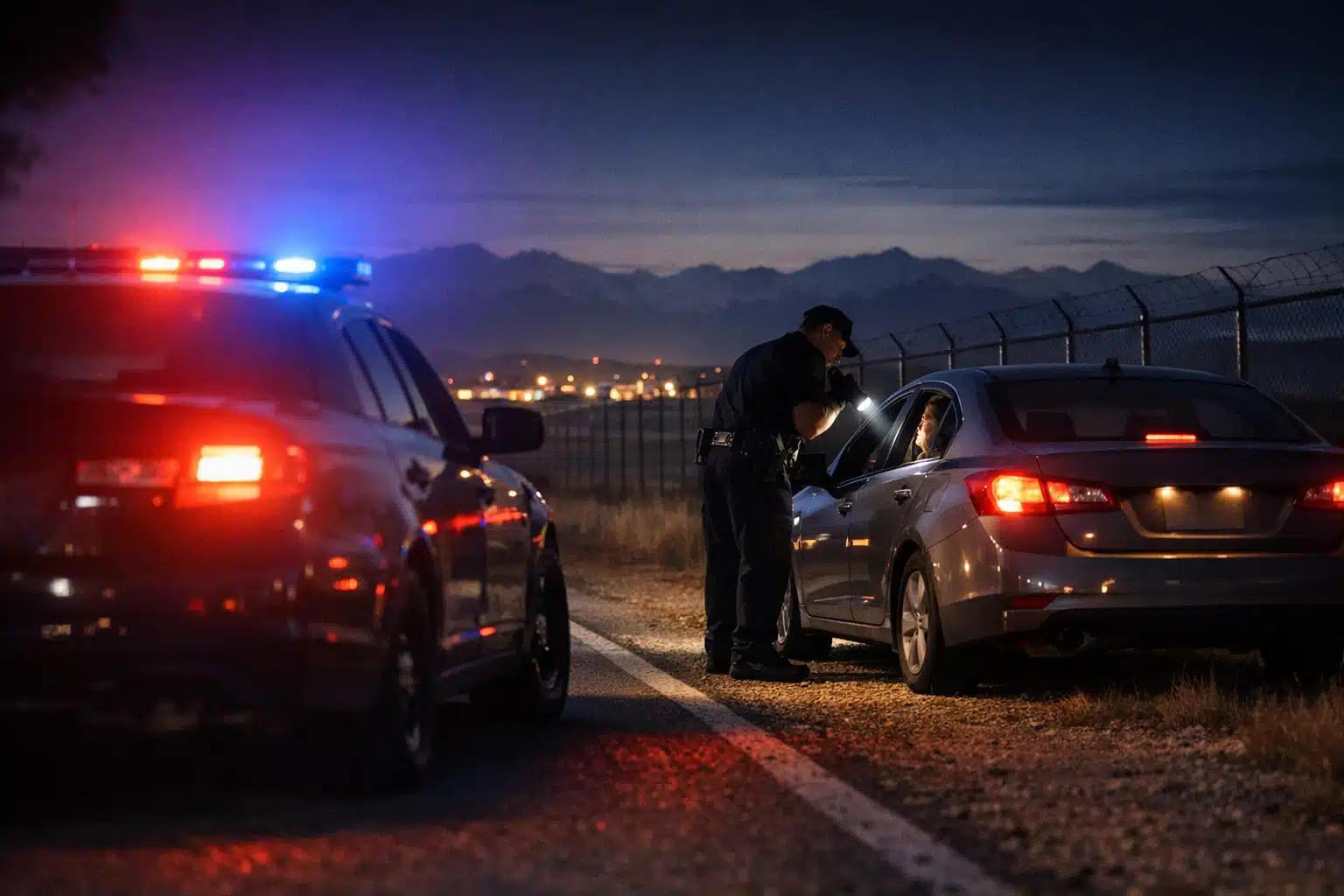
If you were stopped for DUI on a dark October evening in Denver, poor lighting may have affected your roadside tests. Field sobriety test lighting in Colorado directly affects how reliable those tests are, and shorter fall days make this a real concern. Officers often conduct these tests in dim conditions that work against sober drivers.
Colorado’s daylight shrinks fast after the autumn equinox. By late October, many drivers face sobriety tests in near-total darkness on unlit roads. This matters because field sobriety tests were designed and validated under controlled conditions, not on a shadowy shoulder of I-25.
Below you learn how reduced daylight affects roadside testing, what Colorado law requires, and when a lighting-based defense may apply to your case.
Why Shorter Fall Days Change DUI Stops in Colorado
Reduced daylight means more DUI stops happen after dark. From late September through November, sunset in Denver moves earlier each week. Many evening commutes and dinner outings now end in darkness.
Officers conduct standardized field sobriety tests on the roadside during these stops. These tests measure physical coordination and eye movement. Darkness, headlight glare, and passing traffic can all distort the results.
After the fall clock change, the shift grows sharper. Drivers who left work in daylight weeks earlier now drive home in darkness. More sober drivers end up performing coordination tests in conditions that invite mistakes.
Common Fall Stop Scenarios in Denver
- A 6:30 p.m. stop on an unlit stretch of Santa Fe Drive in November
- Roadside testing beside headlight glare on Colorado Boulevard
- A gravel shoulder on a rural county road with no streetlights
- Testing in rain or early frost that reduces visibility further
How Field Sobriety Test Lighting in Colorado Affects Accuracy
Field sobriety tests rely on an officer observing small physical details. Poor lighting makes accurate observation harder. The three standardized tests each depend on clear visual conditions.
The National Highway Traffic Safety Administration developed three validated tests. Colorado officers use them during most DUI stops. Each one can be compromised by darkness.
The Three Standardized Tests and Lighting
- Horizontal Gaze Nystagmus (HGN): The officer watches your eyes follow a pen or light. In darkness, headlights and flashing patrol lights can cause involuntary eye jerking unrelated to alcohol.
- Walk-and-Turn: You walk heel-to-toe along a line. A line you cannot see clearly leads to missteps that look like impairment.
- One-Leg Stand: You balance on one foot. Uneven, poorly lit ground makes balance harder for anyone, sober or not.
Each test assumes you can see where to walk, stand, and focus. Darkness removes that assumption. A sober person may stumble because the surface was invisible, not because of alcohol.
What Colorado DUI Law Says About Field Sobriety Tests
Field sobriety tests in Colorado are voluntary. You can decline them without the automatic license penalty that applies to a refused chemical test. Many drivers do not know this at the roadside.
Colorado law treats chemical testing differently. Under the state’s express consent law, refusing a breath or blood test after a lawful arrest carries a license penalty. Roadside coordination tests do not carry that same consequence.
This distinction matters for a DUI stop poor lighting defense. When roadside tests happen in poor conditions, their value as evidence weakens. A skilled attorney can question whether the officer could accurately observe anything at all.
DUI vs. DWAI in Colorado
- DUI: Driving under the influence, applying when alcohol or drugs substantially affect your ability to drive safely.
- DWAI: Driving while ability impaired, applying when alcohol or drugs affect your driving to the slightest degree.
Both charges can rely on field sobriety test results. If those tests were conducted in poor lighting, the evidence behind either charge may be open to question.
How a Poor Lighting Defense Works in a DUI Case
A poor lighting defense challenges the reliability of what the officer claims to have seen. Darkness affects both your performance and the officer’s observations. Your attorney examines both sides.
This defense does not claim you were definitely sober. It argues that the test conditions were too flawed to prove impairment. That difference matters to Colorado courts weighing the evidence.
Evidence an Attorney May Review
- Body camera and dash camera footage: Video shows the real lighting conditions at the scene.
- Time of the stop: Records confirm how dark it was based on sunset and weather data.
- Location details: Whether streetlights, shoulders, or road surfaces supported fair testing.
- Officer positioning: Where patrol headlights and flashing lights pointed during the HGN test.
- Weather reports: Rain, fog, or frost that reduced visibility that evening.
Dash and body camera footage often tells a different story than a written report. An officer may describe stable conditions. The video may show a dark, uneven shoulder beside moving traffic.
Common Mistakes Drivers Make During Fall DUI Stops
Many drivers hurt their own cases without realizing it. Knowing what to avoid helps protect your rights. Every stop is different, but some patterns repeat.
- Agreeing to field sobriety tests on dangerous, unlit ground
- Not mentioning that they could not see the line or surface
- Assuming roadside tests are required by law
- Failing to note poor weather or glare to their attorney later
- Waiting too long to request a DMV hearing after arrest
The DMV hearing deadline is strict in Colorado. You have seven days from a license revocation notice to request a hearing. Missing this window can cost you a chance to keep driving.

 Posted on Google
What to Do After a DUI Arrest in Denver This Fall
Acting quickly protects both your license and your defense. Colorado DUI cases move on two tracks at once. One runs through the courts, the other through the Colorado DMV.
Steps to Take Right Away
- Write down everything you remember: Note the time, weather, lighting, and road surface at the stop.
- Request your DMV hearing within seven days: This protects your driving privileges during the case.
- Preserve any evidence: Photos of the location in similar conditions can help.
- Contact a DUI defense attorney: Early review of footage matters most while it still exists.
- Avoid discussing your case: Say nothing about the stop on social media.
Camera footage is not kept forever. Agencies may overwrite recordings after a set period. Prompt action helps your attorney secure the evidence that shows true lighting conditions.
When Hiring a DUI Attorney Helps
A lighting-based defense requires careful review of technical evidence. An attorney who handles Colorado DUI cases knows how to read footage, weather data, and test records together. That combination can reveal weaknesses in the state’s case.
Not every case involves poor lighting, and not every poor lighting claim succeeds. An honest attorney reviews your facts before suggesting any strategy. Each case turns on its own details.
Whether you face a first-time DUI, a repeat charge, an underage case, or a marijuana DUI, the lighting conditions of your stop deserve attention. The same holds for cases involving breath tests, blood tests, or an ignition interlock requirement.
Conclusion
Shorter fall days push more DUI stops into darkness, and poor lighting can distort field sobriety test results. A field sobriety test lighting Colorado defense questions whether an officer could fairly judge your performance at all. Acting fast protects your license, your evidence, and your options.
If you were arrested after a dark fall DUI stop, DUI Law Firm Denver can review your case confidentially. Call or text 303‑404‑7492, email info@DUILawFirmDenver.com, or visit https://duilawfirmdenver.com to discuss your situation.
Sources
- National Highway Traffic Safety Administration – Alcohol-Impaired Driving Countermeasures
- Colorado Department of Revenue, Division of Motor Vehicles – Driver License Reinstatement and Hearings
- Colorado General Assembly – Title 42 Motor Vehicles and Traffic Regulation
- Sunrise and Sunset Times – Denver, Colorado
Share This Story, Choose Your Platform!
Table of Contents
When I received my DUI, it was one of the toughest challenges I had to face. I knew I needed an experienced criminal law attorney to help get me through the court process. After meeting with Emilio and his entire team I knew I was in great hands. Their knowledge about the law combined with years of experience made me feel extremely confident going though this difficult time. The DUI Law Firm team walked me through every step in a timely fashion, never leaving my side, making it a successful outcome. I am extremely grateful for what they had accomplished for me.
Related Reading

A DUI security clearance Colorado situation moves fast, and the stakes reach far beyond fines. A single arrest near Buckley Space Force Base or Fort Carson can trigger a security review, a command notification, and a civilian court case at the same time. Service members and clearance holders face consequences that civilians never see. Your [...]
A hunting season DUI Colorado charge often starts on a dark county road before dawn. You are driving back from a weekend elk camp near Craig or Gunnison, a loaded cooler in the back, rifles cased behind the seat. A sheriff’s deputy pulls you over for a cracked taillight, smells last night’s beer, and the [...]
An Oktoberfest DUI Colorado arrest frequently starts the same way: three steins of German lager that each carry nearly double the alcohol of a standard domestic beer. A driver who feels fine after a fall festival in Denver can still blow a 0.12 at the roadside. Fall beer festivals create a specific trap because traditional [...]