What Happens at Your First DUI Court Appearance in Denver?
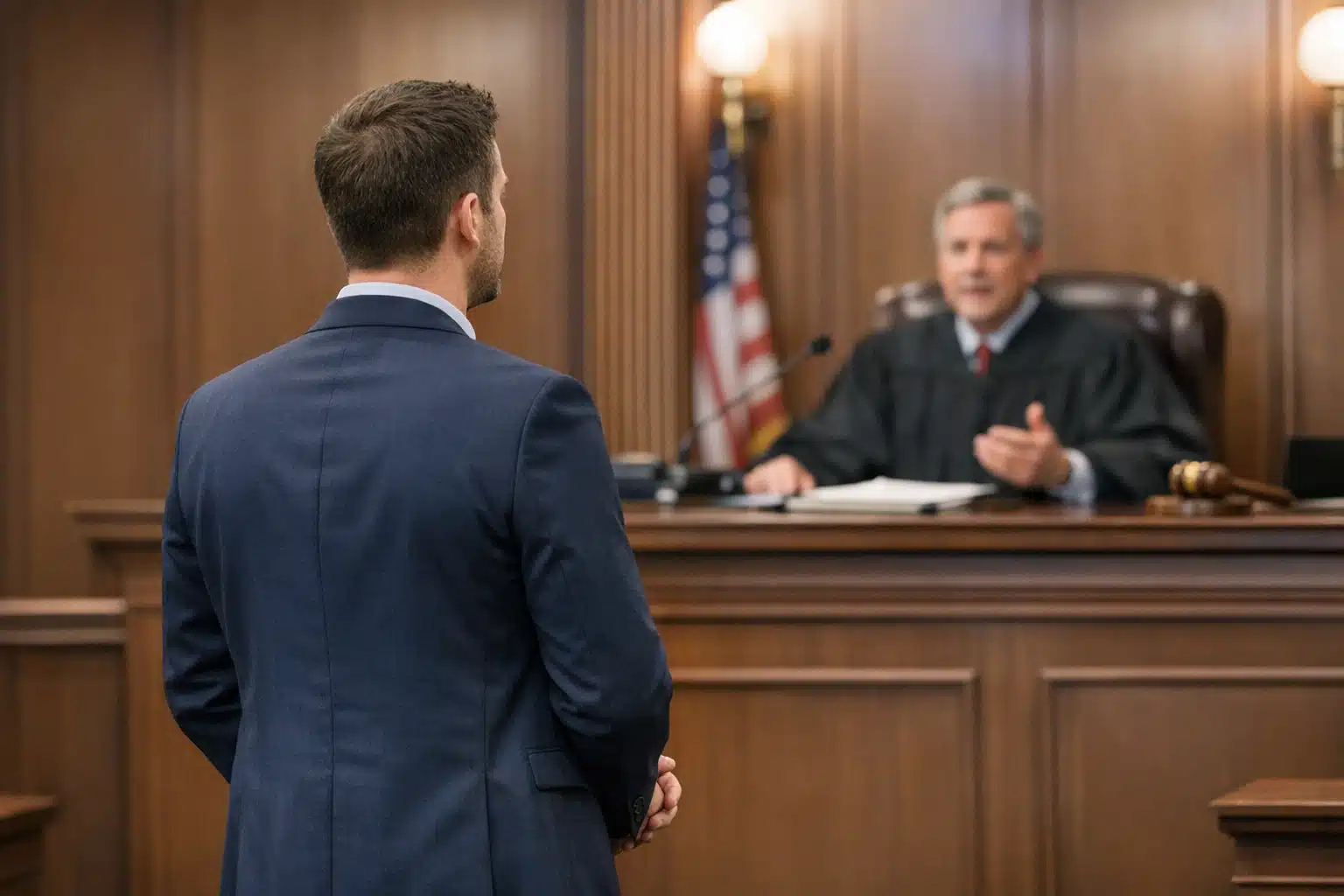
A first DUI court appearance in Denver is an arraignment where the judge reads charges and asks for a plea - not a trial. The hearing is brief, but defendants must also act within seven days to request a separate DMV hearing to protect their license.
- Colorado charges either DUI or DWAI depending on impairment level, with DWAI carrying lighter penalties. Most defense attorneys recommend pleading not guilty at arraignment to preserve time for reviewing evidence.
- A DUI arrest creates two separate cases - a criminal court matter and a DMV administrative case about your license. Missing the seven-day DMV deadline triggers automatic license revocation.
- Common mistakes include skipping the DMV hearing request, pleading guilty before reviewing evidence, and arriving late. Having an attorney early can help file deadlines and identify weaknesses in testing procedures.
Your first DUI court appearance in Denver is called an arraignment. During this hearing, you formally learn the charges filed against you and enter a plea of guilty, not guilty, or no contest. The court will also address bail conditions, set future court dates, and inform you of your rights. Missing this appearance can result in a warrant for your arrest.
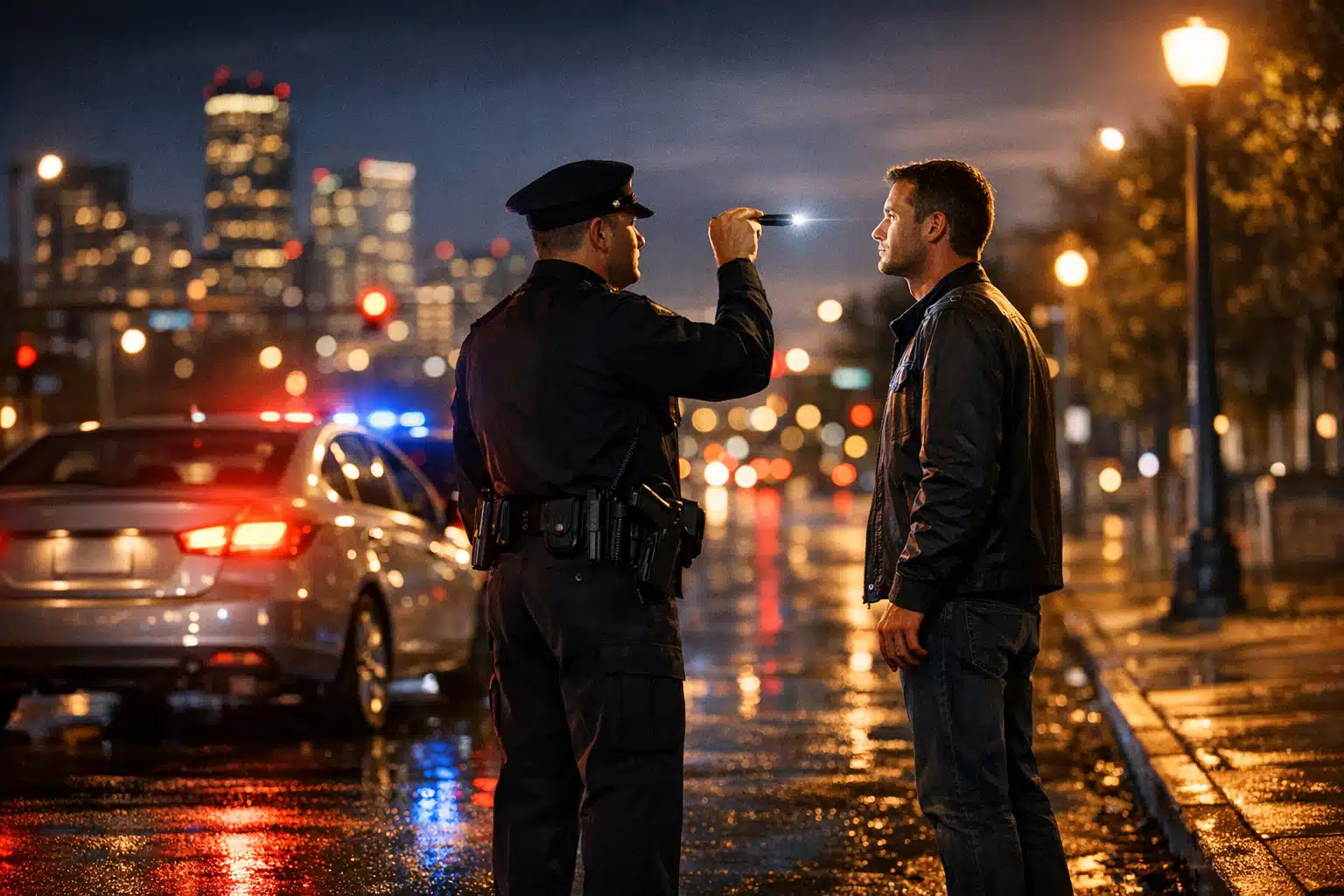
Your first DUI court appearance in Denver is a hearing called an arraignment, where you formally learn the charges against you and enter a plea. If you were arrested near Speer Boulevard on a Friday night, you may have left jail with a pink summons listing a court date at the Lindsey-Flanigan Courthouse. That single sheet of paper is your first deadline, and missing it can trigger a warrant for your arrest.
Most people walking into a Denver courtroom for the first time have never faced criminal charges. They feel anxious about the unknown. This walkthrough covers what to expect at DUI court in Denver, from the moment you find your courtroom to the choices you may face after the judge calls your name.
What Your First DUI Court Appearance in Denver Actually Involves
An arraignment is a short hearing. The judge reads the charges, confirms you understand them, and asks how you plead. You are not put on trial that day.
Colorado prosecutors charge two main alcohol-related driving offenses. Knowing which one you face changes how the hearing unfolds.
- DUI applies when alcohol or drugs substantially affect your ability to drive safely.
- DWAI applies when alcohol or drugs affect your driving to the slightest degree.
A DWAI carries lighter penalties than a DUI in Colorado. Your first court date is often where you first see which charge the district attorney chose.
Where Your Denver DUI Case Is Heard
Denver DUI cases move to different courtrooms depending on where the arrest happened. A stop inside Denver city limits usually lands in Denver County Court at the Lindsey-Flanigan Courthouse on Colfax Avenue.

An arrest in a suburb like Aurora, Lakewood, or Centennial goes to that jurisdiction’s municipal or county court. The address printed on your summons tells you exactly where to appear.
Arrive early. Security screening at the courthouse entrance can take 20 minutes on a busy morning. Bring a valid ID and your summons paperwork.
Step by Step: What to Expect at DUI Court in Denver
Here is the sequence most first-time defendants follow on their arraignment date.
- Check the electronic docket board in the lobby to find your courtroom number.
- Enter the courtroom quietly and sit in the gallery until your name is called.
- Listen for the judge or clerk to address the room about rights and procedures.
- Approach the podium when your name is called and state your name for the record.
- Respond to the judge’s questions about representation and your plea.
- Receive your next court date and any conditions before you leave.
The whole appearance can last just a few minutes once your name is called. The waiting is usually the longest part.
The Two Cases You Face After a Denver DUI Arrest
A DUI arrest creates two separate matters that run on different tracks. Many people do not realize this until it is too late.
- The criminal case begins with your court arraignment and handles the DUI or DWAI charge.
- The DMV case is a separate administrative matter about your driver’s license.
Your court date does not pause the Colorado DMV clock. You have seven days from your arrest to request a DMV hearing to contest your license revocation.
Miss that seven-day window, and your license revocation begins automatically. The judge at your criminal arraignment cannot fix a missed DMV deadline.
Pleas You May Enter at Your First Court Date
The judge will ask how you plead. Colorado defendants have three standard choices.
- Not guilty keeps your case open and lets your attorney review the evidence.
- Guilty ends the case and moves you straight to sentencing.
- No contest accepts the penalty without admitting fault.
Many defense attorneys advise entering a not-guilty plea at arraignment. This preserves your right to examine the breath or blood test results and police reports before deciding anything.
Pleading guilty at your first appearance closes the door on defenses you may not know you have. Once entered, that plea is hard to withdraw.
What the Judge May Order Before You Leave
After you enter a plea, the judge may set conditions of release. For a first-time DUI, these conditions are usually straightforward.
Common conditions include no new criminal offenses and no driving without a valid license. In some cases involving high breath results, a judge may require monitored sobriety or an ignition interlock device.
The judge will also schedule your next hearing. A not-guilty plea moves your case to a pretrial conference where your attorney and the prosecutor discuss the evidence.

 Posted on Google
First Offense Versus Repeat Offense at Arraignment
Your criminal history shapes what happens at your first court date. Colorado treats repeat impaired-driving offenses far more seriously.
- First offense: Release conditions are often minimal, and jail is not usually raised at arraignment.
- Repeat offense: The prosecutor may request stricter conditions, and a fourth DUI is a felony in Colorado.
A fourth or subsequent DUI is charged as a class 4 felony under Colorado law. Felony arraignments involve added steps and higher stakes.
Common Mistakes People Make at Their First Denver DUI Hearing
Small missteps at arraignment can affect your entire case. A few patterns show up again and again.
- Skipping the DMV hearing request because they focused only on court.
- Pleading guilty before anyone reviewed the traffic stop or testing.
- Arriving late and finding their case already called.
- Answering questions from the prosecutor without an attorney present.
- Dressing casually and treating the courtroom informally.
Wear clean, conservative clothing. Silence your phone before you enter. Address the judge as “Your Honor” and speak only when asked.
Should You Bring an Attorney to Your First DUI Court Appearance in Denver?
You are allowed to appear at arraignment without a lawyer. Having counsel at or before this stage can change the direction of your case.
An attorney can request a continuance if you need time to hire representation. They can also review discovery, meaning the evidence the prosecution must share with the defense.
Here is how retaining counsel early usually helps a first-time DUI defendant:
- They file your DMV hearing request within the seven-day deadline.
- They obtain the police report, body-camera footage, and test records.
- They enter an appropriate plea to keep your defenses open.
- They identify weaknesses in breath or blood testing procedures.
- They handle communication with the prosecutor on your behalf.
Every case turns on its own facts. Colorado DUI laws change, and how they apply to your situation depends on details only a lawyer can assess after reviewing your file.
Court Versus DMV: Two Deadlines You Cannot Confuse
Keeping the two tracks straight protects both your record and your driving privileges.
- Court arraignment: Set by the date on your summons. Handles the criminal charge. Missing it can trigger a warrant.
- DMV hearing: Must be requested within seven days of arrest. Handles your license. Missing it starts automatic revocation.
Marijuana DUI and underage DUI cases follow the same two-track structure with their own thresholds. The court date and the DMV deadline still operate independently.
Key Takeaways
Your first DUI court appearance in Denver is an arraignment where you learn the charges and enter a plea, not a trial. Act on the separate seven-day DMV deadline right away, because your court date will not protect your license.
Every DUI and DWAI case is different, and a plea entered too early can limit choices you did not know existed. If you are preparing for a Denver arraignment, contact DUI Law Firm Denver for a confidential consultation. Call or text 303‑404‑7492, email info@DUILawFirmDenver.com, or visit https://duilawfirmdenver.com.
Sources
- Colorado Division of Motor Vehicles – Express Consent and Driver License Restraint
- Colorado General Assembly – Title 42 Vehicles and Traffic (DUI/DWAI Statutes)
- Denver County Court – Official Court Website
- Colorado Judicial Branch – State Courts Information
Share This Story, Choose Your Platform!
Table of Contents
Emilio was fantastic throughout my ordeal. He was always available, honest, and professional. His expertise and knowldge have no equal. I have never been in trouble before so I was extremely nervous, but Emilio knew exactly what he was doing and was able to clearly explain all possible outcomes. My case was dismissed with no fines or fees – the perfect outcome. I strongly recommend their services.
Related Reading

A missed DUI court date in Colorado can turn a defendable case into an arrest situation overnight. The judge may issue a bench warrant the same day you fail to show up. Acting within hours, not days, gives you the best chance to limit the damage. Maybe you wrote down the wrong date. Maybe you [...]
After a Colorado DUI, the court and the Colorado DMV both expect you to complete alcohol education before your case fully closes. Colorado DUI alcohol education classes are court- and probation-ordered programs that follow a required alcohol and drug evaluation. That evaluation decides how many hours of class and therapy you must finish. Imagine a [...]
Roadside field sobriety tests in Colorado are voluntary, and you may decline them without an automatic license penalty. If you are wondering “should I take a field sobriety test in Colorado,” the short answer is that you have a legal right to say no. A Denver officer might ask you to walk a line or [...]