Should You Take the Roadside Sobriety Test in Colorado? Weighing Your Options
Roadside field sobriety tests in Colorado are voluntary, and drivers can decline them without facing automatic license penalties. However, refusing the post-arrest chemical test under Colorado's Express Consent law can result in a one-year license revocation.
- Field sobriety tests like walk-and-turn and one-leg stand are pre-arrest exercises used to gather evidence. Declining them reduces physical evidence but does not prevent an arrest if other signs of impairment exist.
- The roadside preliminary breath test is different from the official chemical test after arrest. Refusing the roadside PBT carries no penalty, but refusing the post-arrest test triggers serious license consequences.
- Common mistakes include assuming tests are mandatory, confusing the roadside PBT with the chemical test, and missing DMV hearing deadlines. Speaking with a DUI attorney early can help protect both your license and defense.
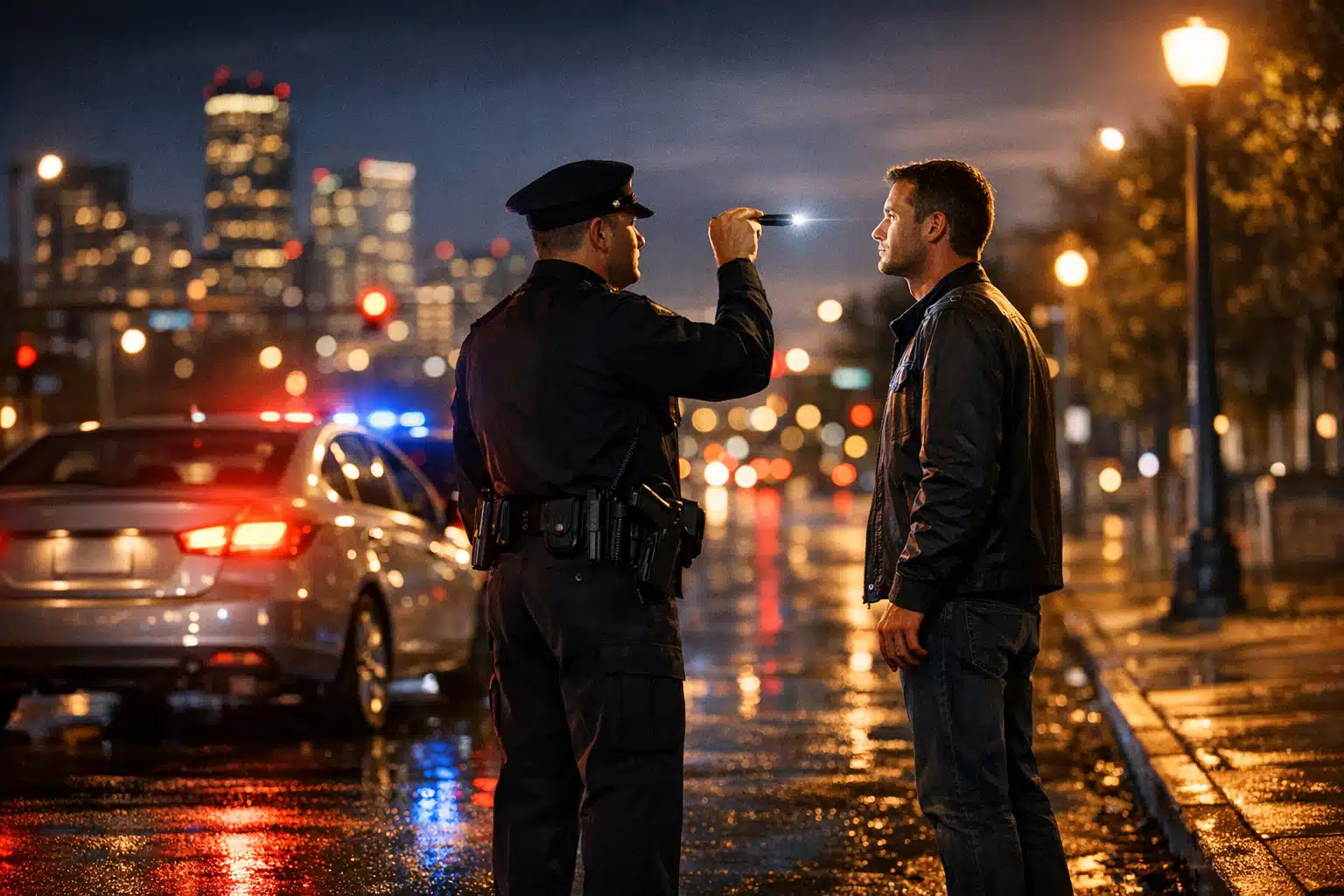
Roadside field sobriety tests in Colorado are voluntary, and you have the legal right to decline them without facing an automatic license penalty. While a police officer may ask you to perform tasks like walking a line or following a pen with your eyes, the law does not require you to comply. Refusing these tests can limit the evidence used against you.
Roadside field sobriety tests in Colorado are voluntary, and you may decline them without an automatic license penalty. If you are wondering “should I take a field sobriety test in Colorado,” the short answer is that you have a legal right to say no. A Denver officer might ask you to walk a line or follow a pen with your eyes, but the law does not force you to comply.
An evening out ends with flashing lights on Colfax Avenue. The officer asks you to step out and perform a few “quick tests.” What you do in that moment can shape your entire case.
This post covers what roadside tests are, why they are voluntary, and how declining differs from refusing a chemical test. You will learn the risks and the tradeoffs of each choice.
What Roadside Sobriety Tests Are in Colorado
Roadside sobriety tests are pre-arrest exercises an officer uses to gather evidence of impairment. They happen on the side of the road, before any arrest decision is made. In Colorado, they are voluntary.
The most common set comes from the National Highway Traffic Safety Administration. Colorado officers use three standardized field sobriety tests:
- Horizontal Gaze Nystagmus — following a stimulus with your eyes.
- Walk-and-Turn — taking nine steps heel-to-toe, then turning.
- One-Leg Stand — balancing on one foot while counting.
Officers may add non-standardized tests, such as reciting the alphabet or counting backward. None of these carry the legal weight of a chemical test. All of them are optional.
The Preliminary Breath Test Is Different From the Evidentiary Test
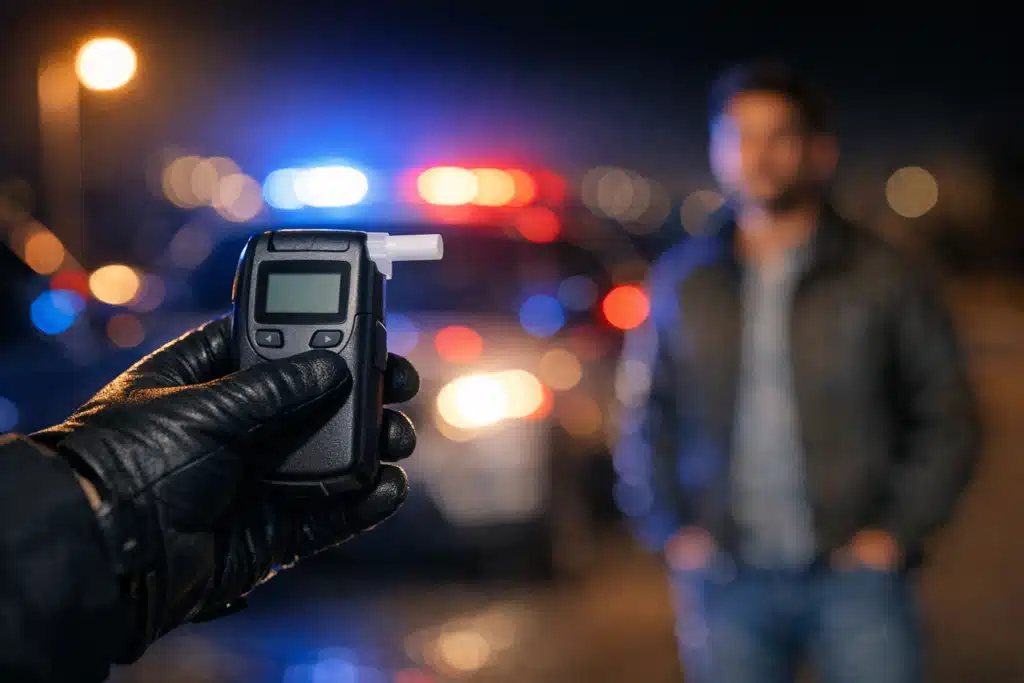
A preliminary breath test (PBT) is a small handheld device used at the roadside. It gives a rough estimate of blood alcohol content. In Colorado, the roadside PBT is voluntary for adult drivers.
Do not confuse the roadside PBT with the official chemical test after arrest. The post-arrest breath or blood test falls under Colorado’s Express Consent law. Declining a roadside PBT is not the same as refusing that later test.
Should I Take a Field Sobriety Test in Colorado? Weighing the Risks
You are not legally required to perform field sobriety tests in Colorado. Refusing a roadside test in Colorado does not trigger an automatic driver’s license suspension. That penalty attaches to the chemical test after arrest, not the roadside exercises.
Field sobriety tests are designed to produce evidence against you. Officers watch for “clues,” and even sober people miss steps or lose balance. Nervousness, uneven pavement, and medical conditions all affect results.
Here is a side-by-side look at the two paths:
If you agree to roadside tests:
- You give the officer more evidence to justify an arrest.
- Your performance can appear on body camera footage.
- Poor results may be used against you in court.
If you decline roadside tests:
- You provide less physical evidence of impairment.
- The officer may still arrest you based on other observations.
- There is no automatic license penalty for declining.
Declining Does Not Prevent an Arrest
An officer can arrest you without any roadside test results. Odor of alcohol, slurred speech, or admitting to drinking may supply probable cause. Declining reduces evidence, but it does not guarantee you will drive away.
Every stop is different. The choice you make depends on your circumstances and how the stop unfolds.
Roadside Tests vs. Chemical Tests: The Key Distinction
Colorado law treats voluntary roadside tests and post-arrest chemical tests very differently. Confusing the two leads people into costly mistakes.
The comparison below shows what matters most:
Roadside field sobriety tests and PBT:
- Voluntary for adult drivers.
- Happen before arrest.
- No automatic license penalty for declining.
Post-arrest chemical test (breath or blood):
- Governed by Colorado’s Express Consent law.
- Happens after a lawful arrest.
- Refusal can lead to a one-year license revocation.
Colorado’s Express Consent statute, found at C.R.S. 42-4-1301.1, applies once you are arrested. By driving in Colorado, you agree to chemical testing if lawfully arrested for DUI. Refusing that test carries serious license consequences.
Why This Matters for Your License
The Colorado DMV handles license suspension separately from the criminal court. Refusing the post-arrest chemical test can cost you your license for a year. That is a steep price, and it happens even if the criminal charge is later reduced.
A refusal designation may also require an ignition interlock device to drive again. A DMV hearing is available, but you must request one quickly after your arrest.
Common Mistakes Drivers Make During a Denver DUI Stop
People under stress make predictable errors. Knowing them ahead of time helps you stay composed.
- Assuming roadside tests are mandatory. Adult drivers may decline field sobriety tests and the roadside PBT.
- Confusing the roadside PBT with the chemical test. Declining the handheld device is not the same as refusing the official test.
- Arguing or becoming hostile. Polite, calm behavior protects you on body camera footage.
- Volunteering information. You are not required to state how much you drank.
- Ignoring DMV deadlines. License hearing requests are time-sensitive after an arrest.
You can decline tests respectfully. State clearly that you do not want to perform them, then stay quiet.
What to Say If You Choose to Decline
You do not need a speech. A short, respectful statement is enough.
Something like “Officer, I prefer not to perform any tests” communicates your choice. Then stop talking and do not resist. Compliance with lawful commands, such as providing your license, is separate from voluntary tests.

 Posted on Google
How Colorado DUI and DWAI Charges Fit In
Colorado charges impaired driving under two main labels. Knowing the difference helps you understand what evidence matters.
DUI applies when alcohol or drugs substantially impair your ability to drive safely. A blood alcohol content of 0.08 or higher supports a DUI charge.
DWAI is a lesser Colorado offense. It applies when alcohol or drugs affect your driving to the slightest degree. A blood alcohol content of 0.05 to 0.08 can support a DWAI.
Roadside test results feed into both charges. Less roadside evidence can affect how a case is filed or negotiated. A marijuana DUI case may hinge on observations rather than a breath number.
When to Contact a Denver DUI Attorney
Speak with a DUI defense attorney as soon as possible after any Denver DUI arrest. Early involvement protects your license and your defense. Deadlines with the Colorado DMV move fast.
An attorney can review the stop, the roadside tests, and the chemical test evidence. First-time DUI, repeat DUI, and underage DUI cases each carry different considerations. A lawyer can examine whether the traffic stop was lawful.
Every case turns on its own facts. No attorney can promise a result, and laws change over time. Legal advice for your situation requires a private conversation about your details.
Final Takeaways
Roadside field sobriety tests and the handheld PBT are voluntary in Colorado, with no automatic license penalty for declining. The post-arrest chemical test is different, and refusing it can cost your license for a year under Express Consent law.
Act quickly after an arrest to protect both your license and your defense. To discuss your situation confidentially, contact DUI Law Firm Denver at 303‑404‑7492, text 303‑404‑7492, or email info@DUILawFirmDenver.com.
Sources
- Colorado General Assembly – Title 42, C.R.S. (Express Consent, 42-4-1301.1)
- NHTSA – Standardized Field Sobriety Testing
- Colorado DMV – Express Consent and License Revocation
Share This Story, Choose Your Platform!
Table of Contents
My World changed dramatically in September 2017. I had never been in any sort of trouble with the law and now I was being cited for a DUI. I was scared, nervous, and had no idea what to do. I made the choice to contact an attorney, and DUI Law Firm Denver information was sent to me by a friend. I called Emilio right away to discuss my case.
The very first time we talked Emilio took almost an hour to listen to what was happening and offered specific recommendations to help me battle through this process. At that point I decided to hire Emilio and we began a long, almost 6 month journey, to resolve the issues surrounding this DUI.
Faced with very few options to help me mitigate my impending punishments, DUI Law Firm Denver never gave up helping me to fight as hard as we could for the best possible outcome in court. He made suggestions along the way that I truly believe turned the tides of this case. To the very end he stood beside me, believed in my story, and fought to help me in any way he could, even though he was pressed against a pretty solid wall.
At the end of it all, given what could have happened, I was very satisfied to come out of this with hope for a brighter future. I am taking the steps necessary to get back on track and without Emilio’s help I would have been doomed to a much greater punishment.
Related Reading

A missed DUI court date in Colorado can turn a defendable case into an arrest situation overnight. The judge may issue a bench warrant the same day you fail to show up. Acting within hours, not days, gives you the best chance to limit the damage. Maybe you wrote down the wrong date. Maybe you [...]
After a Colorado DUI, the court and the Colorado DMV both expect you to complete alcohol education before your case fully closes. Colorado DUI alcohol education classes are court- and probation-ordered programs that follow a required alcohol and drug evaluation. That evaluation decides how many hours of class and therapy you must finish. Imagine a [...]
Your first DUI court appearance in Denver is a hearing called an arraignment, where you formally learn the charges against you and enter a plea. If you were arrested near Speer Boulevard on a Friday night, you may have left jail with a pink summons listing a court date at the Lindsey-Flanigan Courthouse. That single [...]