Probable Cause Through Dash-Cam AI: How Tech Is Entering DUI Stops
AI-powered dash-cam systems are being tested by law enforcement to detect signs of driver impairment during DUI stops, raising legal questions about whether machine-generated data can help establish probable cause.
- These systems analyze driving patterns like lane drifting and erratic braking while also tracking eye movements and facial expressions. They generate time-stamped alerts that officers may include in police reports.
- Private companies build these systems with little federal oversight, and many states lack rules about how AI evidence can be used in court. This creates concerns about defendants' ability to challenge hidden algorithmic reasoning.
- Courts have not settled whether AI-generated data alone can satisfy probable cause requirements under the Fourth Amendment. The law still requires human officers to observe facts and make accountable judgment calls.
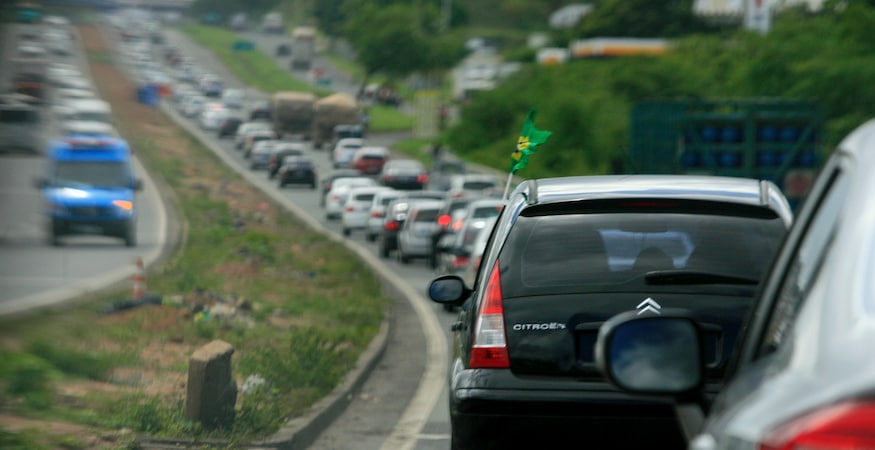
Dash-cam AI systems analyze driving behavior in real time, detecting patterns like swerving, lane drifting, or sudden braking that may indicate impairment. When the system identifies these signs, it alerts officers to potential DUI situations. This technology is being tested by some law enforcement agencies to assist in identifying impaired drivers before a traffic stop occurs.
Artificial intelligence is beginning to play a larger role in DUI enforcement. Some law enforcement agencies are testing dash-cam systems that analyze driving behavior, such as swerving, lane drifting, or sudden braking, and alert officers to potential signs of impairment. As this technology becomes more common, it raises important legal questions about whether AI-generated observations can help establish probable cause for a traffic stop.
While supporters argue that these systems may improve consistency and reduce bias, courts are still grappling with how AI evidence fits within existing constitutional protections against unreasonable searches and seizures.
What Is Dash-Cam AI and How Does It Work in DUI Stops?
Dash-cam AI is a technology integrated into some police vehicle cameras that uses artificial intelligence to analyze driving behavior and identify potential signs of impairment. Using computer vision, the system can detect patterns such as lane drifting, erratic braking, and unusual speed changes while a vehicle is being observed.
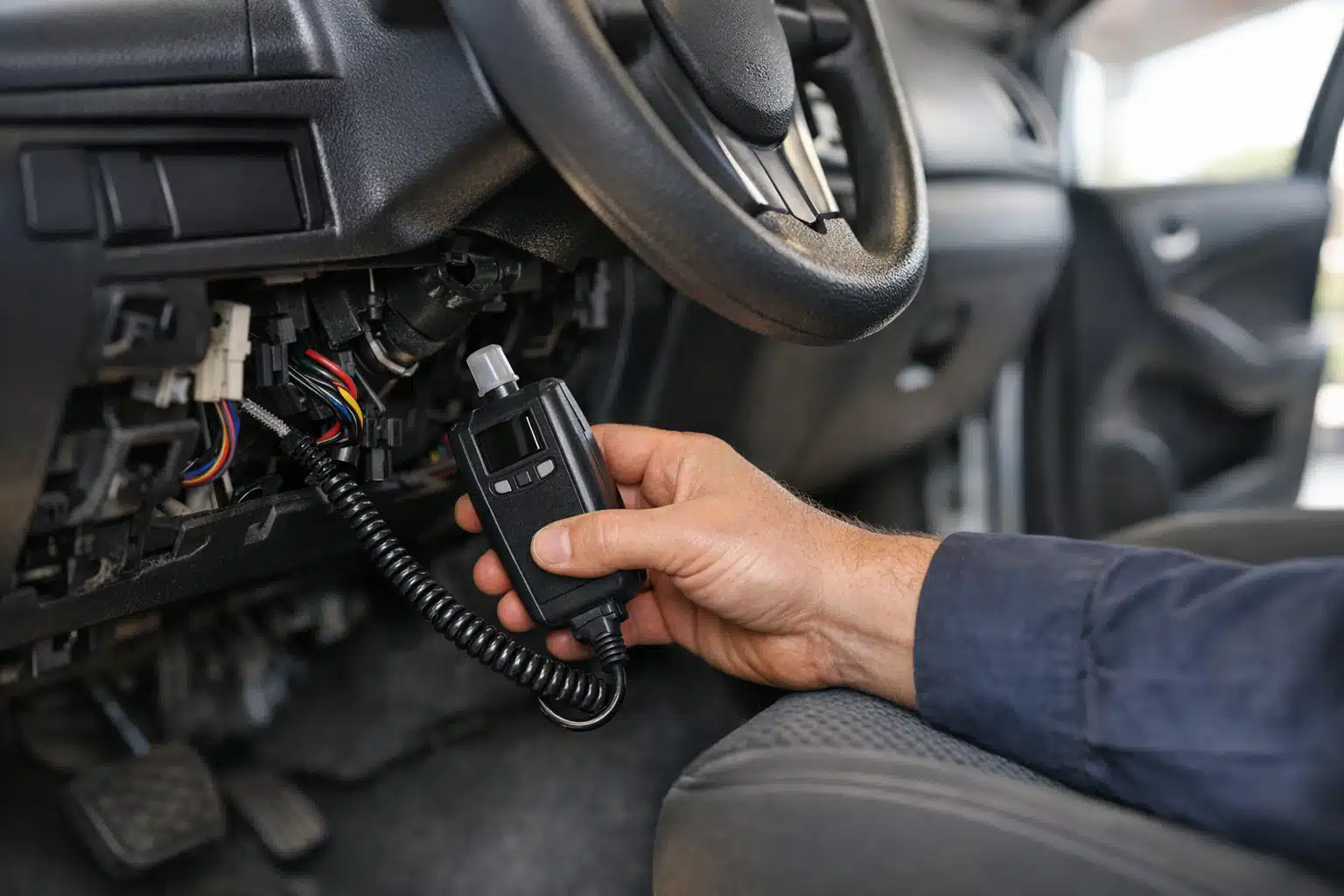
In some cases, AI-assisted camera systems may also analyze driver-related indicators, such as eye movements, facial expressions, or speech patterns captured during an interaction. The technology generates data and alerts that officers can review when determining whether further investigation, such as field sobriety testing, is warranted.
One of the most significant features of dash-cam AI is that it creates a time-stamped digital record of the observations it captures. This data may later be reviewed by attorneys, judges, and juries, raising important questions about how AI-generated evidence should be evaluated in DUI cases and whether it can contribute to establishing probable cause for a traffic stop.
How These Systems Identify Signs of Driver Impairment
These AI systems are only as reliable as what they can detect and how well they detect it. The software studies driving patterns using algorithms trained on thousands of real impairment cases. The system tracks specific behaviors behind the wheel, including:
- Drifting out of the lane
- Uneven braking
- Erratic acceleration
- Slow reaction times
Each behavior is measured and recorded as a data point.
A built-in camera also watches the driver directly. It tracks eye movement, head position, facial tension, and how often the driver blinks. Some systems go further by measuring small steering wheel corrections — movements that research links to reduced motor control.
Every detected problem is compared against a baseline, a standard profile of normal, unimpaired driving behavior. When enough warning signs stack up and cross a set threshold, the system sends an alert. That alert includes a timestamp and an algorithmic score.
This record matters beyond the vehicle. Law enforcement officers may use these AI-generated reports as supporting evidence when establishing probable cause — the legal standard required to justify a traffic stop, field sobriety test, or arrest. Because the data is machine-generated and time-stamped, it carries a documented, traceable trail that can hold up in legal proceedings.
Who Builds Dash-Cam AI and How Is It Regulated?
Private companies build and sell most dash-cam AI systems used today. Key players include Mobileye (an Intel company focused on self-driving technology), Nauto (which specializes in fleet safety using AI behavior analysis), and Lytx (a company that collects driver data to assess risk).
These companies sell their systems to commercial trucking and delivery fleets, car insurance companies, and police departments.
No single federal agency oversees how these AI systems work or how their data gets used. Rules vary by state, and many states have no rules at all. This creates gaps in legal protections for drivers.
Police departments buy these systems through contracts with vendors. In most cases, no outside expert checks whether the AI actually works correctly before it gets used in the field.
The companies do not have to share how their software makes decisions. This means judges and defense lawyers often cannot examine the reasoning behind an AI-generated claim that a driver was impaired.
A few states have started creating rules about when AI-produced data can be used as evidence in court. These efforts are uneven and incomplete across the country.
This lack of clear rules creates serious legal concerns. The Sixth Amendment guarantees the right to challenge evidence used against you.
When AI software flags a driver for DUI (driving under the influence) and that software’s logic is hidden, a defendant may not be able to get a fair trial.
How Law Enforcement Agencies Are Deploying This Technology
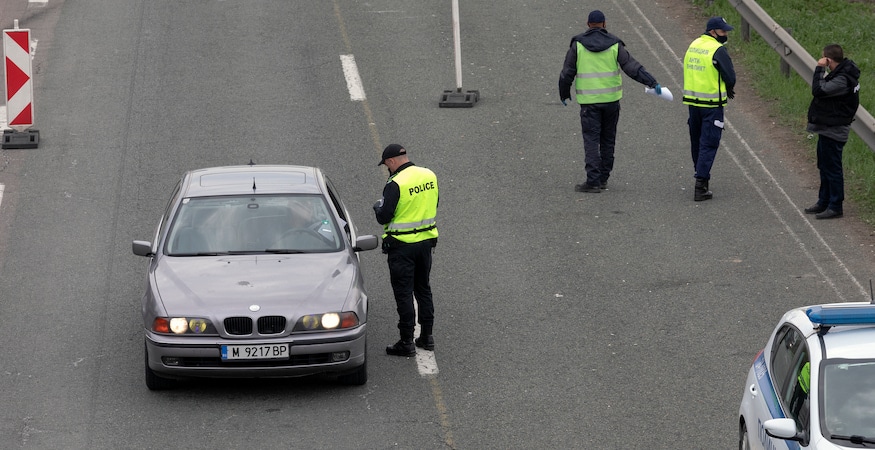
Police departments in Arizona, Texas, and Georgia are now using AI-powered dash cameras during everyday traffic stops, not just DUI checkpoints. These cameras watch driver behavior in real time and send alerts to a screen inside the patrol car. The system flags how a driver is moving before the officer even steps out of the vehicle.
What makes this significant is where that data goes next. Officers in some departments are copying these AI-generated alerts directly into official police reports. That means a machine’s observations become part of the written record of a stop. Prosecutors can then read those reports and use them to make charging decisions, all before a judge or defense attorney ever sees the case.
This raises real concerns about fairness and accuracy. AI systems can make errors. They can reflect built-in bias from the data used to train them. When machine-generated flags are treated like factual evidence in a police report, people may face legal consequences based on flawed or unreliable outputs.
The concept of probable cause is meant to rest on human judgment and observable facts.
Embedding AI outputs into that process changes the foundation of that standard in ways that courts and lawmakers have not yet fully addressed.
What Probable Cause Actually Requires in a DUI Stop
Probable cause in a DUI stop is a legal standard. It comes from the Fourth Amendment of the U.S. Constitution. This amendment protects people from unreasonable searches and stops by police.
To pull someone over for drunk driving, a police officer must be able to point to specific facts that support a reasonable belief that the driver is impaired. Impairment means the driver’s ability to operate a vehicle safely is reduced, often due to alcohol or drugs.
Courts have long based this standard on what a trained officer can observe directly. Common signs of impairment include:
- Slurred speech — the driver speaks unclearly
- Erratic lane changes — the car swerves or drifts without reason
- The odor of alcohol — the smell of alcohol coming from the driver or vehicle
- Failed field sobriety tests — physical or cognitive tests conducted roadside that the driver cannot complete
These are behavioral and sensory clues. A human officer must observe them, interpret them, and take legal responsibility for acting on them.
AI tools and cameras can detect patterns in driving behavior and generate data. That data may help an officer notice a problem.
However, AI cannot satisfy probable cause on its own. The law requires a human officer to weigh all the facts together and make a judgment call. That officer must also be held accountable for that decision.
Technology supports the officer’s role. It does not replace it.
Can Dash-Cam AI Data Legally Establish Probable Cause?
Courts have not settled whether AI data from dash cameras can legally justify a traffic stop or arrest. To understand why this matters, it helps to know what “probable cause” means. Probable cause is the legal standard police must meet before stopping, searching, or arresting someone. It requires real, specific facts that a reasonable person could observe and understand, not just a gut feeling.
The problem is that AI systems work differently from human officers. A dash-cam AI scans video footage and uses computer algorithms to detect things like speeding, erratic driving, or license plate violations. The AI produces a score or flag, a number or alert, rather than a description a human officer witnessed directly.
Courts must decide if that kind of machine-generated output counts as the “articulable facts” the Fourth Amendment requires.
Several key questions shape how a judge would review this evidence:
- Algorithm accuracy — How often does the AI get it right? Has it been independently tested and validated?
- Officer corroboration — Did the officer personally observe anything that supported what the AI flagged?
- Transparency — Can the AI’s decision-making process be explained and examined in court?
The Fourth Amendment protects people from unreasonable government searches and seizures. If a stop is based only on an AI alert that cannot be explained or verified, a judge may throw out the evidence gathered from that stop.
No major appellate court has yet set a binding national rule on this issue. AI dash-cam data can support probable cause, but it cannot automatically create it on its own.
The False Positive Problem Undermining AI Accuracy
Courts are hesitant to treat AI dash-cam alerts as enough reason on their own to pull someone over for drunk driving. A big part of that hesitation comes down to errors, specifically, false positives. A false positive happens when an AI system flags a sober driver as impaired. This can occur when the driver is tired, dealing with a medical condition like epilepsy or diabetes, or simply distracted. These are real, documented problems across commercial AI dash-cam platforms used by law enforcement and fleet operators today.
When an AI system wrongly flags someone as impaired, any traffic stop based solely on that alert lacks a valid legal foundation. The Fourth Amendment requires law enforcement to have probable cause, a reasonable, fact-based belief that a law is being broken, before stopping a driver. A faulty AI alert does not meet that standard.
The problem is made worse by a lack of transparency. Dash-cam AI manufacturers, such as companies producing systems like Lytx or Netradyne, rarely publish clear, real-world error rates. There are no government-enforced standards requiring them to disclose how often their systems are wrong under actual driving conditions.
Courts need reliable, measurable accuracy data before they can trust AI alerts as standalone evidence. Right now, that data does not exist in any regulated or verified form. Independent testing organizations, regulatory agencies like National Highway Traffic Safety Administration (NHTSA), and legal standards bodies have not yet created enforceable accuracy benchmarks for these systems.
Until those benchmarks exist, AI dash-cam alerts can support a DUI stop when combined with other evidence, but they cannot justify one on their own.
The Racial and Demographic Bias Baked Into These Systems
Not all drivers face the same risk of being wrongly flagged by these systems. Studies show that facial recognition and behavior-detection tools make more mistakes when analyzing Black and brown people, women, and older adults. This happens because the data used to train these systems was mostly collected from white men.
When a dataset is unbalanced, the AI model built from it will carry that same imbalance forward.
In DUI enforcement, this imbalance has real legal consequences. A system that more often flags Black or Hispanic drivers as impaired gives police officers a reason to make a stop — what the law calls “probable cause.” Officers may treat an AI alert as hard evidence, even when the system is wrong.
This adds a new layer to a problem that already exists: Black and Hispanic drivers are stopped and cited by police at higher rates than white drivers, a pattern documented in traffic enforcement data across the United States.
This technology does not create bias on its own. It absorbs bias from the data it was trained on. Then it locks that bias into a step-by-step process that looks neutral and official.
When a machine produces the output, the bias becomes harder to see and harder to challenge in court.
The core issue is this: a tool sold as objective can quietly reinforce unequal treatment, and give that unequal treatment the appearance of scientific authority.
Why “Black Box” AI Evidence Struggles to Hold Up in Court
AI evidence from dash-cams can lead to arrests, but it often falls apart in court. The problem is not that judges dislike technology. The problem is that the legal system needs evidence that can be explained, traced, and questioned — and most AI systems are built in ways that make this impossible.
In a courtroom, defense lawyers have the right to challenge evidence. With a standard field sobriety test, they can question the steps, the officer’s training, and the known failure rates. With a proprietary AI model, none of that is possible. The company that built the model treats its internal design as a trade secret. No one outside the company can look inside it, run independent tests on it, or explain exactly how it reached a conclusion.
Federal courts use a standard called the Daubert standard to decide whether scientific evidence is reliable enough to be used at trial. This standard asks four key questions: Has the method been tested? Has it been peer-reviewed? Is the error rate known? Is the method generally accepted in the field?
AI vendors who hide their systems behind trade secret protections cannot answer these questions in open court. That means the evidence fails the test.
The gap this creates is serious. AI-generated conclusions, such as flagging a driver’s behavior as suspicious, may exist as data points, but the reasoning behind those conclusions stays locked away. A jury sees the result. No one can see the work. That is not how reliable evidence is supposed to function in a fair legal system.
How Defense Attorneys Are Fighting AI-Based DUI Evidence
Defense lawyers are finding new ways to fight DUI cases that use AI as evidence. These legal fights matter because more police departments are using computer programs to help catch drunk drivers.
One main strategy is demanding to see how the AI works. Lawyers ask for the source code, training data, and test results that show how the system was built and whether it makes mistakes. When tech companies say that information is a trade secret, defense lawyers argue the defendant cannot get a fair trial. The Sixth Amendment gives defendants the right to face and question evidence used against them. Hiding how the AI works makes that impossible.
Defense lawyers also question whether the police officer who made the arrest had real reasons to pull someone over, beyond just trusting the AI. Under the Fourth Amendment, police need specific, explainable reasons to stop a driver. An AI alert alone may not be enough.
Computer science experts are being brought into courtrooms to explain AI problems in plain terms. They talk about things like false positives, which are cases where the AI says something is wrong when it is not. They explain how weather, lighting, and road conditions can throw off the system.
They also describe overfitting, which happens when an AI learns too much from old data and makes bad predictions in new situations.
The goal of all these strategies is to show that AI is not perfect. Just because a computer flagged something does not mean it is true. Every defendant deserves evidence that can be tested, questioned, and proven reliable.
Where Dash-Cam AI in DUI Enforcement Is Headed Next
Dash-cam AI in DUI enforcement is growing stronger, not pulling back. Engineers are building systems that can do more than record video. These systems watch eye movements, read small facial expressions, and track how a driver holds the steering wheel — all at the same time. That combined data helps paint a clearer picture of whether a driver may be impaired.
Police departments are testing tools that connect dash-cam footage with sensors placed along roadsides. Together, these tools build a behavioral profile of a driver before an officer even steps out of the patrol car. This layered approach means decisions about stopping a driver rely on more than one data point.
State lawmakers are writing new rules about how AI-collected evidence can be used in court. The fact that these rules are being written at all shows that governments are beginning to accept AI as a real part of law enforcement, not just an experiment.
Groups that protect civil rights are pushing back, making sure courts continue to examine how this technology is used. That legal pressure acts as a check on how fast and how far the technology spreads.
The big question in this field has changed. It used to be whether AI should be part of DUI enforcement. That debate has largely moved on. The question now is what legal standard AI-gathered observations must meet before they can justify stopping or arresting someone.
Courts will need to draw that line clearly.
Share This Story, Choose Your Platform!
Table of Contents
- What Is Dash-Cam AI and How Does It Work in DUI Stops?
- How These Systems Identify Signs of Driver Impairment
- Who Builds Dash-Cam AI and How Is It Regulated?
- How Law Enforcement Agencies Are Deploying This Technology
- What Probable Cause Actually Requires in a DUI Stop
- Can Dash-Cam AI Data Legally Establish Probable Cause?
- The False Positive Problem Undermining AI Accuracy
- The Racial and Demographic Bias Baked Into These Systems
- Why “Black Box” AI Evidence Struggles to Hold Up in Court
- How Defense Attorneys Are Fighting AI-Based DUI Evidence
- Where Dash-Cam AI in DUI Enforcement Is Headed Next
Firstly, I would like to thank DUI Law Firm Denver for successfully representing me in my Adams County DUI case. The level of experience, scientific knowledge, dedication (I had both Emilio and Trevor representing me), and preparedness made all the difference during my trial. I highly recommend them. They are the BEST!
Related Reading

A first DUI in Colorado in 2026 usually costs between $10,000 and $13,000 once every expense is added up. Most people expect a fine and a court date. Few expect the years of insurance increases and interlock fees that follow. The cost of a DUI Colorado 2026 stretches far beyond the courtroom. It includes bail, [...]

Many commercial drivers assume that traffic violations committed while off duty and driving a personal vehicle have little or no impact on their Commercial Driver’s License (CDL). In reality, CDL holders are held to higher standards than other drivers, and their driving conduct is closely monitored both on and off the job. Federal and state [...]
A DUI report is one of the most important pieces of evidence in a drunk driving case. From the moment an officer observes a vehicle to the time an arrest is made, specific details are documented to support the investigation. These reports typically include observations about driving behavior, physical signs of impairment, field sobriety test [...]