Was the Stop Legal
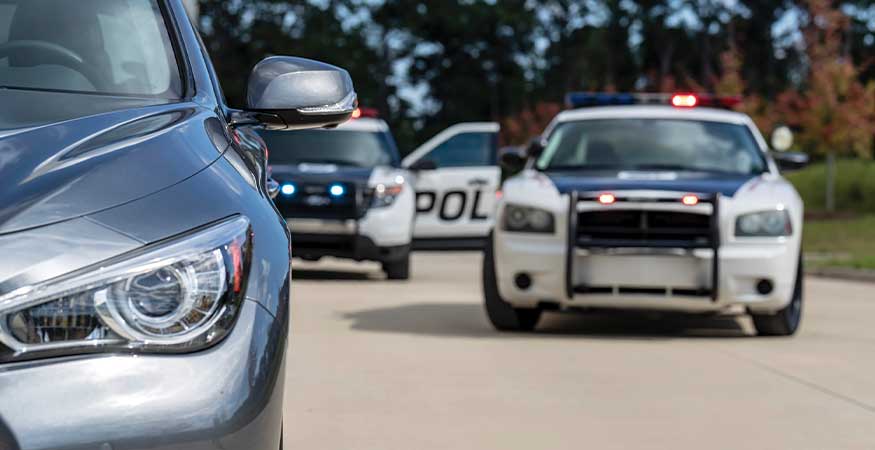
The legality of a traffic stop is crucial in DUI cases, as the Fourth Amendment protects against unreasonable searches and seizures. Police must have reasonable suspicion based on specific facts to justify a stop, and any violation of these rules can lead to key evidence being dismissed in court.
- Officers need observable facts like traffic violations to pull over a vehicle. A vague hunch does not meet the legal standard for reasonable suspicion.
- Traffic stops must be limited in scope and duration to address the original reason for the stop. Extending the stop without new reasonable suspicion may violate constitutional rights.
- Drivers retain their rights during a stop, and police cannot search without consent, probable cause, or a warrant exception. Understanding these rights helps identify potential violations.
The legality of a traffic stop is crucial in a DUI case because it determines whether evidence collected during the stop can be used in court. If the stop violates the Fourth Amendment, any evidence obtained, such as sobriety tests or breathalyzer results, may be deemed inadmissible, potentially impacting the case outcome.
A DUI case can rise or fall based on whether the traffic stop itself was legal. The Fourth Amendment protects drivers from unreasonable searches and seizures, which means police must follow strict rules when stopping and detaining a vehicle. Officers must have reasonable suspicion based on specific facts, such as a traffic violation or observable signs of impaired driving, not just a hunch. They must also keep the stop limited in scope and duration to its original purpose. When police exceed these limits, the stop may violate the Constitution, and key evidence, such as field sobriety tests, breathalyzer results, or officer observations, can be thrown out in court. This checklist explains how to identify common Fourth Amendment problems that could affect a DUI case.
Understanding the Fourth Amendment and Your Rights During a Traffic Stop
The Fourth Amendment protects people from unreasonable searches and seizures by government officials. This protection applies to every traffic stop on U.S. roads, including those that lead to DUI investigations. Police must follow specific constitutional rules when stopping and detaining drivers.
Police must have reasonable suspicion before pulling a vehicle over. In Whren v. United States, the Supreme Court confirmed that officers need specific, observable facts suggesting a traffic violation or criminal activity. Examples may include speeding, weaving between lanes, running a red light, or driving without headlights at night. A vague hunch or general suspicion does not meet this legal standard.
Traffic stops must also remain limited to their original purpose. In Rodriguez v. United States, the Supreme Court ruled that officers cannot extend a stop longer than necessary to handle the reason for the stop. Common tasks include checking a driver’s license and registration, running a warrant check, and issuing a citation. If officers want to continue the detention beyond these tasks, they must develop new reasonable suspicion of another crime. Without it, prolonging the stop may violate the Fourth Amendment.
Drivers still retain their constitutional rights during a traffic stop. Police generally cannot search a vehicle, belongings, or a person unless specific legal requirements are met. These include voluntary consent, probable cause suggesting criminal activity, or a recognized warrant exception, such as contraband or weapons visible in plain view or certain emergency circumstances.
These constitutional limits exist to prevent arbitrary police action while still allowing legitimate law enforcement. The Fourth Amendment creates a balance between public safety and individual liberty. Understanding these rights can help drivers recognize when a traffic stop follows proper legal procedures—and when it may cross constitutional boundaries that could affect a DUI case.
What Makes a Traffic Stop Legally Justified in Colorado?
In Colorado, police must follow the constitutional standard established in Terry v. Ohio. Before pulling over a vehicle, an officer must have reasonable suspicion—specific, observable facts suggesting a traffic violation or other illegal activity.
Common reasons for a lawful stop include equipment problems such as broken headlights or taillights, moving violations like speeding or running a red light, and administrative issues such as expired license plates or missing registration tags.
Courts evaluate these stops using the “reasonable officer” standard, which asks whether a typical trained officer would believe a violation occurred based on the facts observed. Under Whren v. United States, an officer’s personal motivation does not matter. If an objective traffic violation exists—even a minor one—the stop is generally considered lawful.
However, the stop must remain limited in scope and duration. Officers may only detain a driver long enough to address the traffic violation unless new reasonable suspicion develops or the driver consents to additional questioning or a search.
Common Reasons Police Use to Initiate DUI Traffic Stops
Police must have a legally valid reason to stop a vehicle. When officers suspect impaired driving, they typically rely on observable behaviors or traffic violations that courts recognize as indicators of possible DUI.
Driving behaviors that may justify a stop include:
- Lane control problems: swerving, drifting, or crossing lane markers
- Speed irregularities: driving far above or below the speed limit or changing speed without reason
- Delayed reactions: taking too long to move after a traffic light turns green
- Improper turns: unusually wide or erratic turns
Equipment and vehicle violations can also justify a stop, including:
- Broken headlights or taillights
- Expired license plates or registration tags
- Missing or malfunctioning vehicle equipment
Courts generally consider these stops valid—even if the officer also suspects the driver may be impaired.
Additional contextual factors may contribute to reasonable suspicion. For example, driving late at night near bars or entertainment districts may raise an officer’s attention, but time and location alone are not enough to justify a stop. Officers still need a specific traffic violation or observable driving behavior.
To be legally valid, officers must rely on objective, documented facts, such as:
- Specific driving behaviors they observed
- Clear violations of traffic laws
- Concrete observations rather than assumptions or hunches
For people facing DUI charges, reviewing the police report is critical. The key question is whether the officer documented a legitimate traffic violation or relied on weak or unsupported reasons to justify the stop.
Warning Signs That Your DUI Stop May Have Been Illegal
If police cannot clearly explain why they pulled you over, the stop may violate the Fourth Amendment, which protects against unreasonable searches and seizures. Below are common warning signs of a potentially illegal DUI stop.
Vague Police Reports
Police reports should describe specific observations. Red flags include vague phrases like “suspicious behavior” or “appeared intoxicated” without details. Valid reports usually include concrete facts, such as swerving across lane lines or running a red light.
Anonymous Tips Without Verification
Police generally cannot stop a vehicle based only on an anonymous tip. Officers must independently verify details, such as the vehicle description, location, or dangerous driving, before making the stop.
Pretextual Traffic Stops
Officers may legally stop a car for minor violations, but warning signs appear when they immediately question you about unrelated issues—such as alcohol use, despite stopping you for something like a broken taillight.
Extended Detention
A traffic stop should last only as long as needed to address the violation. Delays, repeated unrelated questions, or waiting for additional investigations without new reasonable suspicion may indicate a constitutional violation.
Improper DUI Checkpoints
Legal sobriety checkpoints must follow strict rules, including supervisory approval, neutral vehicle selection (such as stopping every third car), and minimal delay. Checkpoints that lack these safeguards may be unconstitutional.
If a stop is illegal, key evidence, such as field sobriety tests, breathalyzer results, and officer observations, may be suppressed in court, which can significantly weaken or even dismiss a DUI case.
How Minor Traffic Violations Can Lead to DUI Stops
Even minor traffic violations can legally lead to a DUI investigation. In Whren v. United States (1996), the Supreme Court ruled that any traffic violation—no matter how small—can justify a traffic stop.
Common examples include:
- Broken headlights or taillights
- Swerving or drifting between lanes
- Speeding or driving unusually slow
- Failing to signal or obey traffic signs
The officer’s motivation does not matter. If a real traffic violation occurred, the stop is considered lawful.
Once the vehicle is stopped, officers may look for signs of impairment, such as the smell of alcohol, slurred speech, red eyes, or poor coordination. If these indicators appear, the officer can expand the stop into a DUI investigation.
This creates a two-step legal process: a traffic violation justifies the stop, and observable signs of intoxication justify further DUI testing or investigation.
When a DUI Checkpoint or Roadblock Becomes Unconstitutional
The U.S. Supreme Court allows DUI checkpoints, but only if police follow strict constitutional rules. If these safeguards are missing, the checkpoint or the stop itself may violate the Fourth Amendment.
Requirements for a legal DUI checkpoint:
- Neutral vehicle selection: Officers must follow a predetermined system, such as stopping every car or every third car. They cannot choose vehicles based on personal discretion or appearance.
- Supervisory planning: A supervisor must design and oversee the checkpoint rather than leaving decisions to officers in the field.
- Advance public notice: Police typically announce checkpoints beforehand through news releases, social media, or other public notices.
- Reasonable location and duration: The checkpoint must operate in a logical location and for a reasonable period of time.
- Visible safety measures: Warning signs, lights, and clear police presence must alert drivers to the checkpoint ahead.
Limits on detention at checkpoints
Officers may briefly stop drivers to ask basic questions and check licenses, registration, or insurance. However, longer detention requires reasonable suspicion, such as the smell of alcohol, slurred speech, or other signs of impairment.
Primary purpose requirement
Courts also examine the checkpoint’s main purpose. It must focus on road safety and impaired driving enforcement. If the checkpoint is primarily used to search for drugs, outstanding warrants, or other unrelated crimes, it may be ruled unconstitutional.
Anonymous tips and DUI stops
Police may receive anonymous reports about suspected drunk drivers, but these tips must show signs of reliability before they justify a stop. Courts consider tips stronger when they include:
- Specific descriptions of the vehicle, location, or behavior
- Predictive details about what the driver will do next
- Independent police verification of key facts
- Warnings of an immediate danger to public safety
Vague or unsupported accusations—such as a caller simply claiming someone is drunk—generally do not provide enough legal basis for a stop. However, when a tip describes an urgent threat, such as a dangerous drunk driver, officers may act more quickly to protect public safety, provided they still have a reasonable basis to believe the report is credible.
Evidence That May Be Suppressed After an Illegal Stop
If police conduct an illegal traffic stop or detention, courts may exclude the evidence obtained as a result. This protection—known as the exclusionary rule—prevents prosecutors from using evidence gathered through violations of the Fourth Amendment’s ban on unreasonable searches and seizures.
Types of evidence that may be suppressed include:
- Physical evidence: Items discovered during the unlawful stop, such as drugs, weapons, or other contraband.
- Statements by the driver: Admissions, confessions, or other incriminating remarks made during or after the illegal stop.
- Officer observations: Evidence based on what officers claim to have noticed, such as the odor of alcohol, slurred speech, or signs of impairment.
The “fruit of the poisonous tree” doctrine
Courts may also exclude evidence indirectly obtained from an illegal stop. If the original stop was unconstitutional, any evidence discovered as a result of that stop may also be considered tainted and inadmissible in court.
Exceptions prosecutors may argue
In some situations, evidence may still be allowed despite an illegal stop. Common exceptions include:
- Independent source: The evidence was obtained through a separate, lawful investigation.
- Inevitable discovery: Police would have found the evidence anyway through legal means.
- Attenuation: Enough time or intervening events occurred to weaken the connection between the illegal stop and the evidence.
When key evidence is suppressed, prosecutors may struggle to prove the case—especially in DUI charges that rely heavily on officer observations and test results.
How Body Camera Footage Can Reveal Fourth Amendment Violations
Body-worn cameras have changed how courts evaluate the legality of traffic stops and detentions. This footage provides objective documentation that can contradict police officer testimony regarding reasonable suspicion or probable cause.
Defense attorneys examining this evidence should look at:
- Pre-stop observations: Did the officer actually witness the traffic violation claimed as justification for the stop?
- Duration and scope: Did the detention last longer than the time necessary to complete its original purpose?
- Consent authenticity: Were requests to search truly voluntary or coercive based on the officer’s tone, body positioning, and repeated demands?
- Pretext indicators: Did officer statements reveal that the stop’s actual purpose differed from the stated justification?
Courts rely on body camera evidence to resolve factual disputes about Fourth Amendment compliance. Fourth Amendment compliance refers to following the constitutional rules that protect citizens from unreasonable searches and seizures by government officials.
This makes systematic footage review essential for identifying constitutional violations. Defense lawyers need to watch body camera videos carefully because they show what really happened during police encounters.
The footage captures visual and audio evidence of police officer conduct, suspect behavior, and environmental conditions at the scene. When officers claim they had legal justification for a stop, but the video shows something different, courts can use this concrete evidence to determine if rights were violated.
Police departments across the United States now equip officers with these recording devices to document law enforcement activities. The cameras serve multiple purposes: accountability for officers, protection against false accusations, and preservation of evidence for criminal proceedings.
The Role of a DUI Defense Lawyer in Challenging Illegal Stops
A DUI defense lawyer wins cases by examining whether police officers followed the Constitution during the initial traffic stop. When law enforcement violates a person’s rights during a traffic stop, judges can throw out all evidence collected afterward. This includes breathalyzer results, blood test findings, and field sobriety test performances. The exclusionary rule protects citizens by making illegally obtained evidence unusable in court.
Defense attorneys study multiple sources of evidence to find constitutional violations. Police reports contain the officer’s written account of events. Dashboard camera videos show what actually happened during the stop. Body camera recordings capture the officer’s interactions with the driver. Officer testimony reveals what the police remember about the incident. Lawyers compare these sources to spot inconsistencies and violations of Fourth Amendment rights.
Police must have reasonable suspicion before pulling over a vehicle. Reasonable suspicion means specific facts that suggest criminal activity, not just a hunch or guess. Some traffic stops violate the Fourth Amendment in these ways:
- Officers use minor traffic violations as excuses to investigate unrelated crimes.
- Police act on anonymous tips without checking if the information is reliable.
- Officers extend the stop beyond the time needed to handle the original reason for pulling over the vehicle.
When lawyers discover these constitutional problems, they file suppression motions with the court. A suppression motion asks the judge to exclude evidence obtained through illegal means. The landmark Supreme Court case *Mapp v. Ohio* established that excluding tainted evidence accomplishes two goals: it fixes the harm done to the defendant’s rights, and it discourages police from violating rights in future cases.
Judges review suppression motions using the standard set in *Terry v. Ohio*. This framework requires courts to weigh government interests in public safety against individual privacy rights. The judge examines whether the officer had reasonable suspicion based on objective facts available at the time of the stop.
When judges grant suppression motions and exclude key evidence, prosecutors often cannot prove their case. Without breathalyzer results, field sobriety tests, or officer observations from the traffic stop, the state lacks the evidence needed for a DUI conviction. This forces prosecutors to dismiss the charges against the defendant.
What to Do If You Believe Your DUI Stop Was Unlawful
Drivers who think police violated their constitutional rights during a DUI stop need to document everything right away. Human memory gets worse over time. Writing down details while they’re fresh helps you build a stronger case if you need to challenge the stop in court.
Take these steps to protect your rights:
- Write down everything about the traffic stop as soon as you can. Include what the officer said, why the officer claimed to pull you over, what time each thing happened, and the order of events from start to finish.
- Find people who saw what happened and get their contact information. This includes anyone who watched you drive before the stop or saw the officer pull you over.
- Take pictures of where the stop happened. Capture the road surface, weather conditions, street signs, traffic lights, lane markings, and how well drivers can see at that spot.
- Ask your lawyer to get all video and audio recordings from the police department. This includes footage from cameras on the police car dashboard, cameras worn on the officer’s body, and radio calls between the officer and the police station.
Your criminal defense attorney uses these materials to question whether the officer had valid legal reasons to stop you. Police must have reasonable suspicion that you broke a traffic law before pulling you over.
This requirement comes from the Fourth Amendment protection against unreasonable searches and seizures. When you preserve evidence of what really happened, your lawyer can file a motion to suppress evidence if the judge determines the stop violated your constitutional rights.
Share This Story, Choose Your Platform!
Table of Contents
DUI Law Firm Denver did an awesome job. I thought I was in serious trouble, but they got my DWAI case dismissed. I am just so happy that I was referred to them. They were always on top of my case. In particular, Mr De Simone was always on hand whenever I needed him for help and advice. I now keep his business card with me all the time.
Related Reading

An Oktoberfest DUI Colorado arrest frequently starts the same way: three steins of German lager that each carry nearly double the alcohol of a standard domestic beer. A driver who feels fine after a fall festival in Denver can still blow a 0.12 at the roadside. Fall beer festivals create a specific trap because traditional [...]
Arrested for a Denver Broncos game DUI means two separate problems start at once: a criminal case and a driver’s license case. The license case moves faster. You have 7 days from the arrest to request a hearing with the Colorado DMV, or your license suspension begins automatically. Fall Sundays at Empower Field at Mile [...]
A DUI towing trailer Colorado charge can happen on the drive home from Chatfield, Cherry Creek, or Lake Granby. You spent the day on the water, loaded the boat, and merged onto I-70 as the sun dropped. A trooper pulls you over for a swerving trailer, and the stop turns into a roadside sobriety test. [...]